
HDPE Pipe Welding Machines Procurement & Delivery Guide
Table of Contents
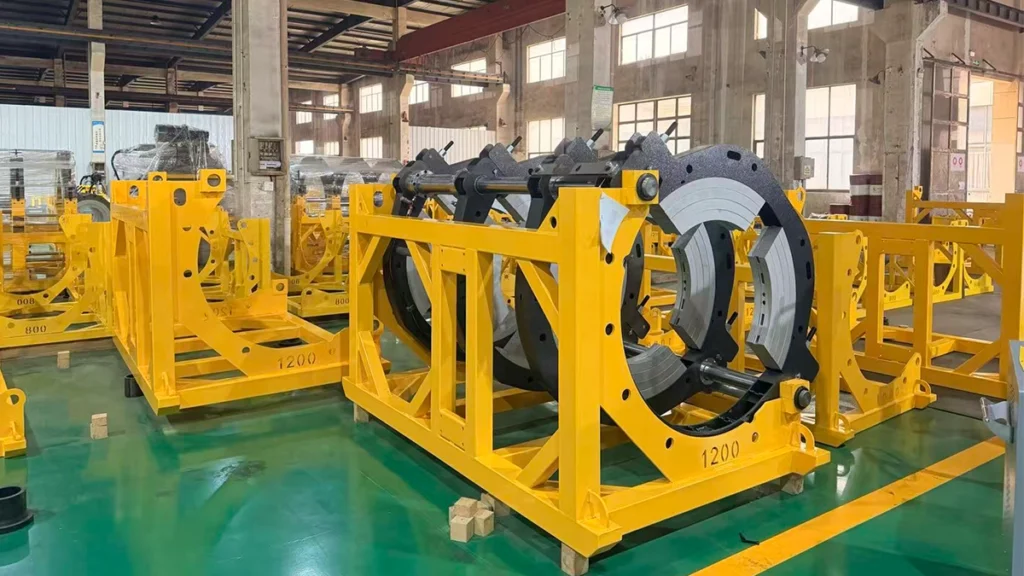
Securing a high-performance HDPE pipe welding machine (DN40mm–DN2600mm) for cross-border infrastructure projects is a high-stakes balancing act. It requires navigating complex financial logistics where a single oversight can cost contractors upwards of $15,000 in delayed logistics or non-compliant specifications. For procurement officers managing municipal water lines, gas distribution networks, or mining slurry pipelines, the anxiety surrounding international wire transfers and unpredictable shipping schedules is a tangible business risk.
This guide bridges the gap between technical procurement and financial security. Here, we detail how Ekberg Welding combines transparent payment structures with optimized supply chain management to ensure reliable HDPE pipe welding machine delivery time and fiscal safety. We will break down the strategic differences between T/T and L/C payments, the real-world impact of Incoterms 2020 on your cash flow, specific production lead times for various butt fusion machine sizes, and how to verify compliance with ISO 21307 standards. By the end of this article, you will have a clear framework to select the right equipment for your project scope—and execute the transaction with zero financial exposure.
—
Navigating International Payment Options for Welding Machinery
When purchasing heavy industrial capital equipment, the payment method is just as critical as the machinery’s technical specs. For distributors and construction firms importing from global manufacturing hubs, the goal is simple: balance cash flow preservation with risk mitigation.
Compare T/T (Telegraphic Transfer) vs. L/C (Letter of Credit) for high-value machinery orders
The two primary vehicles for international equipment transactions are T/T (Telegraphic Transfer) and L/C (Letter of Credit).
For orders under $50,000—typically covering a batch of smaller HDPE pipe welding machine units (160mm–315mm)—T/T is the industry standard. It’s fast, cheap, and efficient. The standard structure involves a 30% upfront deposit to kickstart the automatic HDPE pipe welding machine production lead time, with the remaining 70% balance due after the completion of Factory Acceptance Testing (FAT) but before shipment. This method incurs minimal bank fees ($20–$50) and clears within 1–3 business days, keeping the supply chain moving rapidly.
However, the strategy changes for large-scale infrastructure procurement exceeding $50,000 or $100,000—such as ordering multiple DN1000 units. Here, an Irrevocable Letter of Credit (L/C) offers superior buyer protection. An L/C functions as a bank guarantee; your bank promises to pay the manufacturer only after specific documents (Bill of Lading, Commercial Invoice, Packing List) prove the goods have actually been shipped. While L/C transactions carry higher administrative fees (0.75%–1.5% of the contract value) and require strict paperwork compliance, they eliminate the risk of supplier default. For first-time buyers wary of new suppliers, an L/C provides a “trustless” security layer where the bank acts as the neutral referee.
Understanding Incoterms (FOB, CIF, DDP) and their impact on payment timing
Incoterms 2020 define the precise moment risk and cost transfer from seller to buyer. This directly influences when your final payment balance is due.
- FOB (Free on Board): The most common term for machinery. The supplier’s responsibility ends once the HDPE pipe welding machine is loaded onto the vessel at the origin port. You control the ocean freight, allowing you to negotiate better rates with your own forwarders. Payment is typically finalized upon issuance of the Bill of Lading.
- CIF (Cost, Insurance, Freight): The supplier pays for freight and insurance to the destination port. While convenient, this often hides freight markups. Crucially, risk transfers at the origin port. If the butt fusion welding machine is damaged at sea, *you* must file the insurance claim, not the seller.
- DDP (Delivered Duty Paid): Rare for heavy machinery (2,600kg+ units). The supplier handles everything to your door, including import duties. This is generally discouraged for welding equipment because local customs clearance for industrial machinery requires specific tax IDs and compliance documents that you, as the local entity, are better positioned to handle.
Verifying supplier credibility to prevent fraud in cross-border transactions
Before wiring a 30% deposit for an automatic HDPE pipe welding machine, rigorous due diligence is non-negotiable to prevent invoice fraud or “phantom supplier” scams.
1. Bank Verification: Verify that the bank account name matches the business registration name exactly. Never transfer funds to a personal account.
2. Video Audit: Request a live video audit of the factory floor. A legitimate manufacturer like Ekberg will readily arrange a video call to show the assembly line, the specific inventory of ready to ship automatic pipe welding machine units, and the CNC machining centers in action.
3. Third-Party Validation: Check for valid ISO 9001 quality management certificates and CE markings for European compliance. These should be cross-referenced with the issuing bodies to ensure authenticity.
Currency exchange considerations and hedging for long-term supply contracts
For distributors establishing long-term supply agreements, currency fluctuation is a silent profit killer. Most international trade for welding equipment is conducted in USD or EUR. However, if the manufacturer’s local currency (e.g., CNY) strengthens significantly against the USD during a 6-month contract, the supplier may be forced to adjust pricing. To mitigate this, savvy buyers often lock in exchange rates via forward contracts with their forex providers. Alternatively, you can negotiate contracts with a “currency fluctuation clause” that only triggers price adjustments if the exchange rate swings beyond a defined percentage (e.g., ±3%).
—
Production Lead Times & Logistics for HDPE Pipe Welding Machines
Timely delivery is often the difference between a profitable project and one penalized for delays. Understanding the manufacturing timeline allows contractors to plan site mobilization accurately.
Defining standard automatic pipe welding machine production lead time by model size
Manufacturing timelines vary significantly based on the physical dimensions and complexity of the machine.
- Small to Medium Range (DN160–DN630): These units are high-volume sellers. The production cycle, including casting assembly, hydraulic circuit testing, and electronic calibration, is typically 7–10 working days.
- Large Range (DN800–DN2600): These heavy-duty machines (up to 2,600 kg) require more intensive fabrication and curing times for the chassis. The standard automatic pipe welding machine production lead time for these models is 15–25 working days. This includes extended periods for the 23.5 kW heating plates to undergo thermal uniformity testing, ensuring they stay within ±5°C tolerances across the entire surface area.
Identifying ready to ship automatic pipe welding machine inventory for urgent projects
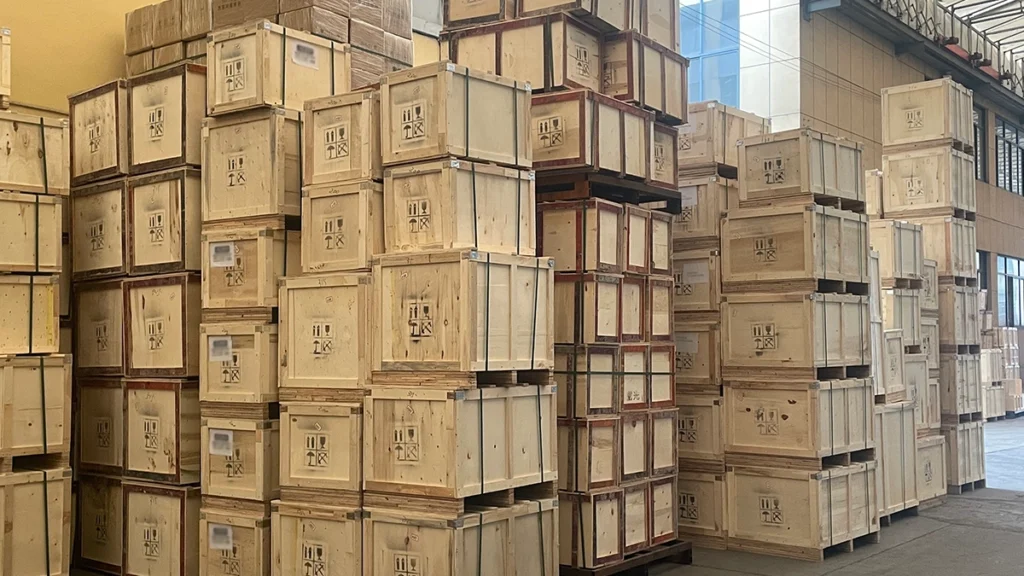
For emergency repairs or sudden project starts, waiting three weeks for production simply isn’t an option. Ekberg maintains a strategic “Safety Stock” of the most common sizes—specifically DN160, DN250, DN315, DN355, DN450, DN500, and DN630. These are ready to ship automatic pipe welding machine units that have already passed FAT and are crated for export. Accessing this inventory can reduce the lead time to just 2–3 days for inland transport to the port. Buyers should always ask “What is on the floor?” during the initial inquiry, as this can save weeks compared to a make-to-order workflow.
Expedited shipping vs. standard sea freight: Cost-benefit analysis
When a project is behind schedule, buyers often consider air freight. However, the cost disparity for heavy hydraulic equipment is massive.
Consider a standard 315mm hydraulic butt fusion machine packaged in a 500kg crate:
- Sea Freight (LCL): Cost is approximately $100–$300 (plus port fees). Transit time is 25–40 days.
- Air Freight: At 3.00–5.00 per kg, shipping the same unit costs $1,500–$2,500.
Air freight is roughly 10x the cost of sea freight. It is only economically viable for urgent spare parts or if the daily penalty for project delay exceeds the freight cost. For fast delivery HDPE pipe welding machine suppliers, the best strategy is usually expedited inland trucking to the port and choosing a direct vessel, rather than air freighting the entire machine.
Packaging and crate standards to prevent transit damage
Ocean transit exposes machinery to high humidity, salinity, and physical shock. To protect sensitive CNC computers and hydraulic seals, Ekberg uses export-grade, non-fumigation plywood crates. The butt fusion welding machine is bolted to the crate base to prevent shifting. Critical components like the hydraulic station and the heating plate are wrapped in VCI (Volatile Corrosion Inhibitor) film, and desiccant bags are placed inside the control cabinet to absorb moisture. This ensures that even after 40 days at sea, the machine arrives without rust on the guide rails or electrical shorts in the PLC.
—
Critical Selection Criteria for Automatic Butt Fusion Machines
Financial security means nothing if the butt fusion welding machine fails to perform on-site. The following technical criteria are non-negotiable for ensuring ROI and compliance.
Evaluating CNC control systems against ISO 21307 standards
The primary advantage of an automatic butt fusion machine is the elimination of operator error. The CNC system must be capable of automatically calculating drag pressure and adding it to the theoretical fusion pressure to determine the actual system pressure.
For compliance with ISO 21307 (Single Low Pressure or Dual Low Pressure), the software must control the temperature (200°C–230°C for PE100), pressure build-up time, and cooling time without manual intervention. The system must also log these parameters for every joint, generating a report that serves as proof of quality for project surveyors.
Hydraulic power unit performance and pressure stability
The hydraulic station is the heart of the fusion process. It must maintain pressure with an accuracy of ±1 bar (0.1 MPa) during the cooling phase, which can last from 10 to 45 minutes depending on pipe wall thickness. Ekberg units utilize high-grade hydraulic accumulators that stabilize pressure even if the generator fluctuates. If the pressure drops below the set tolerance during the cooling phase, the butt fusion machine should automatically trigger an alarm and log the joint as “Failed,” preventing a compromised weld from being buried underground.
Chassis design and clamp alignment precision
For large diameter pipes (e.g., DN1000 SDR11), the force required to drag and fuse the pipe is immense. The hdpe fuison machine chassis must have high structural rigidity to prevent twisting or buckling under load. Ekberg’s 1000mm model weighs 2,600 kg, designed with a heavy-duty steel frame to ensure the pipe ends remain perfectly aligned. Misalignment greater than 10% of the wall thickness is a critical failure mode in butt fusion; therefore, the chassis must maintain linearity even when dragging heavy pipe strings over rough terrain.
Voltage compatibility and electrical safety certifications (CE, UL)
Site power availability varies globally. A standard butt fusion machine typically requires:
- Small/Medium: 220V Single Phase / 50Hz.
- Large (DN630+): 380V 3-Phase / 50Hz or 60Hz.
Buyers must verify the voltage and frequency of their site generators. Running a 50Hz motor on a 60Hz supply can cause overheating and premature failure. Additionally, CE certification is mandatory for entry into the EU, verifying that the butt fusion welding machine meets safety standards for moving parts and low-voltage directives.
Buyer Selection Checklist
- Voltage Verification: Have you confirmed site power (220V 1-phase vs. 380V 3-phase)?
- Standard Compliance: Does the project require ISO 21307 or DVS 2207 parameters?
- Data Logging: Is a printed weld report required for inspection?
- Oil & Fluids: Confirm if hydraulic oil (ISO VG 46) is included or must be purchased locally (often excluded for shipping safety).
—
Factory Capability, Quality Control & Global Support
A butt fusion machine is only as good as the factory that builds it and the support system behind it.
Factory Acceptance Testing (FAT) protocols before shipment
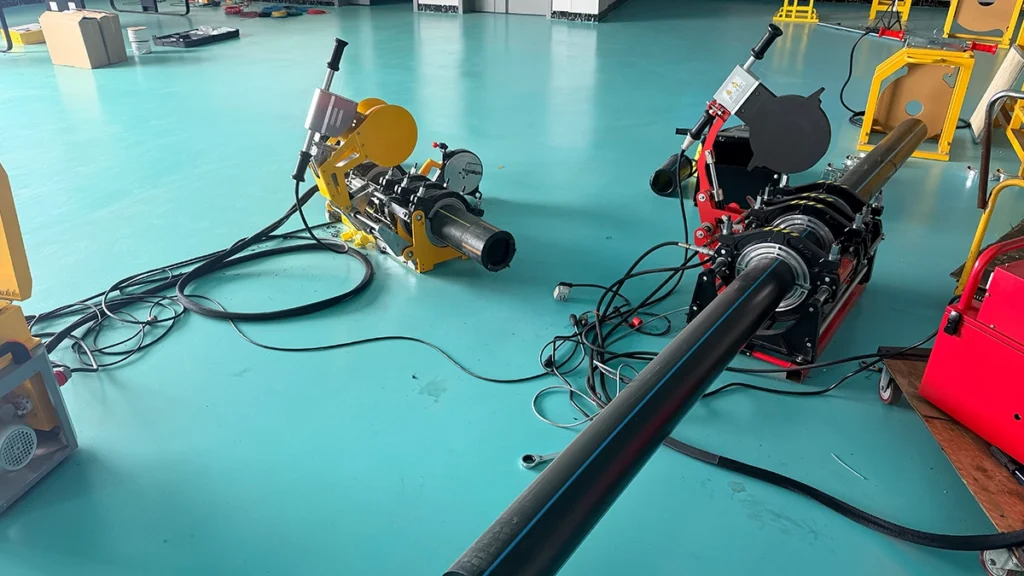
Every Ekberg HDPE pipe welding machine undergoes a rigorous FAT protocol before crating. This includes:
1. Pressure Holding Test: The hydraulic system is pressurized to max capacity (e.g., 6.3 MPa or 16 MPa) and held for 1 hour to check for leaks in seals or hoses.
2. Thermal Uniformity Check: The heating plate is measured at 9 distinct points to ensure the surface temperature does not deviate more than ±5°C from the set point.
3. Software Validation: A test weld is simulated to ensure the CNC controller records data accurately.
Buyers are encouraged to request the FAT report or witness the test via video call.
Supply chain resilience and raw material sourcing
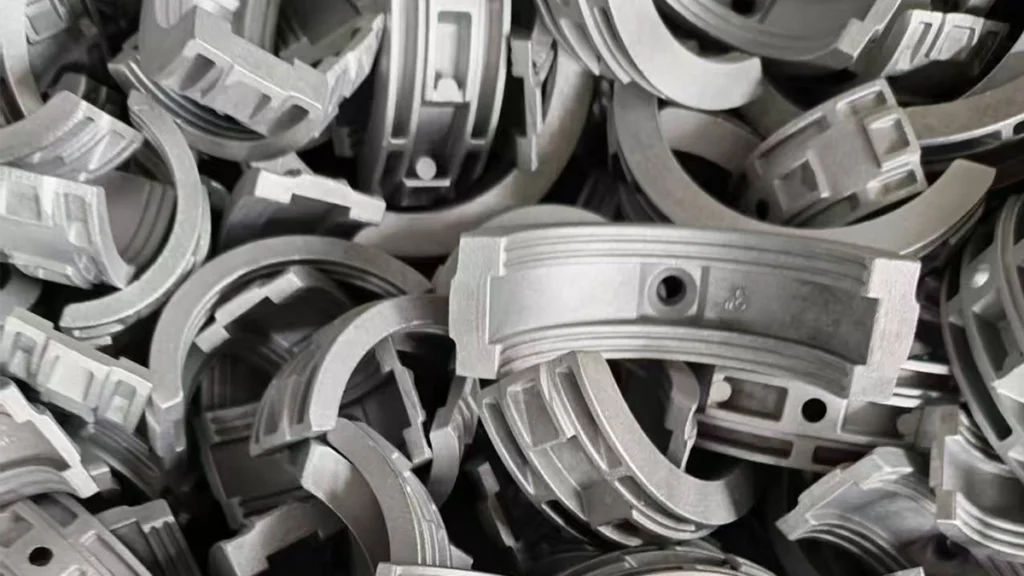
To maintain a stable HDPE pipe welding machine production lead time, Ekberg utilizes vertical integration. By manufacturing critical components like the aluminum clamps, chassis frames, and cutting discs in-house rather than outsourcing, the factory is less vulnerable to external supply chain disruptions. This control allows Ekberg to adapt quickly to custom orders and maintain the “Ready to Ship” inventory for standard models.
After-sales support: Remote troubleshooting and spare parts logistics
When a HDPE pipe welding machine goes down on a remote job site, speed is everything. Modern CNC automatic butt fusion machines are equipped with PLC systems that can often be diagnosed remotely. Ekberg’s support team can guide site engineers through troubleshooting via video call within 24 hours. For hardware issues, critical spare parts like hydraulic seals, temperature sensors, and facer blades are kept in stock and can be dispatched via courier (DHL/FedEx) to reach most global destinations within 3–5 days, minimizing downtime.
—
Frequently Asked Questions
Q1: What are the most secure payment terms for a first-time international order of an automatic HDPE pipe welding machine?
For first-time orders, the most balanced and secure method is a 30% T/T deposit to start production, with the 70% balance paid via T/T after a successful video Factory Acceptance Test (FAT) but before shipment. For very large orders (>$50,000), an Irrevocable Letter of Credit (L/C) is recommended as it provides a bank guarantee that protects both the buyer’s funds and the seller’s payment.
Q2: How does Ekberg ensure fast delivery HDPE pipe welding machine suppliers can meet tight project deadlines?
We achieve speed through a “Safety Stock” strategy. We keep finished units of popular sizes (DN160, DN250, DN315) crated and ready in our warehouse. This allows us to bypass the standard 7-10 day production cycle and ship within 48 hours of payment confirmation. For custom units, our vertically integrated manufacturing ensures we aren’t waiting on external subcontractors for parts.
Q3: What is the typical HDPE pipe welding machine production lead time for a custom voltage unit (e.g., 415V 60Hz)?
While standard voltage models are often in stock or produced in 7-10 days, custom voltage units (such as 415V/60Hz for specific Commonwealth markets) typically require an additional 5–7 working days. This extra time is needed to source and install specific electric motors and heating elements, and to perform extended testing to ensure the electrical components remain stable under the specific frequency load.
Q4: Can I inspect the ready to ship HDPE pipe welding machine before making the final balance payment?
Absolutely. We encourage all buyers to perform an inspection. You can either visit the factory in person, hire a third-party inspection agency (like SGS or Bureau Veritas), or schedule a live video inspection where our technicians will operate the specific butt fusion welding machine allocated to your order, demonstrating pressure holding and heating functions in real-time.
Q5: What documentation is provided for customs clearance (HS Codes, Commercial Invoice, Packing List)?
We provide a full export documentation suite to ensure smooth customs clearance. This includes the Commercial Invoice, Packing List, Bill of Lading (or Airway Bill), and the Certificate of Origin if required. We also provide the specific HS Code (typically 8515.80 for plastic pipe welding machine) and CE certificates to prove compliance with safety standards, facilitating faster import processing.
—
Conclusion
Successfully procuring HDPE pipe welding machine for international projects requires a balance of financial prudence, technical verification, and logistical strategy. By understanding the protective mechanisms of L/C payments versus the speed of T/T transactions, and by leveraging Incoterms to manage cash flow, buyers can mitigate the risks associated with cross-border trade. Furthermore, selecting a manufacturer that offers transparent HDPE pipe welding machine delivery time schedules and robust FAT protocols ensures that the equipment arriving on site is ready to perform to ISO 21307 standards immediately.
Don’t let procurement uncertainty delay your pipeline infrastructure project. Contact Ekberg Welding today to request a proforma invoice, check our current inventory of ready to ship units, and discuss a secure payment structure tailored to your business needs.