
HDPE Pipe Welding Machine Manufacturer Guide: Types, Uses & Equipment
Table of Contents
Securing a certified HDPE pipe welding machine manufacturer—one that guarantees sustained 220°C heating and precise 0.2 MPa automated fusion pressure—is your front line against catastrophic joint failures in high-pressure networks. Make the wrong supplier choice, and you will bleed thousands of dollars on a single failed DN400 joint through messy excavations, scrapped materials, and endless rework. This guide breaks down the exact specifications you need for flawless HDPE fusion. We will walk through essential equipment types spanning the DN50 to DN1200 range. You will see how to hit strict welding standards like ISO 21307 and exactly how upgrading to automated CNC systems drives up your ROI. Read on to build a bulletproof procurement framework tailored for municipal gas, heavy-duty mining, and industrial water projects. By following this technical roadmap, you can dodge expensive specification blunders, slash your liability risks, and lock in long-term profitability through smart, factory-direct partnerships.

Types of Equipment from Top Pipe Welding Machine Manufacturers
Compare manual vs hydraulic vs CNC automatic butt fusion machines
HDPE pipe welding machine automation directly drives your project speed and joint reliability. Sure, manual butt fusion machines work fine for small-diameter, low-pressure jobs. But they simply lack the pinpoint precision demanded by critical municipal infrastructure. Step up to hydraulic butt fusion machines, and you gain serious mechanical muscle. These units leverage heavy-duty hydraulic cylinders to hold consistent fusion pressure across the entire DN40 to DN2600 spectrum. Yet, when contractors need bulletproof reliability and strict compliance, they turn to CNC automatic butt fusion machines.
These advanced systems wipe out human error. By combining a Programmable Logic Controller (PLC) with an intuitive touchscreen Human-Machine Interface (HMI), they automatically calculate and apply the precise drag pressure, soak time, and cooling pressure for your specific pipe diameter and SDR rating. Plus, CNC units come with built-in data logging. They record every single weld parameter, delivering the full traceability that modern municipal utility contracts demand.
Equipment Automation Comparison
| Feature | Manual Butt Fusion | Hydraulic Butt Fusion | CNC Automatic Butt Fusion |
|---|---|---|---|
| Diameter Range | Up to DN250 | DN40 – DN2600+ | DN63 – DN630 |
| Pressure Control | Operator reliant | Hydraulic valves | Automated PLC control |
| Data-Logging | None | Optional add-on | Integrated standard |
| Best Application | Non-pressure irrigation | Standard water mains | High-pressure gas/mining |
Detail electrofusion welder specifications
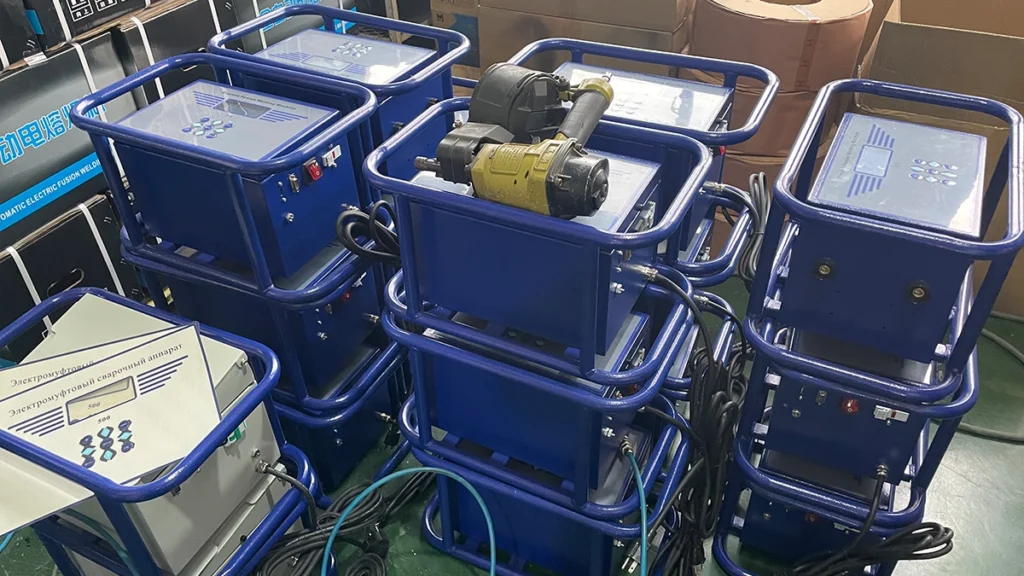
Electrofusion welding creates a permanent molecular bond by energizing heating coils embedded right inside the fitting. To do this safely, industrial-grade electrofusion welders run exclusively on 220V AC mains. They tightly regulate the output voltage to hit the industry sweet spot of 39.5V to 40V. Never hook these units up to 380V three-phase power. Doing so will trigger immediate, catastrophic equipment failure.
Today’s high-end electrofusion units also pack optical pen or laser barcode scanners. The operator simply scans the fitting’s barcode, and the hdpe fusion machine instantly locks in the correct voltage, heating time, cooling duration, and resistance values. No guesswork. No manual entry. Pair this smart technology with premium fittings that hold an ovality of <5‰dn, and you guarantee a flawless joint every single time—even when battling cramped, muddy trench conditions.
Clarify the distinction between metal orbital pipe welding machine uses and automated CNC plastic pipe welding
Procurement teams often mix up HDPE pipe welding machine uses with automated plastic pipe welding. Let’s clear the air: these two technologies dominate completely different industrial sectors. Orbital welding spins a Tungsten Inert Gas (TIG) or Metal Inert Gas (MIG) arc around a stationary metal pipe. You will find this process building high-purity stainless steel lines for semiconductor plants, aerospace projects, and pharmaceutical labs.
Automated CNC plastic pipe welding, on the other hand, deals exclusively with thermoplastics like HDPE and PP. Forget electric arcs. These butt fusion welding machines rely on highly controlled PTFE-coated heating plates and massive hydraulic pressure. The CNC brains behind plastic welding track joint parameters across a full 360 degrees. They automatically spit out DVS-compliant reports, proving beyond a doubt that your heating times, fusion pressures, and cooling durations perfectly match the strict engineering tolerances required for underground infrastructure.
Explain the role of multi-angle fitting welding machines
Butt fusion machines do the heavy lifting for straight pipe runs. However, workshop fabrication demands specialized multi-angle fitting welding machines. Engineers design these stationary workhorses specifically to build precise tees, elbows, crosses, and Y-branches out of segmented HDPE or PP pipes.
Premium workshop machines feature auxiliary markers and highly sensitive insertion depth controls. Why does this matter? Because pinpoint precision stops over-fusion dead in its tracks. It prevents the internal plastic bead from restricting fluid flow and stops the pipe ends from deforming during the heating cycle. Fabricating custom fittings in a controlled shop environment allows contractors to slash the massive costs associated with buying pre-molded, large-diameter fittings. Best of all, you maintain the exact same pressure ratings for the final pipeline assembly.
Essential Accessories for the Best Industrial Pipe Welding Equipment
Define the critical importance of pipe scrapers
You cannot achieve a flawless molecular bond during electrofusion without pristine pipe surfaces. The German DVS 2207-1 standard pulls no punches here: you must remove a 0.2mm oxidation layer from the pipe’s exterior before you even think about welding. Leave that UV-degraded polymer layer intact, and you will end up with a weak, brittle joint that is practically guaranteed to fail under hydrostatic pressure.
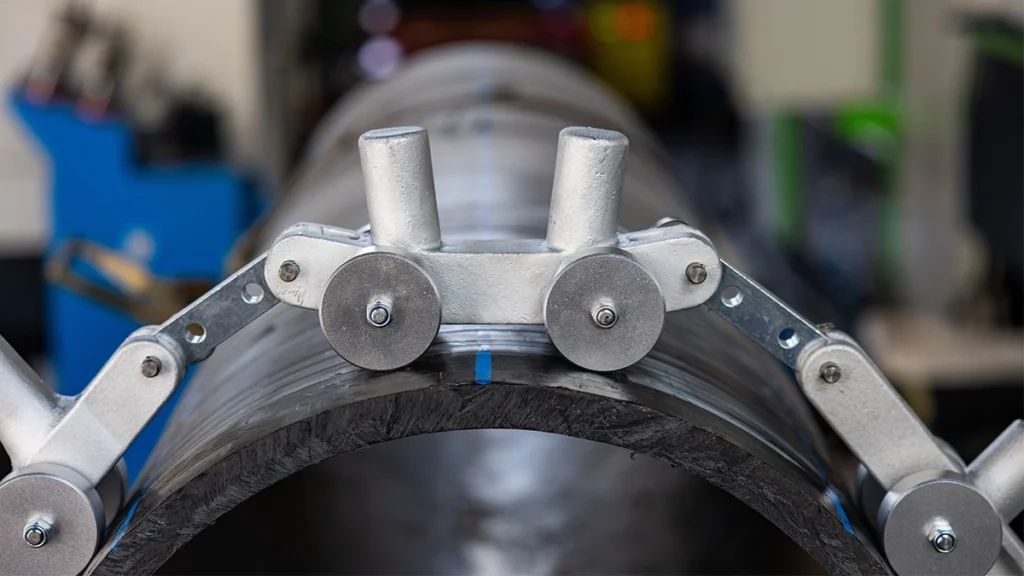
Professional-grade rotational pipe scrapers are your ticket to strict compliance. Throw away those manual hand scrapers—they just leave the surface gouged and uneven. Instead, mechanical external scrapers use high-strength, replaceable blades to peel off a continuous, perfectly uniform layer. The best lightweight models need just 150mm of radial clearance. This makes them absolute lifesavers for tight, in-trench preparations where excavation space is at a premium.
Compare guillotine cutters vs rotary pipe cutters
A perfect butt fusion joint always starts with a perfectly square cut. Once you move past DN63 pipes, mechanical cutters become absolute necessities. Guillotine cutters step up to the plate with durable, non-stick coated blades. Powered by either manual levers or hydraulic rams, they slice cleanly through thick-walled HDPE pipes. The result? A pristine, square face that aligns perfectly against the heating plate, completely eliminating high-low mismatch.
Rotary pipe cutters tackle a different challenge: confined spaces. These tools need a mere 6 to 8 inches of clearance. They use a sharp cutting wheel that tracks smoothly around the pipe’s circumference. If you are doing in-trench repairs, rotary cutters are your best friend. They slice through large-diameter HDPE pipes without producing a single plastic shaving, ensuring your weld zone and internal fluid stream remain completely uncontaminated.
Detail heating plate and PTFE coating specifications
Think of the heating plate as the thermodynamic engine of the butt fusion process. When working with standard PE100 materials, this plate must hold a rigid surface temperature between 200°C and 220°C. (You might push it to 230°C if you are battling freezing weather or exceptionally thick pipe walls.) Temperature uniformity across the entire face is non-negotiable. A single cold spot causes incomplete melting. A hot spot destroys the polymer chain.
To stop molten plastic from sticking like glue to the bare metal, engineers coat these heating plates with industrial-grade Polytetrafluoroethylene (PTFE). The best manufacturers don’t just spray it on; they bake on multiple layers of high-density PTFE. This guarantees resilient, non-stick performance that survives hundreds of brutal heating cycles in abrasive, dust-choked environments.
Detail the hydraulic power unit specs
A hydraulic power unit (HPU) does a lot more than just push pipe clamps back and forth. Its real job is to lock in exact fusion pressures throughout the entire, critical cooling phase. Take heavy-wall applications like SDR 9 or SDR 11 mining pipes. The required fusion pressure here is massive. If your HPU drops pressure while the cooling clock is ticking, you will ruin the joint with internal voids and severely cripple its tensile strength.
True industrial HPUs pack high-precision pressure relief valves and heavy-duty hydraulic accumulators. These specialized components guarantee a rock-solid pressure output, even when the main pump motor cycles off. The HDPE pipe welding machine’s brain constantly monitors this cooling phase. Never release that clamping fixture before the timer hits zero. Holding the pressure ensures the polymer matrix solidifies under perfect compression.
Industrial Uses and Application Scenarios
Municipal water and gas distribution networks
Municipal infrastructure leaves zero room for error. This is especially true in gas distribution, where a single leak can trigger a catastrophe. Contractors in this high-stakes sector must navigate punishing safety standards, like ISO 21307 for fusion procedures and EN 12007 for functional requirements. These rules govern plastic pipelines pushing operating pressures right up to 16 bar.
To hit these exact marks, municipal crews lean heavily on automated butt fusion and smart electrofusion machine. The built-in data logging acts as an unblinking auditor. It hands you verifiable proof that every single joint buried in the grid meets the code. Having this airtight documentation shields your contracting business from massive liability and guarantees a zero-leak network that will perform for decades.
Mining, slurry lines, and dredging operations
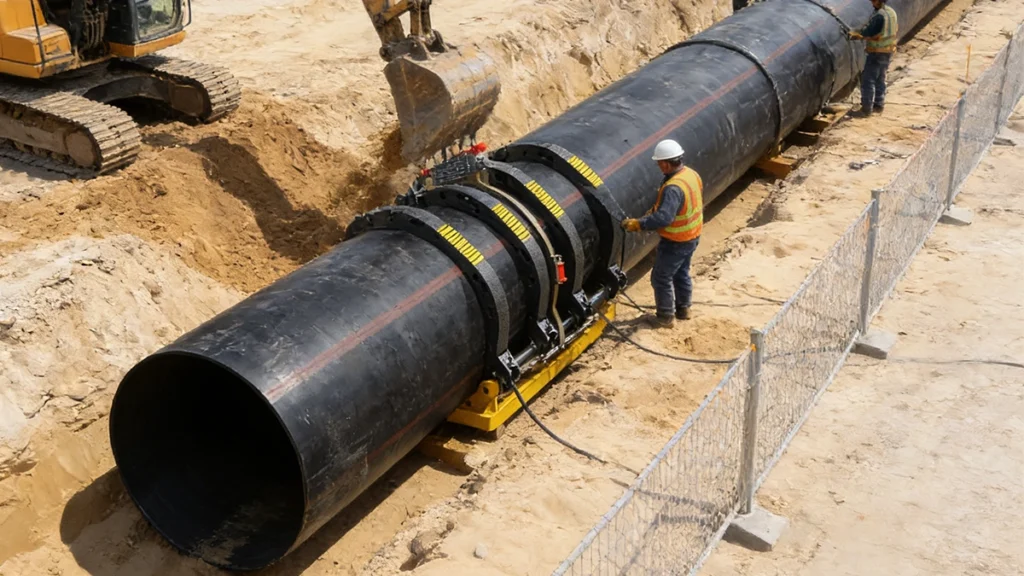
Mining and dredging sites are brutal. They subject pipelines to relentless abrasive wear and intense internal pressures. Crews rely on ultra-thick HDPE pipes for these jobs—usually SDR 9 (pushing 250 psi) or SDR 11 (rated for 200 psi). Welding these massive, unwieldy pipes demands equipment with raw hydraulic power and an unbreakable structural backbone.
HDPE pipe welding achines built for the trenches feature thick aluminum alloy chassis and chrome-plated steel rollers just to manage the crushing weight of the pipe. Beyond brute strength, this equipment must be fully ruggedized. It needs to shrug off choking dust, violent impacts, and wild temperature swings without ever losing the precise calibration of its PLC controls or its hydraulic pressure output.
Agricultural irrigation and industrial chemical plants
Sprawling agricultural irrigation systems and massive industrial chemical plants require miles upon miles of continuous piping. Out here, your daily joint output dictates the entire project timeline. If you want to keep momentum high and labor costs low, partnering with top-tier automatic HDPE pipe welding machine suppliers is your only viable move.
Automated machinery slashes the time spent on every single weld cycle by perfectly optimizing both heating phases and changeover speeds. Deploying CNC equipment allows your crews to crank out an incredibly high daily joint count. You will drastically cut down your labor hours per mile, ultimately accelerating the final commissioning of that irrigation network or chemical processing facility.
Buyer Checklist: Choosing the Right Pipe Welding Machine Manufacturer
Evaluate R&D capability and automation technology
As you size up different pipe welding machine manufacturers, look straight at their automation technology. Standard manual butt fusion machines force you to rely on an operator’s gut feeling to regulate pressure and time. That is a fast track to inconsistent bead formation and overlapping, defective welds.
True industry leaders invest heavily in R&D to deliver robust CNC automated welding systems. These smart butt fusion welding machines lock out manual overrides during the most critical fusion phases, effectively neutralizing human error. They also deliver mandatory data logging. Project managers can simply plug in a USB, download the day’s weld reports, and instantly verify that every joint clears the strict bead inspection criteria (calculated exactly as 0.1 × pipe wall thickness + 0.5mm).
Buyer Selection Criteria Checklist:
- Verify barcode scanning capability for automatic parameter input on EF units.
- Confirm the hydraulic unit provides continuous pressure via accumulators during the cooling phase.
- Ensure the fusion equipment generates DVS 2207 or ISO 21307 compliant weld reports.
- Check that fitting ovality tolerances are guaranteed at <5‰dn.
Assess supply chain stability and lead times
If you are a major pipeline contractor or an international distributor, supply chain stability matters just as much as torque specs and heating plates. You need to audit the factory’s actual production capacity. Can they deliver a massive fleet order without dragging out timelines and stalling your project kick-off?
A premier factory-direct supplier always holds deep inventory reserves of critical components and raw materials. This operational readiness guarantees rapid assembly and rigorous testing. It drastically cuts lead times compared to smaller, fragile assemblers who cross their fingers and rely on just-in-time deliveries from unpredictable third-party vendors.
Calculate ROI for pipeline contractors
Buying the best industrial pipe welding equipment demands a long-term financial lens. Manual butt fusion welding machines might tempt you with a cheap sticker price, but they hide a massive tax: sluggish production rates and terrifying rework liabilities. CNC automatic butt fusion machines, however, deliver a vastly superior Return on Investment (ROI) across a standard 3-year depreciation cycle.
Run a high-volume HDPE pipeline project with automated gear, and you will typically see gross margins hit 18-25%, with net profits comfortably resting between 8-14%. What drives this financial leap? The relentless productivity of CNC automatic butt fusion welding machines. They wipe out catastrophic rework costs and aggressively slash the skilled labor hours required for every single joint.
Review spare parts availability and component quality
A plastic pipe welding machine is only as reliable as the parts bolted inside it. Smart buyers always demand a comprehensive bill of materials from the manufacturer. You must verify exactly where those critical electrical and hydraulic components originated.
Elite CNC and hydraulic units rely exclusively on internationally recognized hardware—think Schneider or Siemens contactors, breakers, and PLCs. High-end internals deliver incredible operational stability in the dirt and mud. More importantly, they guarantee you can source replacement parts locally, no matter where your job site is on the globe. That accessibility kills costly equipment downtime when your project is on the line.
Factory Capability, Certification & Global Support
Detail ISO 9001 and CE quality control protocols
Any pipe welding machine manufacturer worth your time operates under ironclad ISO 9001 quality management systems and carries full CE certification. Do not mistake these for mere administrative checkmarks. They represent brutal, multi-step testing protocols executed on the factory floor every single day.
Before a hydraulic butt fusion machine ever sees a shipping crate, it endures a mandatory 24-hour pressure holding test. This proves the absolute integrity of its hydraulic cylinders, hoses, and valves. Next, technicians subject the heating plates to punishing temperature calibration. They ensure the actual thermodynamic output perfectly matches the digital display, allowing zero deviation across the critical 200-230°C range.
Describe the CNC machining precision for clamps and frames
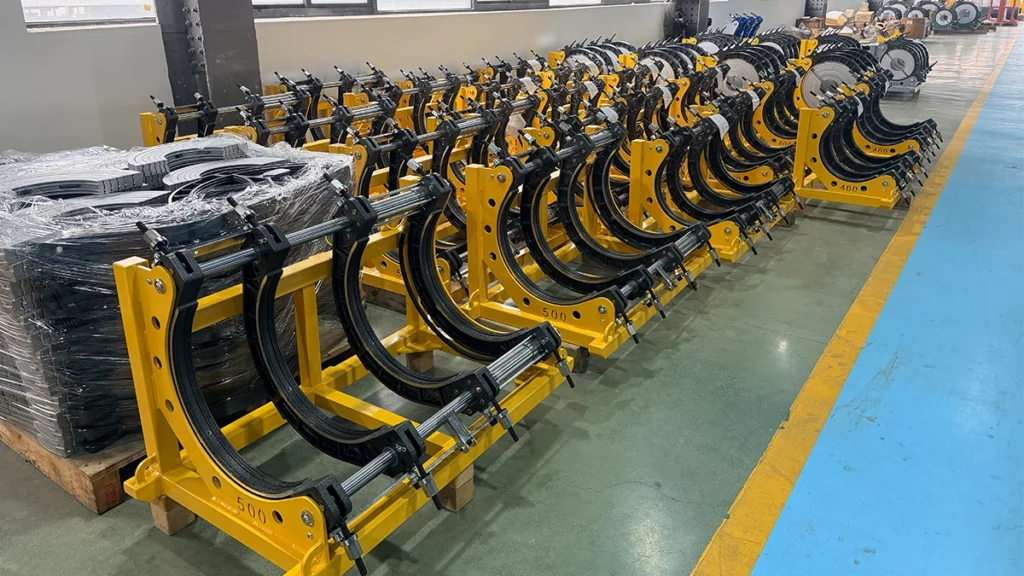
The physical alignment of your pipes relies entirely on the structural integrity of the plastic pipe welding machine frame and its clamps. Factories pour high-grade aluminum castings to build chassis components that are remarkably lightweight, yet rigid enough to survive extreme field abuse.
Precision CNC machining is the secret weapon here. It completely eliminates high-low mismatch—that fatal defect where pipe walls fail to align flush. Highly engineered clamping fixtures lock the pipes in perfect concentricity during both the heating and fusion phases. This guarantees you utilize the full wall thickness for the molecular bond, keeping internal fluid flow smooth and uninterrupted.
Outline global after-sales support and technical training
Shipping complex machinery to remote global job sites demands an unbreakable after-sales support network. The industry’s best manufacturers deliver intensive technical training directly to your field operators. They make sure your crew masters the nuances of PLC operation, barcode scanning, and critical routine maintenance—like wiping down optical lenses weekly or swapping out electrodes every 1,000 welds.
Modern advanced systems even support remote troubleshooting. Factory engineers can walk your team through diagnostic self-tests over the phone. (For example, they might instruct an operator to bypass a self-test by holding the DOWN & ENTER keys to isolate a fault.) If you are an international distributor, elite factories also provide deep OEM/ODM services, letting you fully customize equipment branding and tweak software interfaces for your local market.
Detail warranty policies and calibration services
A manufacturer’s warranty policy tells you exactly how much confidence they have in their own steel. The industry standard hovers around 12 to 24 months. However, premium builders like Ekberg shatter that baseline by offering a comprehensive 3-year warranty covering all non-human-induced damage. That single policy drastically lowers your total cost of ownership.
Beyond warranties, you have to think about traceability. To stay compliant with strict codes like ISO 21307, your CNC dataloggers and electrofusion scanners need annual calibration. Top manufacturers run dedicated calibration labs and push regular firmware updates. They ensure your gear stays flawlessly accurate year after year, keeping your contracting firm perfectly safe from aggressive compliance audits.
Frequently Asked Questions
Q1: What are the main types of equipment a pipe welding machine manufacturer supplies for HDPE?
A world-class manufacturer delivers a complete ecosystem for pipeline construction. Their lineup features hydraulic and CNC automatic butt fusion machines to handle long, straight pipe runs. They offer smart electrofusion welders designed for tight-space fittings, alongside stationary workshop butt fusion welding machines built to fabricate complex multi-angle tees and elbows. Furthermore, they supply all the critical prep gear—from rotational pipe scrapers that peel away the required 0.2mm oxidation layer, to heavy-duty guillotine and rotary pipe cutters.
Q2: Why should contractors choose automatic pipe welding machine suppliers over manual equipment providers?
Partnering with automatic pipe welding machine suppliers is the fastest way to eliminate human error and slash your liability. CNC automation takes total control of heating times, fusion pressures, and cooling durations by locking out manual overrides. Even better, these automated systems feature exhaustive data logging. They instantly generate verifiable, DVS-compliant reports for every single joint. In today’s landscape of municipal gas and water utility contracts, that level of traceability is an absolute requirement.
Q3: What is the difference between orbital pipe welding machine uses and plastic CNC welding?
HDPE pipe welding machine uses apply strictly to high-purity metal piping. They rotate a TIG or MIG arc around stainless steel lines, typically inside pharmaceutical labs or semiconductor facilities. CNC plastic welding is an entirely different beast. It uses PTFE-coated heating plates and intense hydraulic pressure to fuse thermoplastics like HDPE. The “CNC” label here refers to the hdpe welding machine’s ability to automate pressure control and track joint parameters across a full 360 degrees during polymer fusion.
Q4: How do I select the best industrial pipe welding equipment for a large mining project?
Mining operations force you to handle thick-walled SDR 9 or SDR 11 pipes in incredibly harsh conditions. To survive here, the best industrial pipe welding equipment must feature heavy-duty aluminum alloy frames, massive diameter capabilities (like DN315–DN800), and highly robust hydraulic power units. Always verify that the hydraulic system relies on accumulators. You need that technology to sustain continuous, high-pressure output during the agonizingly long cooling phases required for massive pipe walls.
Q5: What makes Ekberg Welding a reliable pipe welding machine manufacturer?
Ekberg Welding separates itself from the pack by combining factory-direct pricing with rigorous, CE-certified quality control and premium international components. Before shipping, every single butt fusion welding machine must pass a grueling 24-hour pressure holding test and strict temperature calibration. On top of that, Ekberg backs their equipment with a rock-solid 3-year warranty, advanced CNC automation with built-in data logging, and comprehensive global support. This ecosystem guarantees lifetime pipeline integrity while maximizing your contracting profitability.
Conclusion
Protecting the integrity of high-pressure utility, mining, and industrial networks begins long before your crew lays the first pipe. It starts the moment you procure your equipment. Carefully evaluating and selecting a certified pipe welding machine manufacturer stands as the single most critical decision a pipeline contractor makes. Get it right, and you guarantee lifetime joint integrity, block catastrophic leaks, and fiercely protect your profit margins. When you invest in a fully compatible equipment ecosystem—from CNC butt fusion rigs and smart electrofusion welders to precision scrapers and rotary cutters—you destroy workflow bottlenecks. You also guarantee absolute compliance with unforgiving ISO 21307 and DVS standards.
So, whether you are upgrading to automated data-logging fleets to win lucrative municipal gas contracts, or hunting for heavy-duty machinery to wrestle SDR 9 slurry lines, factory-direct partnerships always deliver the highest ROI. Reach out to Ekberg Welding today to secure factory-direct quotes, leverage advanced technical consultation, or build custom OEM solutions. Equip your crew with the most reliable fusion technology on the market, and leave the competition in the dust.