
2026 Automatic Pipe Welding Machine Prices – Best Value Guide
Table of Contents
Introduction
Budgeting for an automatic pipe welding machine in 2026 isn’t just about comparing sticker prices; it is a calculation of risk. You have to weigh the upfront capital expenditure against the potential financial disaster of a joint failure. As raw material costs for aluminum and specialized hydraulic components remain volatile, contractors facing tight margins on HDPE pipeline projects need to look past the initial invoice to understand the Total Cost of Ownership (TCO).
Whether you are fusing DN63 water lines or massive DN1600 industrial effluent pipes, the equipment’s price tag directly reflects its automation level, compliance capabilities, and long-term reliability.
In this guide, we strip away the marketing fluff to reveal the technical factors driving equipment costs—from ISO 21307 compliance to CNC automation logic. We will break down estimated price ranges for different HDPE pipe welding machine classes, analyze the ROI of automation versus manual labor, and expose the hidden logistics costs that dictate your final landed price. By the end, you’ll have a clear framework to select the right gear for your project scale and avoid costly specification mistakes that lead to downtime.
Key Factors Influencing Automatic Pipe Welding Machine Prices in 2026
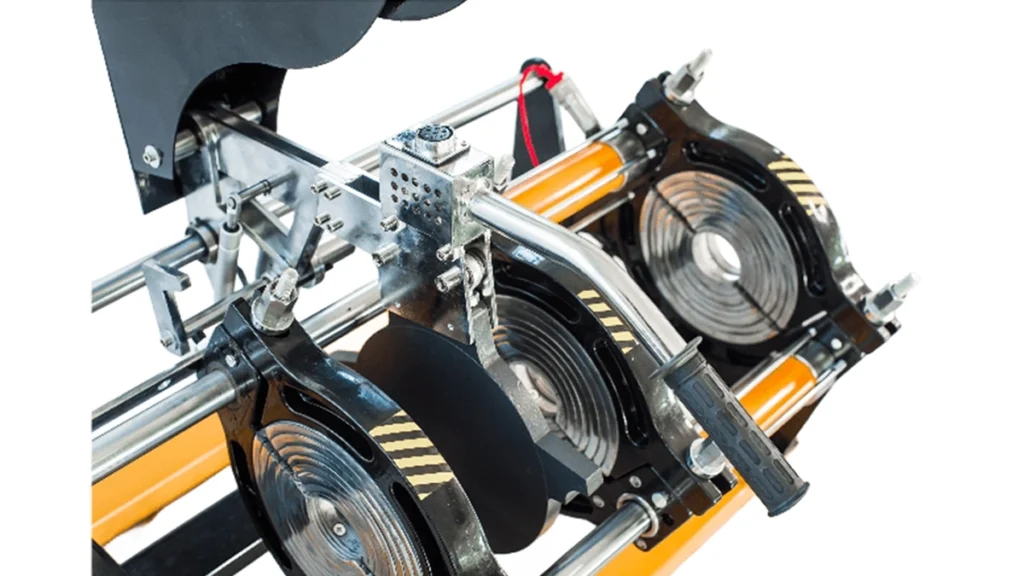
It can be confusing when two pipe welding machines of the same size have vastly different price tags. However, when you dismantle the cost structure, the disparity usually comes down to three things: the sophistication of the control system, the metallurgy of the chassis, and the rigor of the certification process.
Automation Levels: CNC vs. Hydraulic Semi-Automatic vs. Manual
The biggest cost driver is the level of human intervention required to complete a weld. A fully automatic pipe welding machine (CNC) commands a premium because it effectively replaces operator judgment with algorithmic precision. These butt fusion machines utilize PLC-based control systems that automatically calculate drag pressure, regulate heating plate temperature to within ±5°C, and control every phase of the fusion cycle (bead build-up, heat soak, dwell, and cooling).
In contrast, a semi-automatic hydraulic butt fusion machine provides the muscle (hydraulic pressure) but relies on the operator to time the phases and manually adjust valves. The price gap covers the onboard computers, pressure transducers, and displacement sensors. For example, a CNC unit includes “Fingerprint ID” access control and a Data Transfer Unit (DTU) for 4G remote transmission. This technology protects the contractor from liability, but it adds significantly to the manufacturing cost compared to a basic manual hydraulic pump.
Component Quality and Sourcing (The Internal Cost)
Beneath the paint, component sourcing dictates both the price and the lifespan of the pipe welding machine. Low-cost generic butt fusion machines often utilize sand-cast aluminum chassis. These are cheaper to make but prone to cracking under high-pressure drag forces. Premium manufacturers like Ekberg Welding utilize High-Strength Aluminum Alloy with die-casting or precision machining. This ensures the frame remains rigid even when welding SDR 11 pipes at maximum pressure.
Furthermore, the integrity of the hydraulic system drives the price. A HDPE pipe welding machine using generic seals and unbranded motors will be cheaper initially but may suffer from pressure drops during the critical cooling phase. High-quality automatic pipe welding machines integrate imported hydraulic seals and calibrated motors (e.g., 0.75 kW to 2.2 kW depending on size) that maintain consistent pressure for hours. The cost of these premium internals is reflected in the final quote, but they pay for themselves by preventing hydraulic leaks and “cold joints.”
Compliance with International Standards (ISO 21307, DVS 2207)
Compliance is a major, often invisible, cost factor. Butt Fusion Machines engineered to meet ISO 21307 (High Pressure) or DVS 2207 (German Welding Society) standards require rigorous factory calibration and design validation. Achieving the high interfacial pressures required by ISO 21307 involves robust hydraulic cylinders and a reinforced chassis design to handle the stress without deformation.
Manufacturers must invest in testing rigs to verify that heating plates maintain thermal uniformity across the entire surface (e.g., 200–230°C with <±7°C deviation). A “bargain” machine often bypasses these stringent QA checks. For utility companies and municipal projects, paying for a standards-compliant pipe welding machine is essentially buying an insurance policy against audit failures and pipeline rejections.
Ancillary Features: Data Loggers and Safety Systems
Modern infrastructure projects increasingly demand full traceability. An automatic pipe welding machine equipped with an integrated Data Logger (LDU) records every parameter of the weld—time, temperature, pressure, and operator ID—and ties it to GPS coordinates.
Integrating these electronics requires specialized software development and hardware protection, such as overload protection circuits and hydraulic accumulators that stabilize pressure during power fluctuations. While a basic pipe butt welder might lack these safeguards, an advanced automatic unit includes them to prevent catastrophic damage to the pipe or the pipe welding machine itself. The price premium here isn’t just for the hardware; it’s for the software ecosystem that allows you to generate PDF weld reports for project inspectors.
Price Guidelines by Machine Size and Type (Estimated Ranges)
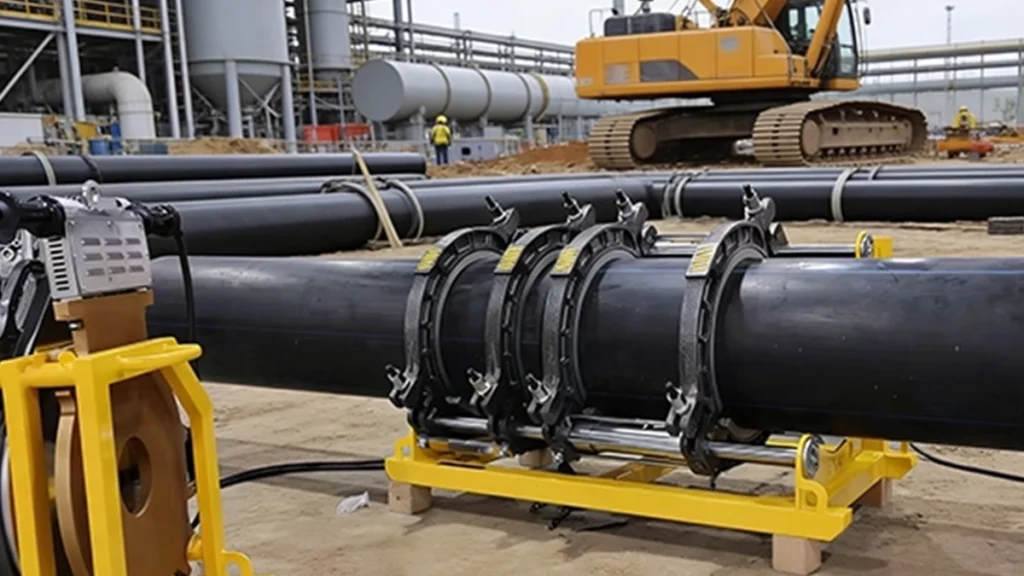
To help you budget for 2026 procurement, we have categorized price expectations based on machine capacity. Note that these are estimated ranges for high-quality equipment; “rock bottom” prices often indicate non-compliant or disposable machinery.
Small to Medium Diameter Machines (63mm – 315mm)
This range covers the bulk of residential water, gas distribution, and electrical conduit projects.
- Manual/Basic Hydraulic (160mm): Prices typically range from $600 to $1,500. These are entry-level units suitable for non-critical drainage or irrigation where data logging is not required.
- CNC Automatic (315mm): For a fully automatic butt fusion machine in the 315mm range (Total Power ~4-5 kW), prices generally sit between $1,500 and $3,500 when buying factory-direct.
- The Gap: The significant jump in price from manual to automatic in this size reflects the miniaturization of CNC technology. You are paying for the same sophisticated computer brain found in larger pipe welding machines, just mounted on a smaller chassis.
Large Diameter Industrial Machines (355mm – 1200mm)
These machines are the workhorses for municipal water mains and industrial mining applications.
- Cost Drivers: The chassis must be significantly heavier to align pipes with wall thicknesses exceeding 50mm. The hydraulic power units jump to approx. 10.7 kW total power (for a 630mm unit) to generate the necessary fusion pressure (up to 6.3 MPa system pressure).
- Price Range: Factory-direct pricing for a high-spec CNC automatic pipe welding machine in the 630mm class typically ranges from $3,000 to $15,000. Equivalent models from premium US/EU distributors can exceed $35,000, largely due to import markups and distribution layers rather than hardware superiority.
Mega-Pipeline Equipment (1400mm – 2600mm)
Machines in the 800mm to 1600mm range are essentially mobile factories.
- Engineering: A 1600mm butt fusion machine weighs over 7,000 kg and draws 53.5 kW of power. It requires a dedicated generator (min 60 kVA).
- Pricing: These are often built-to-order. Prices can range from $15,000 to $50,000+ depending on customization (e.g., crawler tracks, integrated cranes).
- Logistics: The “landed cost” is critical here. Shipping a pipe welding machine of this volume often requires Flat Rack containers or specialized crate packing, adding thousands to the final invoice.
Electrofusion vs. Butt Fusion Cost Comparison
Buyers often weigh butt fusion against electrofusion.
- Capital Cost: An electrofusion control box is cheaper ($1,000–$3,000) than a butt fusion machine.
- Operational Cost: Electrofusion machine requires a specialized coupler for *every single joint*. On a 5km pipeline, the cost of couplers (ranging from $20 to $200+ each) quickly eclipses the cost of a butt fusion machine.
- Verdict: For long pipelines, a butt fusion machine is the more economical choice despite the higher upfront equipment price, as it uses zero consumables to join the pipes.
ROI Analysis: Automatic Pipe Welding Machine Price vs. Manual Labor Costs
Smart procurement looks at Return on Investment (ROI), not just purchase price. An automatic machine is an efficiency multiplier.
Calculating Labor Efficiency and Cycle Times
On a manual machine, the “cooling time” is dead time. Operators often stand idle or, worse, release the clamps early to speed up the job, risking joint failure. An automatic pipe welding machine enforces the cooling cycle strictly but optimizes the changeover times.
- Scenario: On a 5km DN315mm pipeline, the automated retraction of the heating plate and precise pressure application can shave 2-3 minutes off the “dead time” per joint compared to manual operation.
- Impact: Over hundreds of joints, this efficiency allows a crew to complete 1-2 extra welds per day. Industry analysis suggests that one automatic pipe welding machine can match the daily output of four manual crews in complex setups, drastically reducing payroll costs.
The Cost of Human Error and Failed Welds
What is the price of a failed weld? If a joint fails during hydro-testing, the cost involves excavation equipment, crew overtime, new materials, and reputational damage.
- The Calculation: A single repair on a buried DN400 line can cost between $5,000 and $15,000.
- The Solution: A CNC machine prevents the most common errors: insufficient soak time, over-pressure, and cold fusion. If an automatic machine prevents just *one* failure in its lifetime, it has effectively paid for its price premium over a manual unit.
Data Logging and Project Bid Eligibility
In 2026, many municipal and government tenders *require* ISO 12176-compliant weld data records. Contractors owning only manual butt fusion machines are automatically disqualified from bidding on these high-value projects.
- Strategic Value: Investing in an automatic pipe welding machine with a native Data Logger is not just an operational cost; it is a market entry fee. It grants access to lucrative utility contracts that strictly mandate traceability, providing an ROI that goes beyond simple labor savings.
2026 Buyer’s Checklist: How to Validate the Price Quote
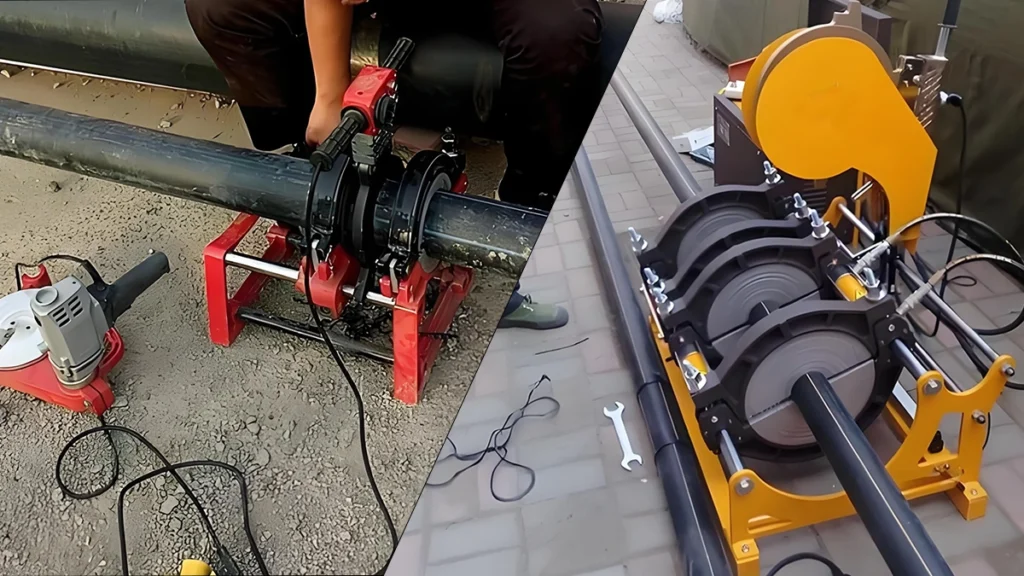
When you receive a quote for an automatic pipe welding machine, use this checklist to ensure you are comparing apples to apples.
Verifying the “Included Accessories” List
Low-ball quotes often strip out essential accessories to appear cheaper. Ensure your price includes:
- Full Insert Sets: Aluminum inserts for all pipe sizes in the range (e.g., for a 315mm machine: 160, 180, 200, 225, 250, 315 inserts).
- Planing Tool (Facer): Electric facer with safety limit switches and spare blades.
- Heating Plate: PTFE-coated plate with a dedicated storage stand to prevent damage.
- Tool Kit: Basic maintenance tools and a stub end holder for flange welding.
Warranty Terms and Spare Parts Availability
A machine is only as valuable as its uptime.
- Warranty: Look for a minimum 1-year warranty on the hydraulic station and chassis.
- Parts Support: Ask the vendor for a “wear parts list” (seals, quick couplers, fuses). If they cannot provide this or guarantee stock, the low price is a trap. Ekberg Welding maintains a global inventory of critical spares to ensure your project doesn’t stall due to a $5 seal.
Shipping, Customs, and Logistics Costs
The FOB (Free on Board) price is not what you pay.
- Freight: In 2026, container rates are volatile. A 40ft container from China to the EU or US can range from $3,200 to $5,500.
- Incoterms: Understand if the quote is FOB (you pay shipping/insurance) or CIF (Cost, Insurance, and Freight included).
- Customs: Factor in import duties. A “cheap” machine can become expensive once 25% tariffs and port handling fees are applied. Always calculate the “Landed Cost” before signing the PO.
Manufacturing Excellence & Quality Control at Ekberg Welding
Factory-Direct Pricing Model Explained
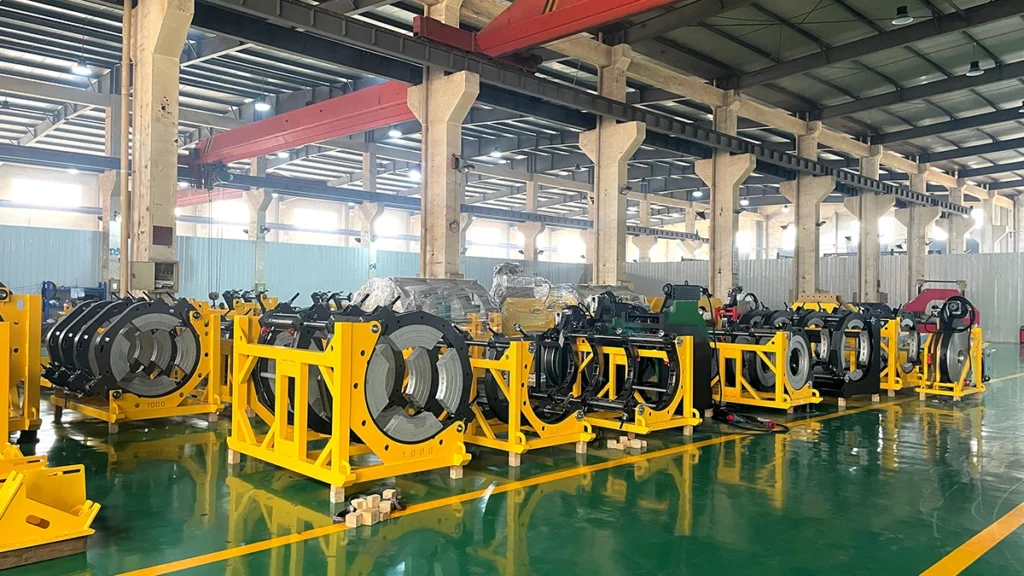
Ekberg Welding operates on a factory-direct model, eliminating the layers of distributors, wholesalers, and regional agents that typically inflate equipment prices by 30-50%. By purchasing directly from the manufacturer, buyers secure equipment that meets ISO and CE standards at a fraction of the cost of Western legacy brands, without compromising on metallurgy or control logic.
Rigorous Testing Protocols
Price is a reflection of quality assurance. Every Ekberg machine undergoes a strict testing regimen before crating:
- Pressure Holding Test: Hydraulic systems are tested at 1.5x max working pressure to ensure seal integrity.
- Thermal Mapping: Heating plates are scanned to ensure temperature uniformity remains within ±5°C.
- Chassis Stress Test: Frames are subjected to load tests to guarantee they will not warp under the force of dragging heavy pipes.
This testing reduces the likelihood of “DOA” (Dead on Arrival) equipment, saving buyers from immediate maintenance headaches.
Global Support and Training Resources
Value extends beyond the iron. Ekberg provides comprehensive after-sales support, including video tutorials, detailed operation manuals, and remote technical troubleshooting. For large-scale fleet purchases, on-site training options are available to ensure your crew is proficient in operating CNC systems, maximizing the lifespan of your investment.
Comparison: Manual vs. Automatic Capability
| Feature | Manual / Hydraulic Machine | Automatic (CNC) Machine |
|---|---|---|
| Price Range (315mm) | Low ($$) | Medium-High ($$$) |
| Operator Skill Required | High (Must calculate pressure/time) | Low (System guides process) |
| Data Logging | None / Manual Note-taking | Integrated / Cloud Upload |
| Pressure Control | Manual Valve Adjustment | Automatic Closed-Loop |
| Risk of Error | High (Human fatigue/calculation) | Near Zero (System lock-out) |
| Project Eligibility | Residential / Agriculture | Municipal / Gas / Mining |
Frequently Asked Questions
Q1: What is the average price difference between a manual and an automatic pipe welding machine?
Generally, an automatic (CNC) machine costs 2.5 to 3 times more than a basic manual hydraulic unit of the same size. For example, a 160mm manual unit might cost around $1,000, while a fully automatic version could range from $2,500 to $3,500. This premium covers the PLC computer, sensors, automated valves, and data logging hardware required for compliance.
Q2: Do automatic welding machines require expensive annual calibration?
Yes, to maintain ISO compliance, automatic machines typically require annual calibration of their pressure sensors and temperature probes. However, this cost is minimal compared to the risk of non-compliance. Ekberg machines are designed with self-diagnostic software to alert operators if sensors drift out of tolerance, ensuring you only pay for calibration when necessary.
Q3: How do shipping costs impact the final price of large (630mm+) welding machines?
Shipping is a major factor for large machines due to their volume and weight. A 630mm machine crate is bulky and heavy. While the machine price might be attractive, shipping can add 15-20% to the total cost depending on your location and current fuel surcharges. Always request a CIF (Cost, Insurance, Freight) quote to see the full picture.
Q4: Can I upgrade a manual butt fusion machine to automatic later to save initial costs?
Usually, no. While the chassis might look similar, the hydraulic station of a manual machine lacks the electronic solenoids, sensors, and computer interface ports required for automation. It is generally more cost-effective to buy the specific machine type you need rather than attempting a complex and often unsupported retrofit later.
Q5: Why do prices for the same machine size vary so much between brands?
Price variance comes down to component origin and brand premium. Western brands charge for their legacy reputation and extensive dealer networks. Low-end generic brands cut costs by using recycled aluminum and cheap seals. Ekberg offers a middle ground: premium components (imported seals, virgin alloy) at factory-direct prices, stripping out the “brand tax” while maintaining industrial quality.
Conclusion
In the landscape of 2026 infrastructure development, the “best value” is rarely found in the lowest sticker price. True value is found in a machine that guarantees compliance, reduces labor costs through efficiency, and eliminates the expensive risk of joint failure. While the upfront cost of an automatic pipe welding machine is higher than manual alternatives, the return on investment is realized through faster cycle times, reduced scrap rates, and eligibility for high-level government contracts.
Don’t leave your project budget to guesswork or risk your reputation on unproven equipment. Make a data-driven decision that secures the future of your pipeline projects.
Contact Ekberg Welding today for a transparent, factory-direct 2026 price list and a customized consultation for your specific project needs. Let us help you build a fleet that pays for itself.