
Choosing a Reliable Butt Fusion Welding Machine Factory
Table of Contents
Securing a reliable butt fusion welding machines factory in China can make or break your pipeline operations. You need better margins, sure. But you also demand zero-leak joint integrity at precise 0.15 MPa fusion pressures. Pipeline contractors and utility distributors constantly wrestle with a tough balancing act: keeping capital equipment costs down without sacrificing the welding reliability required for critical infrastructure. Pick the wrong equipment, and you pay a heavy price—failed joints, blown pressure tests, and massive delays on municipal water projects.
This guide breaks down everything you need to know. We cover butt fusion machine specifications, compliance with ISO 21307 and DVS 2207 welding standards, and how to select the right gear for different project scales. We will also dive into ROI for global buyers. You will learn how to vet manufacturers, make sense of pricing structures, and scrutinize critical engineering specs like heating plate temperature control, hydraulic stability, and CNC automation.
By the time you finish reading, you will have a rock-solid framework for sourcing DN20–DN2600 HDPE pipe welding equipment—saving you from disastrous specification mistakes during procurement.

Why Source from a Top Butt Fusion Machines Factory in China?
Butt Fusion Machine Cost & ROI Comparison
Procurement managers who analyze the butt fusion machines factory in china price immediately notice a massive drop in capital expenditure compared to Western legacy brands. Let’s look at the numbers. A premium Chinese hydraulic butt fusion machine built for DN315-630mm HDPE pipes usually runs between $600 and $3000 USD, depending on its CNC capabilities. Meanwhile, equivalent models from Swiss or American manufacturers easily blow past the $10,000 mark. Yet, both utilize similar foundational thermal and hydraulic technologies.
Run an ROI calculation over a standard three-year municipal water project, and this upfront savings flips the script on your profitability. Lower entry costs mean you can deploy multiple HDPE pipe welding machines across different job sites simultaneously, rather than choking production while crews wait on a single, overpriced unit. Operating costs per weld remain identical—you still only need electrical power. Consequently, contractors frequently hit their payback period on Chinese equipment within the first six months of active pipeline installation.
Best of all, you don’t trade savings for compliance. High-end Chinese manufacturers build equipment that hits the exact global welding parameters demanded by municipal authorities. You get the financial upside without risking project rejection or joint failure.
High-Precision CNC Machining in Modern Production
Chinese manufacturing has aggressively evolved past basic assembly lines. Today, the best butt fusion machines factory in china relies on high-precision CNC machining centers. These systems mill chassis components and clamping mechanisms to incredibly tight tolerances. Why does this matter? Because even a single millimeter of deviation throws off pipe alignment, potentially causing wall thickness mismatches that exceed the strict 10% limit during fusion.
Robotic welding now dominates the construction of main hdpe fusion welding machine frames. By automating the welding of heavy-duty chassis components, factories strip out human error. The result is deep, uniform weld penetration capable of surviving the intense pulling forces needed to drag massive HDPE pipes across rough terrain. Hydraulic stability has also taken a massive leap forward. Modern hydraulic stations utilize copper-wound motors and precision-engineered cylinder pistons (featuring areas from 2,237 mm² to 23,179 mm²). These powerhouses generate and lock in pressures up to 15 MPa, completely eliminating pressure drops during the vital cooling phase.
Thanks to these engineering upgrades, Chinese equipment easily goes toe-to-toe with established global brands in terms of durability. Closed-loop control systems lock in time, temperature, and pressure with absolute stability, effectively neutralizing the unpredictable environmental variables found on harsh construction sites.
OEM & ODM Capabilities for Custom Solutions
Teaming up with a leading manufacturer unlocks massive supply chain advantages, especially for global distributors juggling unpredictable regional demand. Top-tier Chinese factories bring serious OEM (Original Equipment Manufacturer) and ODM (Original Design Manufacturer) muscle to the table. Distributors can dictate custom butt fusion welding machine colors, specify voltage adaptations (like 110V, 220V, or 380V), and demand localized language interfaces on PLC touchscreens. You essentially build your own regional brand, fully backed by battle-tested engineering.
Need to scale fast? That is where the Chinese industrial ecosystem shines. Suppose a massive national gas network or agricultural irrigation project suddenly requires three dozen plastic pipe welding machines. A premier factory simply pivots its lean manufacturing lines to knock out that bulk order in a fraction of the time a Western competitor would need. This agility keeps projects on schedule and empowers distributors to snatch up lucrative, time-sensitive contracts.
Inventory management also gets a major efficiency boost. Predictable lead times and streamlined export logistics allow distributors to keep stock levels perfectly balanced. By mixing different butt fusion welding machine sizes in a single shipment—from small DN63 manual units to massive DN1200 CNC models—distributors slash landed costs and aggressively outmaneuver local market competitors.
Key Types of HDPE Butt Fusion Machines and Their Core Specs
Welding Pressure Specifications: Manual vs Hydraulic
Manual butt fusion machines generally handle small-diameter plumbing and indoor jobs (DN40-250mm). They rely entirely on the operator’s physical strength, using a lever or handwheel to drive fusion pressure. They are incredibly affordable—usually sitting between $500 and $1500 USD. However, they lack the mechanical muscle needed for larger, thicker-walled pipes. Operators have to guess the drag pressure and fusion force. That guesswork introduces dangerous variability, making manual units unfit for strict, high-pressure municipal applications.
Hydraulic models step in as the undisputed industry standard for medium to large infrastructure, dominating the DN160-315mm range and beyond. These beasts feature a motorized hydraulic station offering a pressure adjustment range of 0 to 6.3 MPa. Take a standard DN315 HDPE pipe (PE100, SDR11), for example. The hydraulic system lets the operator calculate and dial in the precise interfacial pressure—typically between 0.15 and 0.25 MPa. It even automatically compensates for the drag resistance of the heavy pipe string.
This hydraulic control becomes non-negotiable during the heat soak and cooling phases. Once the initial bead forms, the unit drops the pressure down to the specific dragging pressure. This prevents the molten plastic from squeezing out of the joint. Nail this controlled pressure management, and the molecular chains intertangle perfectly, creating a weld that often outlasts the pipe itself.
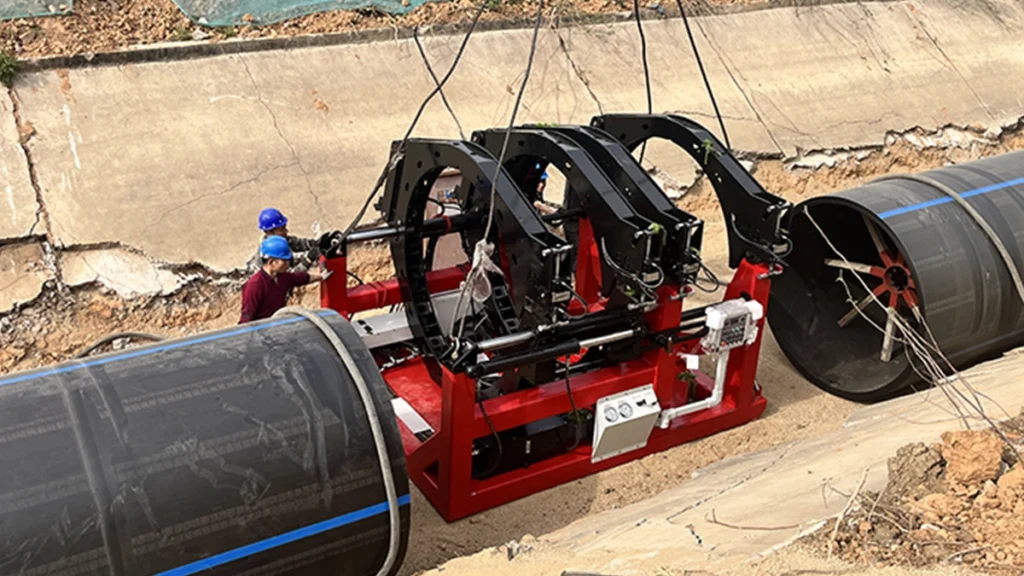
CNC/Automatic Butt Fusion Machines: Data Logging & Traceability
CNC automatic butt fusion machines sit at the absolute cutting edge of pipeline welding, currently holding a 45% share of the global market. These smart systems take human error out of the equation by fully automating the fusion cycle. The operator just punches in the pipe diameter, material grade (like PE100), and SDR rating. From there, the CNC brain takes over, automatically calculating the exact heating time, temperature, and pressure based on strict standards like ISO 21307 or DVS 2207-1.
Advanced data logging is where CNC models truly shine. To satisfy rigid utility regulations, these butt fusion welding machines record every single parameter of the weld cycle. If the heating plate temperature dips below the mandatory 210°C ± 10°C, or if hydraulic pressure wavers during cooling, the system sounds an alarm and instantly aborts the weld. You get 100% bulletproof weld traceability.
Top-tier CNC models take it a step further with integrated Beidou/GPS positioning. The hdpe fusion welding machine tags the exact geographic coordinates of every single joint and beams that data back to enterprise management systems. For gas distribution networks where a failed joint means catastrophe, this level of automated, verifiable quality control isn’t a luxury—it is a strict requirement.
High-Load Frame Design for Large Plastic Pipe Welding
Fusing large-diameter pipes—ranging from DN1000mm to DN2600mm, with custom builds pushing 2000mm or even 3000mm—demands extreme engineering. In mining and municipal utility applications, the sheer dead weight of a 1000mm HDPE pipe creates brutal drag resistance. To fight this, manufacturers drastically scale up the hydraulic cylinder piston areas, pushing them as high as 23,179 mm² to generate massive clamping and pulling forces.
The butt fusion machine’s chassis and clamping mechanisms must shrug off severe job-site abuse. Standard steel simply doesn’t cut it; it is too heavy and tends to flex under extreme tension. Premium manufacturers solve this by utilizing aviation-grade Aluminum Alloy ZL104. This material delivers a lightweight, ultra-rigid skeleton that keeps pipes perfectly aligned during high-pressure fusion.
Power demands also skyrocket. A DN1200mm model requires a serious electrical backbone, usually demanding a 380V, 50Hz power supply. The massive heating plate alone pulls 22.5 KW to guarantee uniform heat across its vast surface area, while the milling cutter and hydraulic station draw 3.0 KW apiece. Safely managing these intense power loads requires heavy-duty insulation protocols and industrial-grade electrical contactors.
Equipment Comparison: Manual vs. Hydraulic vs. CNC Automatic
| Specification | Manual Machines | Hydraulic Machines | CNC Automatic Machines |
|---|---|---|---|
| Optimal Pipe Range | DN40 – DN250mm | DN40 – DN2600mm | DN63 – DN630mm |
| Pressure Control | Human physical force | Manual hydraulic valve | Closed-loop automated |
| Data Logging | None | Optional add-on | Fully integrated (GPS enabled) |
| Standard Compliance | Basic plumbing | ISO 21307 / DVS 2207 | Strict ISO/DVS with traceability |
| Primary Application | Indoor plumbing, light ag | Municipal water, industrial | High-pressure gas, critical utility |
Essential Buyer Checklist: How to Choose the Best Manufacturer
Specification Analysis: Heating Plates on Ekberg Butt Fusion Machines
The heating plate acts as the thermal heart of your butt fusion welding machine. When vetting suppliers, confirm that the heating plate temperature control spans 0-300°C. You need a highly sensitive electronic thermostat that holds deviations tight—ideally between ≤±3°C to ±5°C. For standard PE100 HDPE, the plate must lock in at a steady 200-230°C. Uniform temperature is non-negotiable; cold spots cause brittle, weak welds, while hot spots destroy the polymer structure.
Next, scrutinize the surface coating. A premium multi-layer Polytetrafluoroethylene (PTFE) Teflon film is absolutely mandatory. It stops molten plastic from sticking, ensuring a flawless release during the critical changeover phase.
Pressure Holding Stability in Hydraulic Units
The performance of your hydraulic unit directly dictates the structural integrity of your weld. Dig into the system’s pressure-holding stability. It must maintain the precise MPa required throughout the long cooling phase without forcing the motor to run continuously. Always specify copper-wound motors.
They deliver vastly superior thermal resistance and longevity compared to cheap aluminum-wound knockoffs. Do not forget to ask where the internal hydraulic valves and quick connectors come from. Flat-type quick connectors handle environmental grit much better, and CE-certified valves guarantee the system can safely push the 60+ bar of interfacial pressure demanded by elite welding standards.
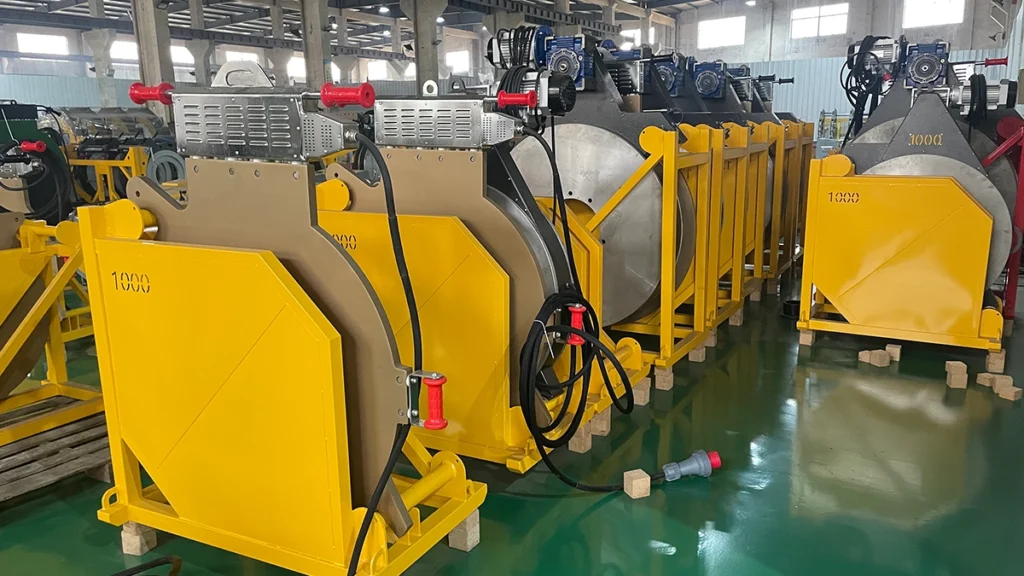
Chassis & Clamping Systems: Aluminum vs Steel Performance
Your butt fusion welding machine’s physical framework has to survive brutal site conditions. Look closely at the chassis materials. Aviation-grade Aluminum Alloy ZL104 easily beats standard cast iron or low-grade steel. Its incredible strength-to-weight ratio fiercely resists job-site deformation. This rigidity is the secret to alignment precision. If your clamps flex while hydraulically pulling two massive pipes together, the ends will misalign, and the inspector will reject the weld. Also, verify that the clamps use wide-surface grips. This design evenly distributes the crushing clamping force, preventing deep scores on the pipe’s exterior.
Warranty & After-Sales Support: Global Service Capabilities
Killer hardware specs mean absolutely nothing if the after-sales support falls short. The top butt fusion machine manufacturers in china, like Ekberg Welding, back their gear with a standard 1-year warranty and a commitment to lifetime maintenance. Dig into their spare parts availability. Wear items like electric milling cutter double-edged blades (which should be forged from high-quality tool steel) must be readily available for quick shipment.
Ensure the factory supplies professionally translated English technical manuals and intuitive PLC interfaces. Finally, ask about remote troubleshooting. Modern CNC systems should monitor themselves, triggering specific error codes that allow factory engineers to diagnose problems instantly via video call. This slashes field downtime to a minimum.
Quick Buyer Selection Checklist
- Thermal Precision: Multi-layer PTFE-coated heating plate featuring a ≤±5°C temperature deviation.
- Structural Integrity: Chassis and clamps forged from aviation-grade aluminum (ZL104).
- Hydraulic Power: Base standard pressure range of at least 6.3 MPa, driven by CE-certified valves.
- Traceability: Fully integrated data logger capable of storing a minimum of 1000 welds (for CNC models).
- Support: A solid 1-year warranty, fast parts dispatch, and crystal-clear English technical documentation.
Ekberg Welding: Manufacturing Excellence, Quality Control & Global Support
Factory Infrastructure: Production & Lean Manufacturing
Ekberg Welding runs a cutting-edge, ISO 9001 certified production facility engineered to handle intense global industrial demand. Their manufacturing backbone relies on ruthless raw material inspection protocols. Before a single piece of ZL104 aluminum alloy, hydraulic hosing, or electrical circuitry hits the assembly line, it faces severe metallurgical and electrical scrutiny. By weaving modern lean manufacturing processes into their daily operations, the factory slashes waste, speeds up assembly, and guarantees every hdpe fusion welding machine meets incredibly tight engineering tolerances. This systematic rigor ensures flawless product quality, whether they are building a bespoke custom unit or knocking out a massive wholesale order.
QA/QC Testing Protocols: Pre-Shipment Validation Standards
At Ekberg, quality assurance isn’t a final checkbox—it is baked into the entire production cycle. Before any butt fusion welding machine gets the green light for export, it survives a punishing battery of QA/QC tests. Engineers run hydraulic pressure overload tests, pushing cylinders and valves to their absolute breaking points (frequently blowing past 15 MPa on heavy-duty models). This proves seal integrity and stops catastrophic blowouts in the field. Next come electrical safety insulation checks on the 380V/50Hz systems.
These tests validate the equipment’s IP54 protection rating, ensuring operators stay safe even in soaked, muddy trenches. Finally, technicians deploy thermal cameras for uniform temperature calibration, verifying the PTFE heating plate maintains a flawless ±3°C variance from edge to edge.
Highlight global export and certification capabilities: Document CE/RoHS compliance, EN 12007 alignment, and localized support structures for utility companies and gas distribution networks.
Regulatory red tape is a massive headache for utility companies and international distributors. Ekberg Welding clears this hurdle instantly with robust global export and certification credentials. Every piece of equipment ships fully CE and RoHS compliant, perfectly aligning with strict European health, safety, and environmental protection laws. Furthermore, the butt fusion machines meet EN 12007 requirements for gas infrastructure, generating the verifiable weld data you need to get municipal sign-offs. To back up this global reach, the factory builds localized support structures. This means regional gas distribution networks get rapid parts delivery and technical assistance explicitly tailored to their local regulatory environments.
Outline engineering support: Describe custom tooling capabilities, flange adapter solutions, and dedicated technical support for complex agricultural irrigation or industrial plant installations.
The best manufacturers do a lot more than just pump out standard butt fusion welding machines; they engineer solutions for unique field nightmares. Ekberg provides deep custom tooling capabilities. Need specific clamp inserts for oddball pipe diameters? Or specialized flange adapters to marry a new HDPE pipeline to aging steel infrastructure? They can design and hdpe fusion welding machine it. For massive, complex jobs—think sprawling agricultural irrigation grids or high-temp industrial chemical plants—dedicated technical support teams work directly with your project engineers. They help map out optimal welding parameters and equipment setups. You aren’t just buying a piece of hardware; you are securing a comprehensive, engineered pipeline joining system.
Pricing Breakdown: Understanding the Costs of Chinese Butt Fusion Welders
Cost Breakdown by Welding Range
To truly grasp the butt fusion machines factory in china price, you have to look at the scale of the hardware. For indoor installations and light plumbing (the DN63-250mm range), manual or light-duty hydraulic units are incredibly budget-friendly. You will typically spend between $600 and $1,500 USD. These smaller units simply require less raw material and utilize basic electrical components. On the flip side, heavy-duty municipal rigs built for DN1000-2600mm HDPE pipes demand a much heavier capital investment, usually landing between $8,000 and $50,000+ USD.
The price jump makes sense when you factor in the massive blocks of aviation-grade aluminum needed for the chassis, the huge hydraulic cylinders (boasting up to 23,179 mm² piston areas), and the heavy-duty 22.5 KW heating plates required to melt thick-walled utility pipes.
Price Impact of Automation: Hydraulic vs CNC Systems
Automation is the second biggest driver of cost. The price gap between a standard hydraulic model and a fully automated CNC system comes down to the sophisticated electronics packed inside. Stepping up to a CNC automatic butt fusion machine means paying for high-precision pressure sensors, imported proportional hydraulic valves, responsive PLC touchscreens, and integrated Beidou/GPS data loggers. These smart components easily add several thousand dollars to the baseline manufacturing cost. But if you are a contractor bidding on high-pressure gas lines or tightly regulated municipal water networks, this premium pays for itself rapidly. It eliminates manual logging labor, drastically reduces the risk of ruined welds, and guarantees compliance with unforgiving TSG D2002-2006 standards.
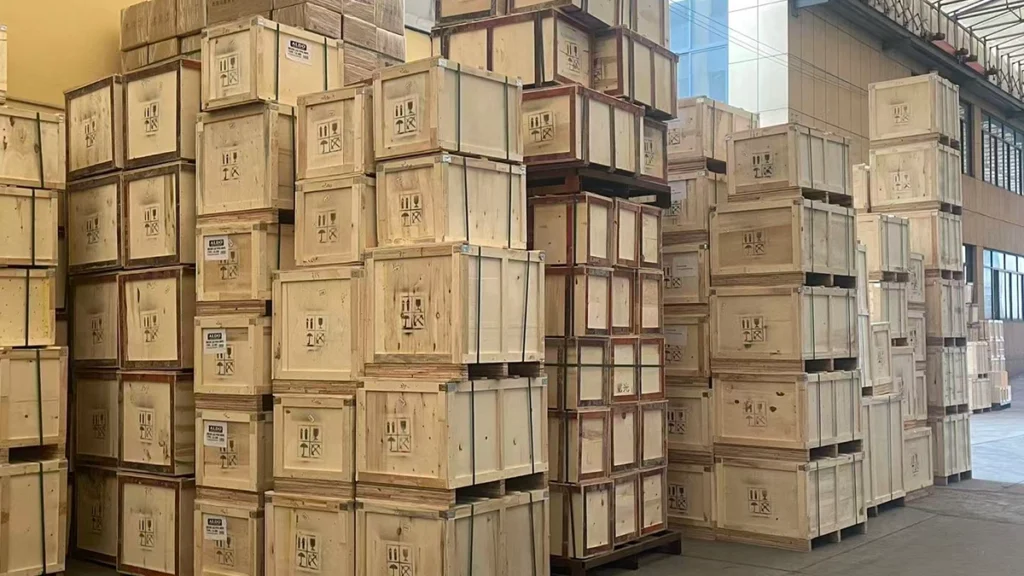
Analyze logistics and bulk purchasing: Outline how import duties, shipping volumes (LCL vs FCL), and wholesale distributor discounts impact the final landed cost of an hdpe butt fusion machines factory in china.
Your purchasing strategy and logistics heavily dictate the final landed cost of gear from an hdpe butt fusion machines factory in china. Shipping volume is the biggest lever you can pull. Buying a single butt fusion welding machine via Less than Container Load (LCL) hits you with higher per-unit freight and handling fees. Smart distributors consolidate their orders into Full Container Loads (FCL) to crush their per-unit shipping costs.
Top factories also reward volume, offering tiered wholesale discounts based on annual commitments. You still have to factor in local import duties and taxes, of course. However, the remarkably low FOB price of Chinese equipment ensures that, even after freight and tariffs, your total landed cost remains aggressively competitive against domestic Western brands.
Frequently Asked Questions
Q1: How do I verify the reliability and technical E-E-A-T of an hdpe butt fusion machines factory in china before ordering?
A: Start by cross-referencing their engineering specs against strict international standards. Demand hard documentation proving their heating plates maintain a ≤±5°C deviation, and ask to see their ISO 9001 and CE certificates. A trustworthy factory will gladly open the books on their hydraulic cylinder piston areas, where they source their electrical components, and their internal QA/QC testing protocols. Transparency proves technical authority.
Q2: What is the standard manufacturing lead time for wholesale or OEM orders from top Chinese suppliers?
A: Most factories keep standard hydraulic butt fusion machines in stock, allowing for rapid dispatch within 7 to 10 days. If you need custom OEM work—like specific voltages, branded paint jobs, or fully automated CNC rigs—expect lead times to stretch between 20 and 35 days. Thankfully, their lean manufacturing setups allow them to scale up incredibly fast if you have an urgent infrastructure project.
Q3: Are machines from a butt fusion machines factory in China fully compatible with strict ISO 21307 and DVS 2207 safety and performance standards?
A: Absolutely. Tier-1 Chinese manufacturers specifically engineer their gear to nail ISO 21307 (for global water and gas) and DVS 2207-1 (the gold standard for German high-precision welding). Their CNC models automatically calculate drag pressures, heat soak times, and cooling phases exactly as these standards demand, ensuring zero compliance issues.
Q4: How do leading butt fusion machine manufacturers in China handle international warranties and replacement parts?
A: Elite manufacturers back their equipment with a solid 1-year warranty covering non-human-induced damage, plus lifetime technical support. They stockpile critical wear parts—like PTFE-coated heating plates, milling cutter blades, and hydraulic seals—and dispatch them globally via DHL or FedEx air freight to keep your field downtime to an absolute minimum.
Q5: Can I request customized electrical voltages (e.g., 110V/220V/380V) and specific brand colors for my local market?
A: Yes, you can. Premier factories excel at OEM/ODM services. They will easily swap out electrical contactors and heating elements to match your specific grid (whether that is 110V/60Hz for the US or 380V/50Hz for European industrial sites). They can also powder-coat the chassis in your brand colors and load localized languages into the PLC interface.
Conclusion
Teaming up with a high-tech, reputable manufacturing facility ranks as one of the smartest procurement moves a pipeline contractor or equipment distributor can make. By tapping into advanced CNC machining, precision thermal control, and aviation-grade aluminum construction, you secure elite, standard-compliant welding gear at a fraction of the cost of Western equivalents. This slashes your capital expenditure, accelerates your project’s ROI, and drives up profitability. Most importantly, you achieve all this without ever compromising the strict ISO 21307 and DVS 2207 joint integrity that modern infrastructure demands.
However, unlocking these benefits requires serious due diligence. You must rigorously vet suppliers, confirm their QC protocols, evaluate their engineering expertise, and ensure they have genuine global support capabilities. Partnering with the right butt fusion machines factory in china guarantees you get more than just a piece of metal—you gain a long-term engineering ally equipped to back your toughest HDPE pipeline installations.
Ready to overhaul your equipment procurement strategy? Contact Ekberg Welding today. Request our comprehensive product catalog, grab a custom factory-direct quote tailored to your exact voltage and diameter needs, or book a virtual factory tour to witness our manufacturing excellence firsthand.