
How to Select a Reliable HDPE Butt Fusion Machine
Table of Contents
In high-pressure gas lines, operator error accounts for nearly 60% of joint failures. An butt fusion machine with precise, closed-loop hydraulic control is the only reliable safeguard against this statistic.
For pipeline contractors and utility engineers, the structural integrity of a DN630 or DN1000 HDPE pipeline is absolute. There is no room for compromise. Yet, logistical hurdles often force buyers into settling for subpar equipment. This guide breaks down critical hdpe butt fusion machine specifications, explores global sourcing strategies that overcome local inventory deficits, and outlines financial frameworks for securing capital equipment. By the end, you will possess a clear roadmap for selecting equipment that meets your specific pressure requirements—helping you avoid expensive specification errors.
While the instinct is to search for “reliable butt fusion machines near me,” the most robust solutions often require looking past local dealerships toward factory-direct partnerships. Local availability rarely guarantees the specific voltage configurations, data logging compliance, or heavy-duty hydraulic performance necessary for industrial-grade infrastructure. Here is how to evaluate manufacturing quality, navigate international logistics, and negotiate favorable payment terms to ensure that “reliable” means technically superior, not just geographically convenient.butt

Sourcing Strategy: Local Dealers vs. Factory-Direct Partnerships
The supply chain for heavy industrial equipment is shifting. Contractors have traditionally relied on regional distributors for immediate availability. However, as project specifications regarding traceability and ISO compliance tighten, the “off-the-shelf” model is struggling to keep up with the demands of large-scale infrastructure projects.
The Limitations of Local Inventory vs. Factory Customization
Local dealers typically stock “general purpose” butt fusion machines meant for a broad market. This usually results in standard voltage configurations and basic manual or semi-automatic controls that fail to meet specific project mandates. Sourcing directly from a manufacturer, however, opens the door to critical customization. A project in a remote mining region, for instance, might demand a butt fusion welding machine configured for 380V/50Hz with specific hydraulic modifications to survive extreme ambient temperatures.
Factory-direct orders also allow for the integration of advanced data logging features (Data Loggers). These are often hard-coded to project-specific standards like ISO 12176, ensuring every weld record is tamper-proof and fully traceable.
Lead Times and Support Structures
Speed is the primary argument for buying “near me.” But for an automatic hdpe pipe welding machine in the 630mm–1000mm range, local dealers rarely stock a full inventory of spare parts for every sub-assembly. If a hydraulic seal fails or a heating plate element burns out, the dealer often has to order from the factory anyway, adding a middleman to the process.
Factory-direct partnerships flip this dynamic. While the initial hdpe pipe butt welder delivery involves shipping time, technical support is immediate and unfiltered. Manufacturers like Ekberg Welding provide direct access to the engineers who designed the hydraulic schematics. Troubleshooting is based on deep technical knowledge rather than a distributor’s general catalog.
Cost Implications: Dealer Markups vs. Total Cost of Ownership
The financial gap between local purchasing and factory-direct sourcing is stark. A Tier 1 Western brand automatic unit in the 900mm–1000mm range can run between $40,000 and $85,000. Local dealers add margins to cover warehousing and sales commissions. By going direct, buyers can access premium Tier 2 equipment—offering comparable specs like 23.5 kW total power and closed-loop control—for approximately $10,000 to $15,000. For a contractor outfitting a dual-team crew, this is a potential savings of over $50,000. That capital can be reinvested into spare parts packages or on-site generators, significantly lowering the total cost of ownership over the butt fusion machine’s lifecycle.
Global Logistics and Incoterms
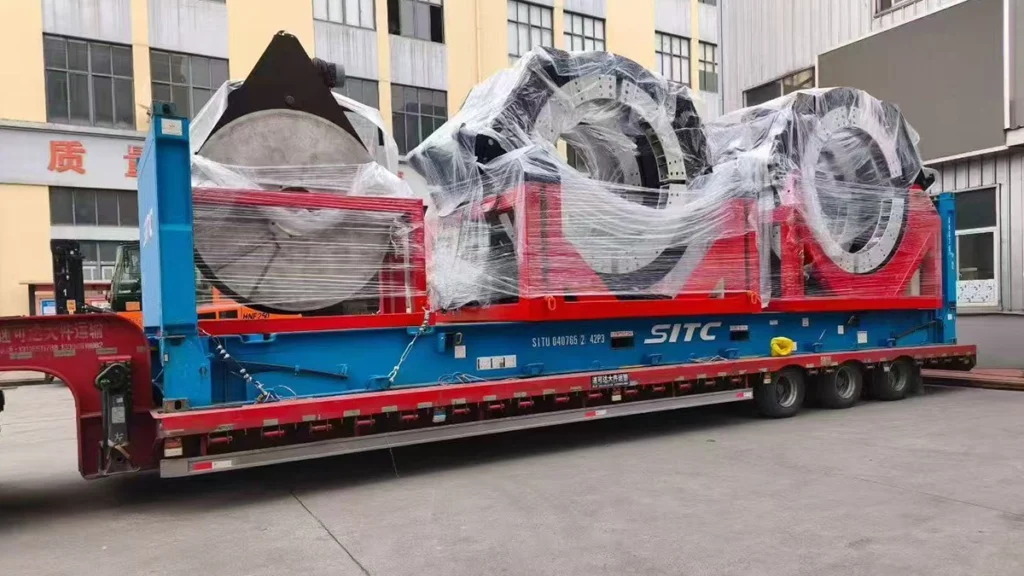
Modern logistics have effectively shrunk the distance between the factory floor and the job site. Understanding Incoterms is the key to reliability. When buying direct, terms like CIF (Cost, Insurance, and Freight) or DDP (Delivered Duty Paid) place the logistics responsibility on the manufacturer until the equipment reaches the destination port or the buyer’s warehouse. This mitigates buyer risk. A reputable manufacturer packages butt fusion welding machines in reinforced plywood cases—separating the frame, hydraulic station, and heater—to withstand transoceanic shipping. With established freight forwarders, a factory in Asia can deliver to a site in South America or Europe with a predictability that rivals domestic ground freight.
Defining Reliability: Technical Specs of High-Performance Automatic Pipe Welding Machines
Reliability in butt fusion isn’t a marketing buzzword; it is a measurable engineering standard. A machine is only as reliable as its ability to maintain specific parameters under stress.
Hydraulic System Requirements
The heart of an automatic butt fusion machine is its hydraulic system. To meet ISO 21307 High-Pressure welding standards, the system must maintain interfacial pressure (typically 0.52 MPa ±0.1 MPa) with absolute stability. Buyers should look for HDPE pipe welding machines utilizing a closed-loop control system driven by a PLC (such as Siemens S7-200). This system uses A/D conversion modules to continuously monitor pressure sensors and automatically adjust hydraulic flow to compensate for any drops. This is critical during the cooling phase, where pressure must be held constant for a duration calculated by wall thickness (e.g., 0.43 × en). Manual systems simply cannot react fast enough to micro-leaks or thermal contraction, leading to voids in the joint.
Heating Plate Technology and Temperature Uniformity
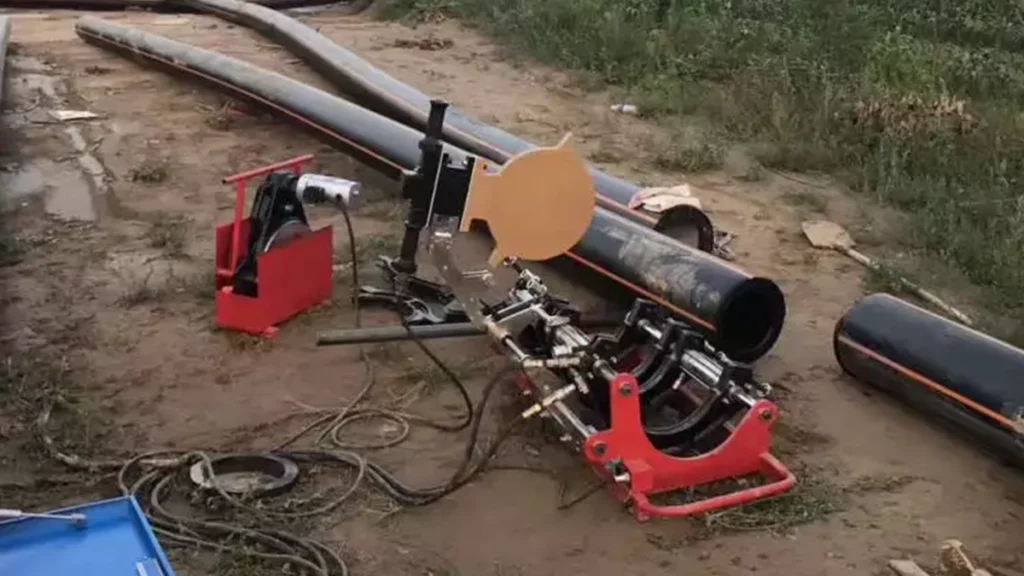
For thermoplastics like HDPE and PVDF, temperature consistency is vital. A reliable heating plate must maintain a surface temperature between 200°C and 270°C with a deviation of no more than ±3°C to ±5°C across the entire face. This requires high-quality casting and precise placement of heating elements. Furthermore, the PTFE (Teflon) coating must be durable enough to withstand repeated scraping and cleaning without flaking, as exposed metal can contaminate pipe ends. Electronic temperature control mechanisms are superior to mechanical thermostats; they provide the rapid response needed when a cold pipe contacts the plate, preventing temperature sag that causes “cold welds.”
Structural Integrity and Alignment
The butt fusion machine chassis must be rigid enough to prevent the pipe from forcing the clamps out of alignment during the fusion cycle. For a 1000mm hydraulic butt fusion machine, the drag force can be immense. A 4-clamp sleeve structure is the industry standard for ensuring precise alignment, with tolerances allowing for less than 0.2mm or 10% wall thickness mismatch (whichever is smaller).
The clamps must also feature robust inserts to handle the full range of diameters (e.g., reducing from 1000mm down to 630mm). Additionally, the chassis design must account for drag pressure—the force required to move the pipe carriage. Reliable automatic machines calculate this drag pressure dynamically and add it to the theoretical fusion pressure to ensure the actual interfacial pressure at the joint is correct.
The Importance of Data Logging
In modern infrastructure projects, a weld without a record is essentially a failed weld. An integrated Data Logger is essential for reliability because it removes the operator’s ability to “fudge” the numbers. The system records time, temperature, and pressure at every stage (bead-up, heat soak, changeover, fusion, cooling). If any parameter falls outside the pre-set standard (ISO, DVS, or ASTM), the butt fusion machine should automatically abort the weld or flag the record. This traceability protects the contractor from liability and provides the utility company with a digital twin of the pipeline’s integrity.
Financial Guide: Payment Terms, Negotiation, and ROI Analysis
Acquiring heavy machinery involves significant capital expenditure (CapEx). Smart buyers leverage financial instruments and negotiation strategies to manage cash flow while securing the best equipment.
Standard Payment Terms in B2B Trade
When purchasing factory-direct, the standard payment terms automatic pipe welding machine manufacturers offer usually involve a split structure. A common arrangement is a 30% T/T (Telegraphic Transfer) deposit to initiate production, with the remaining 70% due before shipment or upon presentation of the Bill of Lading. For larger orders (e.g., equipping a full fleet for a municipal project), utilizing a Letter of Credit (L/C) at sight is a prudent strategy. An L/C protects the buyer by ensuring payment is only released once the bank verifies that shipping documents and quality certificates comply strictly with the contract, mitigating the risk of non-delivery.
Financing Options and Leasing
For companies preferring to keep working capital liquid, exploring financing options for automatic pipe welding machine price structures is viable. While factories themselves act as manufacturers rather than banks, many B2B transactions can be supported by third-party export credit agencies or industrial leasing partners. Current industrial equipment leasing rates typically range from 7% to 14%, with terms extending from 36 to 84 months. This allows contractors to pay for the butt fusion machine using the revenue generated from the projects it completes. Some global manufacturers may also offer deferred payment structures for long-term distributor partners who have established creditworthiness.
Negotiating Price Offers
When you are ready to start negotiating automatic hdpe pipe welding machine price offers, look beyond the sticker price. The real value often lies in the ancillaries. Instead of demanding a rock-bottom machine price which might compromise component quality, negotiate for “value-adds.” This could include an extended spare parts package (seals, heater plates, facer blades), free shipping (CIF instead of FOB), or the inclusion of additional insert sets for non-standard pipe diameters. Volume discounts are also standard; ordering a 315mm and a 630mm hydraulic butt fusion machine together can often unlock a tier discount of 5-10%.
Installment Plans and Staged Payments
It is possible to buy hdpe butt fusion machine with installment plan structures, particularly for custom or high-volume orders. A staged payment plan aligns cash outflows with production milestones: 30% at order, 30% upon completion of the “Run-in” test (verified via video), and 40% upon arrival at the destination port. This structure ensures the manufacturer is funded to procure high-quality raw materials while the buyer retains leverage until the hdpe butt fusion machine is proven ready. This shared-risk model fosters a partnership rather than a transactional relationship.
Selection Checklist: Matching the Machine to the Project
Selecting the correct butt fusion machine requires mapping machine capabilities to project variables. Below is a comparison to guide specification.
| Feature | Ekberg 1000mm machine | Competitor |
|---|---|---|
| Welding Range | 630mm – 1000mm | 340mm – 900mm |
| Operation Mode | hydraulic | Semi-Automatic hydraulic |
| Total Power | 23.5 kW (Heater 17.5kW) | ~20.5 kW |
| System Weight | 2,600 kg (Transport Friendly) | 4,300+ kg |
| Pressure Range | 0 – 16 MPa | 0 – 206 Bar |
| Control System | Closed-Loop Siemens PLC | Open or Closed Loop |
Diameter Range and Power
Match the butt fusion machine to the plastic pipe, not just the maximum diameter. If your project involves primarily 800mm and 900mm lines, a hdpe butt fusion welding machine that maxes out at 900mm will be working at its limit constantly. A 1000mm hydraulic butt fusion machine offers greater structural overhead. Ensure your power supply can handle the load; a 23.5 kW machine requires a generator rated at least 1.5x that capacity (approx. 40 kVA) to account for startup surges and heater cycling.
Automation Levels: Manual vs. CNC
butt fusion For non-critical agricultural irrigation, a manual butt fusion machine may suffice. However, for gas distribution and potable water, Fully CNC Automatic machines are increasingly mandated. They eliminate the “human factor” in applying fusion pressure and timing cooling cycles. If your project requires adherence to ISO 21307 High Pressure parameters, a manual operator simply cannot adjust the hydraulic valve fast enough to maintain the required 0.52 MPa interfacial pressure accurately.
Material Compatibility
Ensure the hdpe butt fusion welding machine’s pressure range suits your material. HDPE (PE100) requires specific fusion pressures, while PP and PVDF have different flow characteristics. Refer to DVS 2207 standards: for a 315mm SDR 11 pipe, the cooling time under pressure can be over 30 minutes. The machine’s hydraulic accumulator must be capable of holding this pressure without the pump running constantly, which would overheat the oil.
Site Conditions
Consider the terrain. Trench work often requires a butt fusion machine where the hydraulic station and chassis can be separated easily. Crawler machines are excellent for long pipeline stretches on flat terrain but are heavy (4000kg+) and difficult to transport to remote, hilly sites. A lighter, modular design (like the Ekberg 2600kg unit) offers better versatility for sites with poor access roads.
Manufacturing Excellence, Quality Control & Global Support
When you buy factory-direct, you are buying the manufacturer’s process, not just the hardware. Ekberg Welding positions itself as a partner in your engineering success.
Factory Quality Control (QC) Process
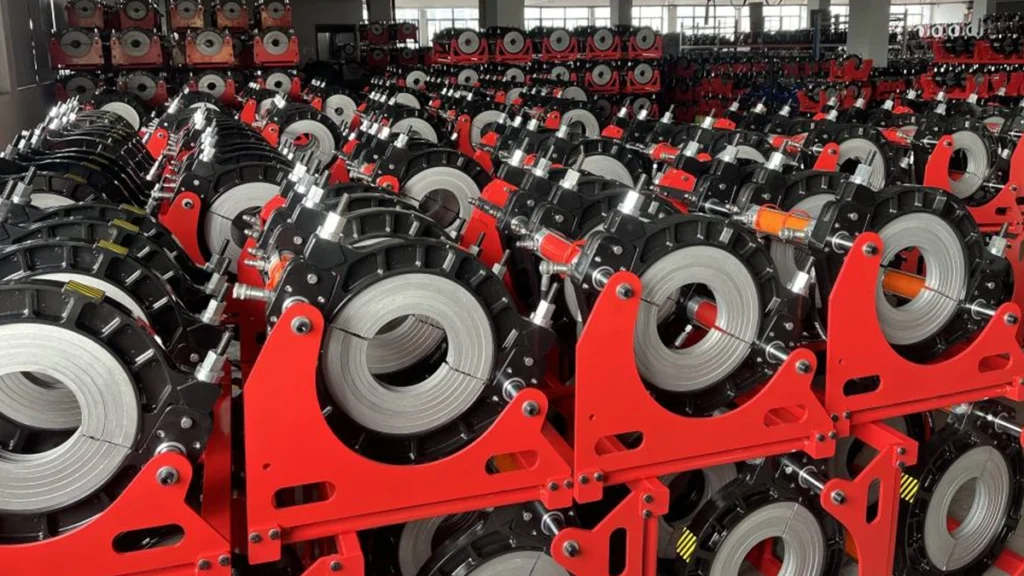
Quality starts with raw materials. The aluminum castings used for the chassis and clamps must be free of porosity to withstand high clamping forces. At Ekberg, we implement a strict traceability system where every hydraulic valve and electrical component is tracked to a specific batch. Our QC process includes high-pressure seal testing and electrical safety audits to meet CE certification requirements. This ensures that the butt fusion welding machine you receive is safe and durable.
The “Run-in” Test Procedure
No machine leaves the factory floor without a “Run-in” test. This involves cycling the hdpe pipe butt welder through simulated welding procedures at maximum pressure to verify hydraulic stability. We check for oil leaks, calibrate the heating plate temperature to ensure the ±3°C uniformity, and verify the data logger’s accuracy. This pre-shipment validation is what allows international buyers to trust that the equipment will work immediately upon arrival.
After-Sales Support Ecosystem
Distance should not mean silence. A top-tier manufacturer provides a comprehensive support ecosystem. This includes video-based training manuals, virtual troubleshooting sessions with engineers, and a commitment to supplying spare parts at material cost for the machine’s lifetime. If a control module fails, we prioritize air-freighting replacements to minimize downtime.
Certifications and Standards
Compliance is key. Our butt fusion machines are designed to meet ISO 21307, ISO 12176-1, and DVS 2207 standards. We hold ISO 9001 management certification, ensuring consistent manufacturing processes. When you present your equipment list to a municipal auditor, having these certifications readily available streamlines the project approval process.
Frequently Asked Questions
Q1: What is the delivery time for an hdpe pipe welding machine if I order factory direct?
Production time typically ranges from 10 to 15 days for standard models (up to 1200mm). Shipping times vary by location: 15–20 days to Southeast Asia or the Middle East, and 30–45 days to Europe or the Americas. We recommend planning procurement 6-8 weeks ahead of project start dates to ensure the hdpe butt fusion machine is on-site and calibrated before welding begins.
Q2: Do you offer financing options or installment plans for international buyers?
Yes, we support flexible payment structures. While we do not act as a bank, we accept Letters of Credit (L/C) for large orders, which provides security similar to financing. For long-term distributor partners, we can negotiate staged payments or buy automatic pipe welding machine with installment plan agreements based on volume commitments. Third-party leasing through your local industrial bank is also a common method our clients use.
Q3: How does the machine ensure compliance with ISO 21307 High Pressure welding standards?
Our machines utilize a closed-loop hydraulic control system with a Siemens PLC. This allows the butt fusion machine to maintain the higher interfacial pressures (0.52 MPa) required by ISO 21307 with precision. The system automatically compensates for pressure drops and strictly enforces the shorter cooling times, ensuring high productivity without compromising joint integrity. The integrated data logger records these parameters to prove compliance.
Q4: Can I get local support or spare parts if I am not located near the factory?
Absolutely. We design our butt fusion machines using standard industrial components (e.g., standard hydraulic seals and electrical relays) that are often available locally. For proprietary parts, we maintain a rapid-response logistics team to air-freight spares globally. Additionally, we provide comprehensive video maintenance guides and virtual technician support to help your local team resolve issues immediately.
Q5: What are the standard payment terms for a first-time order?
For new international clients, the standard payment terms hdpe pipe welding machine orders require is a 30% T/T deposit to initiate manufacturing. The remaining 70% balance is due before shipment, usually after you have received photos or video verification of the completed machine and its “Run-in” test results. This ensures both parties are protected and committed to the transaction.
Conclusion
The search for a “reliable butt fusion machine near me” often leads to a compromise between convenience and capability. However, for critical infrastructure projects, the cost of a failed joint far outweighs the convenience of a local pickup. By prioritizing an hdpe pipe welding machine with verified technical specifications—such as closed-loop hydraulics, ISO 21307 compliance, and robust data logging—you ensure the longevity of your pipeline assets.
Smart procurement is not just about price; it is about value. Partnering with a factory-direct manufacturer like Ekberg Welding offers you transparent pricing, flexible payment terms, and the assurance of global quality standards. Don’t let geography limit your engineering success.
Ready to upgrade your projects? Contact Ekberg Welding today for a technical consultation, a detailed catalog of our automatic series, and a competitive factory-direct quote tailored to your project’s budget.