
Durable Butt Fusion Machines Manufacturers Guide
Table of Contents
Industrial butt fusion machines operating at pressures up to 6.3 MPa and scorching temperatures of 220°C represent the single most critical variable in pipeline infrastructure. In this sector, a single joint failure isn’t just an inconvenience; it can trigger over $50,000 in downtime costs and environmental remediation fees for a mining operation. For procurement managers and site engineers, selecting equipment isn’t merely a transactional purchase—it is a strategic hedge against risk to ensure long-term project viability.
In this engineering-focused guide, we strip away the marketing fluff to analyze the metallurgy behind chassis rigidity, compare hydraulic reliability against ISO 21307 standards, and evaluate the true lifecycle costs of premium versus economy equipment. By the end, you will possess a clear technical framework to identify leading manufacturers known for producing durable butt fusion machines, ensuring your capital investments deliver operational security for years to come.
Defining Durability: What Separates Industrial-Grade Butt Fusion Machines from Economy Models?
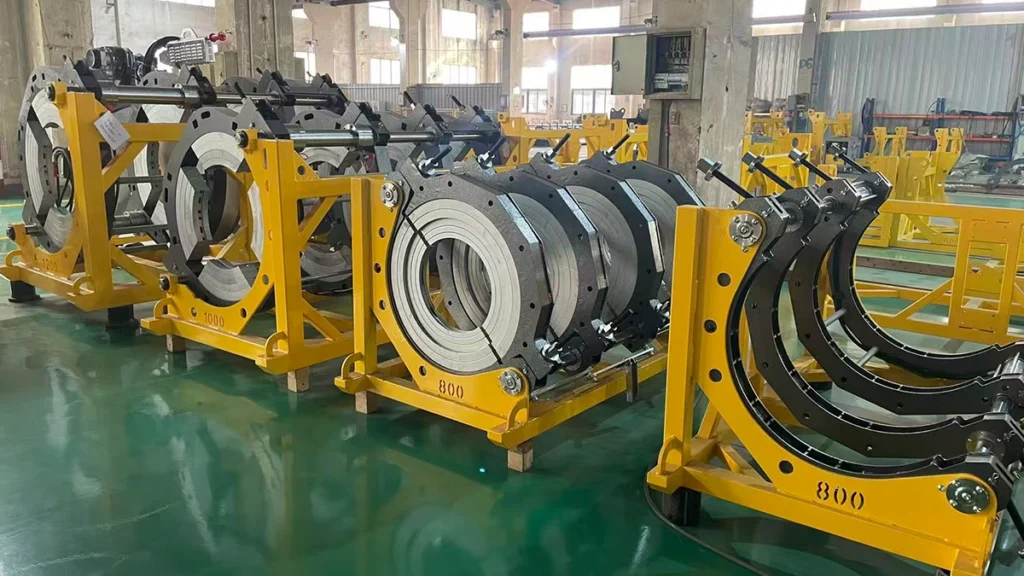
When evaluating equipment for critical infrastructure—whether for urban gas distribution or high-pressure mining slurry lines—durability is defined by measurable engineering metrics, not brochure claims. The gulf between an industrial-grade workhorse and a disposable economy model is found in the structural integrity of the chassis, the precision of the hydraulic architecture, and the thermal stability of the heating elements.
Chassis Rigidity and Material Selection (Aluminum vs. Steel)
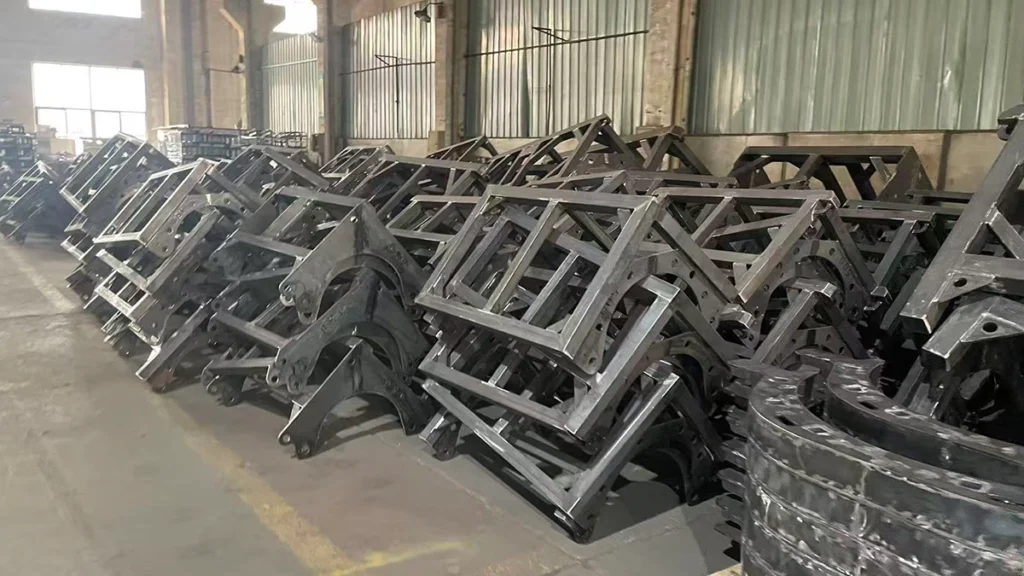
The chassis acts as the backbone of the fusion process. It must maintain perfect axial alignment while under significant drag and interfacial pressures. While lightweight aluminum alloys are standard for smaller diameter butt fusion welding machines (up to DN 250) to aid portability, their tensile strength often buckles under larger applications or high-pressure (SHP) welding scenarios.
Leading manufacturers pivot to reinforced carbon steel frames for butt fusion machines designed for pipes larger than DN 315 or for high-SDR applications. Steel offers roughly three times the tensile strength of standard cast aluminum, ensuring the hdpe pipe welding machine frame remains rigid during the fusion phase.
Frame flex is a catastrophic failure mode in butt fusion. If the chassis distorts by even a few millimeters under the 60-90 psi interfacial pressure mandated by ASTM F2620, the pipe ends will misalign. This results in a “high-low” joint condition, creating stress concentrators that significantly slash the pipeline’s service life. Durable butt fusion machines feature heavy-duty guide shafts made from hardened steel—often chrome-plated to resist scoring—working in tandem with the rigid frame to maintain alignment tolerances within <10% of the pipe wall thickness.
Corrosion resistance is the secondary pillar of chassis durability. While economy models often rely on standard spray paint that chips in rugged field conditions, premium manufacturers utilize electrostatic powder coating. This finish provides a hermetic seal against saline humidity in coastal desalination plants or acidic dust in mining environments, ensuring the HDPE pipe welding machine’s structural integrity remains uncompromised after years of deployment.
Hydraulic System Reliability and Pressure Maintenance
The hydraulic unit is the heartbeat of the fusion operation. Its primary function isn’t just generating pressure, but maintaining it with absolute stability during the cooling phase—a process that can last upwards of 45 minutes for thick-walled HDPE pipes. Industrial-grade units typically utilize pumps rated for 160 bar (16 MPa) or higher. Even if the welding pressure is lower, this headroom ensures the system never operates at maximum capacity, significantly extending component life.
A critical differentiator lies in the sealing system. Leading manufacturers integrate high-grade seals from reputable suppliers like Parker or Hallite. Conversely, cheap economy models often use standard O-rings that degrade rapidly under thermal cycling and pressure fluctuations. This degradation leads to internal bypassing—oil leaking back into the reservoir—causing a gradual pressure drop during the cooling cycle. If pressure falls below ISO 21307 requirements (typically 0.15 MPa + drag pressure), voids form in the joint, rendering it non-compliant.
Furthermore, the inclusion of a hydraulic accumulator is a hallmark of durability in premium butt fusion machines. The accumulator acts as a pressure buffer, absorbing system shocks and compensating for minor thermal contraction of the hydraulic fluid. This ensures interfacial pressure remains constant without the pump cycling continuously, reducing motor wear and maintaining the static pressure required for a homogeneous weld.
Heating Plate Technology and Temperature Uniformity
The heating plate must deliver thermal energy to the pipe ends with a surface uniformity of ±3°C. Achieving this demands sophisticated electronic temperature control rather than the simple mechanical thermostats found in budget units. Electronic controllers use PID (Proportional-Integral-Derivative) algorithms to prevent temperature overshoot and ensure rapid recovery once the plate touches cold pipe ends.
Durability is also determined by the coating. Premium manufacturers apply a double-layer PTFE (Polytetrafluoroethylene) coating. The base layer ensures adhesion to the aluminum plate, while the top layer provides the non-stick properties essential for clean separation from molten PE. Single-layer coatings, common in lower-tier equipment, wear off rapidly after repeated cleaning. This leads to plastic sticking to the heater, ruining the weld and forcing operators to use abrasive tools to clean the plate, which further damages the equipment.
In extreme climates, internal heating elements face significant stress. Leading manufacturers design plates with redundant heating zones and high-quality insulation to prevent heat loss at the edges. This design prevents “cold spots” on the heating plate surface, a primary cause of brittle welds in cold-weather projects.
Manufacturing Technologies That Drive Equipment Longevity
The longevity of butt fusion machines is predetermined on the factory floor. The shift from manual fabrication to automated precision manufacturing has widened the gap between top-tier suppliers and generic assemblers.
Precision CNC Machining and Component Tolerances
To prevent pipe misalignment, every moving component must be machined to strict tolerances. Leading manufacturers employ multi-axis CNC machining centers to fabricate main clamps and hydraulic cylinder housings. This automated process ensures the centerline of the fixed clamps aligns perfectly with the moving clamps, often within a tolerance of 0.1mm.
In manual fabrication setups, misalignment is often “corrected” by shimming or forcing components into place, introducing pre-load stresses that lead to premature failure. Precision CNC machining eliminates this variable. It also ensures that replacement parts purchased five years later will fit perfectly—a critical factor for long-term asset maintenance. Wear and tear on guide shafts and bushings are significantly reduced when butt fusion machine geometry is mathematically perfect, preventing the binding and friction characteristic of low-quality units.
Electronic Control Unit (ECU) Protection Standards
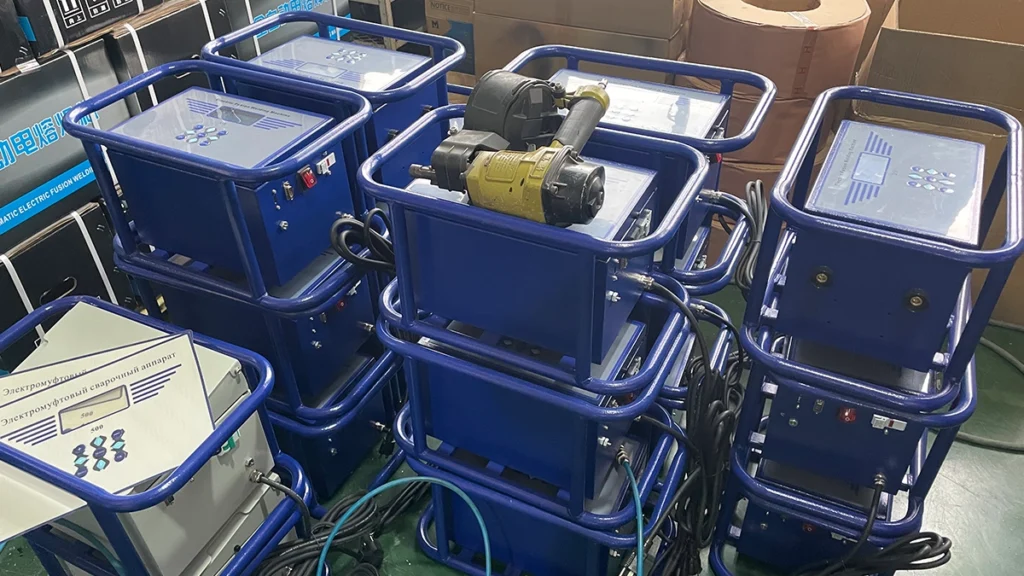
Modern fusion machines rely on data loggers and electronic control units (ECUs) to record welding parameters. However, electronics are inherently vulnerable in construction environments. Durable butt fusion machines feature ECUs housed in enclosures rated IP54 or higher (dust and splash protection), with IP65 being the standard for mining applications.
Beyond the enclosure, internal circuit design matters. Manufacturers known for durability pot their PCBs (Printed Circuit Boards) or use vibration-dampening mounts to protect against rough handling during transport on unpaved roads. Furthermore, they incorporate voltage stabilization circuits. Generators on job sites are notorious for voltage spikes; without protection, these spikes can fry the logic board of an automatic welder. Modular design is another key feature, allowing a single damaged module to be swapped out in the field without shipping the entire butt fusion machine back to a service center.
Insert and Clamp Durability for Various Pipe Sizes
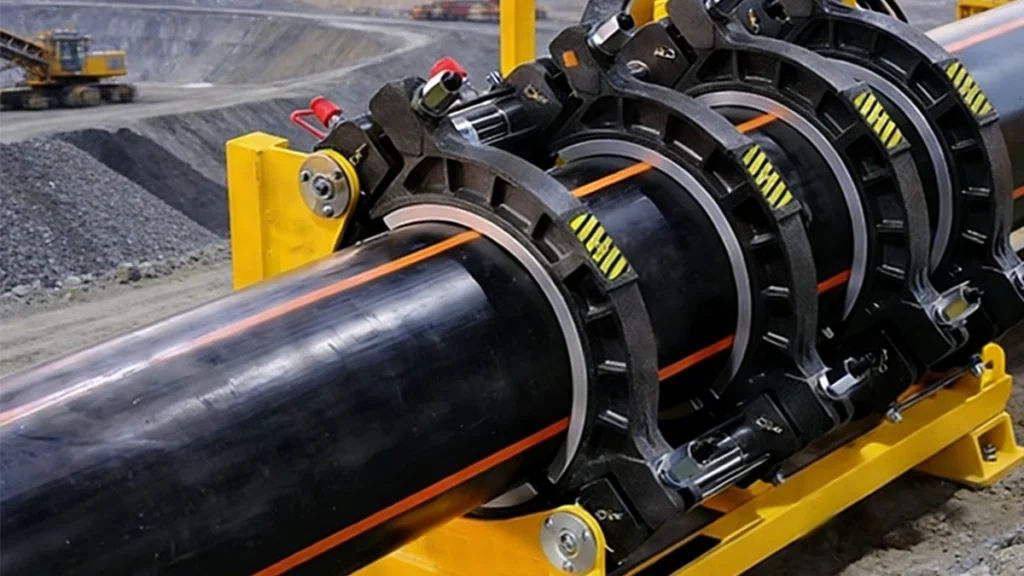
Inserts (reducing liners) allow a single butt fusion machine to weld a range of pipe diameters (e.g., a 315mm hydraulic butt fusion machine welding DN 90 pipe). The durability of these inserts is often overlooked. Economy models use cast aluminum inserts which can be brittle and prone to cracking if dropped. Premium manufacturers utilize machined aluminum inserts, which possess higher ductility and impact resistance.
Crucially, the inner surface design of the clamp and insert dictates grip strength. Smooth inserts can allow the pipe to slip under high drag pressures, especially with wet or muddy pipes. Durable designs feature a knurled or serrated surface that bites into the pipe surface, ensuring positive traction. Additionally, the locking mechanism—whether a screw or a latch—must be robust enough to withstand thousands of cycles without stripping threads or bending, ensuring inserts remain concentric with the pipe axis.
Comparing Machine Types: Durability Across Different Operations
Durability is not absolute; it is relative to the application. A butt fusion machine designed for a clean factory floor may fail within a week in a muddy trench.
Hydraulic vs. Automatic (CNC) Butt Fusion Machines
There is often a debate regarding the durability of manual hydraulic versus CNC automatic butt fusion machines. Mechanically, manual hydraulic machines are simpler. They rely on levers, valves, and gauges—components that are robust and easy to repair in remote locations. For extremely remote mining sites with limited technical support, the mechanical simplicity of a hydraulic unit often translates to higher uptime.
However, automatic machines offer a different kind of durability: process durability. By automating pressure and time cycles, they eliminate operator error—the leading cause of joint failure. While the electronic sensors and transducers in automatic machines require more careful handling, leading manufacturers encase these sensors in protective housings. For utility companies managing large fleets, the reduction in failed welds often justifies the increased maintenance requirement of electronic components.
Track-Mounted vs. Wheeled vs. Trench Machines
For cross-country pipeline projects, track-mounted (crawler) machines offer superior durability compared to wheeled or standard trench machines. The self-propelled track system isolates the fusion unit from the ground, preventing the chassis from dragging through mud and rocks.
However, the track system itself introduces maintenance needs. Durable crawlers utilize independent hydraulic drives for the tracks, separate from the fusion hydraulic circuit, to ensure travel demands do not compromise fusion pressure. Tracks must be made of high-wear rubber compounds capable of traversing sharp gravel without shredding. While trench machines are lighter and more portable, they are often subjected to rougher handling as they are dragged by excavators, making their structural rigidity even more critical.
Lifecycle Cost Analysis: Premium vs. Budget Manufacturers
Procurement decisions are often driven by initial capital expenditure (CapEx), but operational expenditure (OpEx) drives profitability.
| Cost Factor | Premium Machine (e.g., Ekberg) | Economy/Budget Model | Impact on ROI |
|---|---|---|---|
| Initial Purchase | $10,000 – $25,000 | $8,000 – $12,000 | Higher upfront, but amortized over a longer life. |
| Lifespan | 7-10+ Years | 2-3 Years | Premium units outlast budget units by 3x. |
| Spare Parts | Available 10+ years | Often obsolete in 2 years | Obsolescence forces premature replacement. |
| Resale Value | 40-60% of original value | <15% (Scrap value) | Premium brands hold equity. |
| Downtime Risk | Low (<5% probability) | High (>30% probability) | One day of downtime can cost >$10,000. |
The data indicates that while a budget machine saves money on day one, the Total Cost of Ownership (TCO) over five years is significantly higher due to replacements, repairs, and lost productivity.
Global Standards and Certification: The Hallmarks of Quality Manufacturers
Certifications are not just paperwork; they are evidence of engineering discipline. Reliable butt fusion machines are built to meet or exceed specific international standards.
Compliance with ISO 21307 and DVS 2207
ISO 21307 (Plastics pipes and fittings – Butt fusion jointing procedures) outlines distinct pressure parameters: Single Low Pressure (SLP) and Single High Pressure (SHP). SHP requires interfacial pressures up to three times higher than traditional low-pressure methods (DVS 2207).
Many economy but fusion machines claim compliance but physically cannot sustain SHP parameters without frame distortion or hydraulic stall. A durable manufacturer rigorously tests their equipment to ensure it can deliver these high pressures repeatedly. For example, welding SDR 7 pipe requires immense force; if the butt fusion machine is not engineered for these loads, the hydraulic pump will overheat and seals will blow. Compliance guarantees that the butt fusion machine has the “muscle” to perform the weld correctly, every time.
CE Certification and Safety Standards
CE certification is mandatory for the European market but serves as a global quality proxy. It mandates safety features such as emergency stop buttons, thermal overload protection for the planer (facer), and hydraulic safety valves.
Adherence to these safety standards correlates with overall build quality. A manufacturer that cuts corners on safety switches is likely cutting corners on hydraulic hoses and chassis welds. Features like the “dead man’s switch” on the planer prevent operator injury, while thermal cut-offs prevent the motor from burning out during heavy milling operations—features that directly extend the butt fusion machine’s operational life.
Manufacturer Testing Protocols (QC/QA)
The most durable butt fusion machines undergo exhaustive factory testing before shipment. Leading manufacturers like Ekberg perform a 24-hour pressure holding test on every hydraulic unit to detect micro-leaks. Heating plates are subjected to thermal imaging scans to verify temperature uniformity across the entire surface.
Traceability is also key. Every major component—from the hydraulic cylinder to the data logger—should be serialized and tracked. This allows the manufacturer to identify batches of components if a defect is discovered, facilitating targeted recalls or service bulletins rather than total equipment failure in the field.
Ekberg Welding: Factory Capability, Certification & Global Support
At Ekberg Welding, durability is not an afterthought; it is the core design philosophy. We bridge the gap between the prohibitive costs of Western giants and the unreliability of generic budget brands.
Advanced Manufacturing Facilities and Quality Control
Ekberg’s production facility utilizes fully automated CNC machining centers for all chassis and clamp production. We do not rely on third-party fabrication for critical structural components. This vertical integration allows us to control the metallurgy of our aluminum and steel inputs, ensuring consistent tensile strength. Our hydraulic seals are sourced exclusively from top-tier international suppliers, ensuring that our butt fusion machines remain leak-free even in the harsh thermal cycles of the Middle East or the freezing conditions of Nordic winters.
Spare Parts Availability and After-Sales Ecosystem
A butt fusion welding machine is only as durable as its support network. Ekberg maintains a comprehensive inventory of spare parts, including seals, heater elements, and facer blades, ready for immediate international dispatch. Unlike budget manufacturers that frequently change designs—rendering older butt fusion machines obsolete—we maintain backward compatibility for our parts wherever possible. This commitment ensures that an Ekberg pipe welding machine bought today remains serviceable a decade from now.
Technical Training and Welding Parameters Support
Butt fusion machine longevity is heavily influenced by operator usage. Ekberg provides detailed welding parameter tables (compliant with ISO, DVS, and ASTM) and technical training resources. We educate operators on best practices, such as proper pressure setting and cleaning protocols, which prevent unnecessary wear on the hydraulic pump and heating plate.
Buyer’s Checklist: How to Evaluate Manufacturer Reliability
Before issuing a purchase order, use this checklist to validate the manufacturer’s claims.
Assessing Warranty Terms and Service Agreements
- Scope: Does the warranty cover the hydraulic pump and motor, or just the frame? (Ekberg covers core components).
- Duration: Is it a standard 12-month warranty, or can it be extended?
- Support: Is there a dedicated technical support line with engineers who speak your language? (Look for WhatsApp/Video support for instant site troubleshooting).
Evaluating Customization and Supply Chain Capabilities
- Voltage: Can the manufacturer configure the butt fusion machine for your specific site voltage (220V, 380V) and plug type?
- Packaging: Does the butt fusion welding machine ship in a ruggedized wooden crate? Poor packaging is a leading cause of “dead on arrival” equipment.
- Lead Time: Reliable manufacturers have stock of standard models (DN160 – DN630mm) to minimize project delays.
Verifying References and Case Studies
Request references from projects with similar environmental conditions to yours. If you are mining in Australia, ask for references from high-temperature, dusty environments. If you are laying gas lines in Russia, ask for cold-weather performance data. Customer feedback regarding butt fusion machine durability—specifically regarding hydraulic leaks and electronics failure—is the most honest data point available.
Frequently Asked Questions
Q1: What is the average lifespan of a high-quality butt fusion machine?
A well-maintained industrial butt fusion machine from a reputable manufacturer like Ekberg can last between 7 to 10 years. This assumes regular maintenance, such as hydraulic oil changes and proper storage. In contrast, economy models often suffer critical structural or hydraulic failures within 2 to 3 years of heavy daily use.
Q2: How often should hydraulic oil be changed to ensure machine durability?
Hydraulic oil should generally be changed every 6 to 12 months, or sooner if the butt fusion machine is operating in extremely dusty or humid environments. Contaminated oil is the primary cause of pump and seal failure. Using high-quality oil (e.g., ISO VG 46) and keeping the quick-couplers clean are essential for system longevity.
Q3: Can Ekberg butt fusion machines withstand extreme weather conditions (freezing/tropical)?
Yes. Ekberg butt fusion machines are designed with global climates in mind. For tropical heat, we use oversized cooling fans and UV-resistant hydraulic hoses. For freezing conditions, our heating plates feature high-wattage elements and insulation to reach and maintain fusion temperatures (220°C) despite low ambient temperatures.
Q4: What are the signs that a butt fusion machine’s heating plate needs recoating or replacement?
If molten plastic begins to stick to the heating plate during the removal phase, the PTFE coating is compromised. Other signs include visible scratches exposing the aluminum substrate or uneven heating patterns (cold spots). Continuing to use a damaged plate will result in non-compliant welds and potential joint failure.
Q5: Does the manufacturer provide calibration services for data loggers and pressure gauges?
Yes, leading manufacturers provide calibration certificates upon purchase. For ongoing maintenance, the data logger and pressure gauge should be re-calibrated annually. Ekberg provides support for this process, ensuring that the parameters recorded for your quality assurance documentation are accurate and legally defensible.
Conclusion
Selecting the right equipment is a balance of technical precision and economic foresight. Durable butt fusion machines rest on three pillars: a rigid mechanical chassis that resists high-pressure distortion, a hydraulic system engineered for zero-leak performance, and electronics protected against the harsh realities of the job site. While the initial investment in premium equipment is higher, the cost of downtime—often exceeding thousands of dollars per day—makes the choice clear.
Do not compromise your project’s timeline or safety record with disposable equipment. Contact Ekberg Welding today for a technical consultation, to request our full catalog of ISO-compliant butt fusion machines, or to discuss factory-direct pricing for your next infrastructure project.