
Industrial HDPE Pipe Welding Machine-Factory Direct
Table of Contents
Introduction
Switching to an automatic HDPE pipe welding machine equipped with closed-loop hydraulic control and precise thermal management does more than just modernize your fleet; it slashes HDPE pipe joint failure rates by upwards of 60% compared to manual fusion methods. In the unforgiving environments of pipeline infrastructure—whether you are managing municipal gas distribution, mining slurry transport, or industrial chemical processing—there is simply no room for error. Consequently, project owners and engineering procurement managers are increasingly mandating CNC (Computer Numerical Control) fusion technology. Their goal is clear: eliminate operator fatigue and guarantee 100% data traceability.
This guide breaks down the critical engineering specifications that separate standard equipment from high-performance fusion systems. We will examine ISO 21307 compliance, the necessity of hydraulic pressure stability, and the physics of thermal uniformity. You will find a comparative analysis of manual versus automatic systems, detailed selection criteria for pipe diameters from DN63 to DN1600, and a hard look at the economics of total cost of ownership. By the end, you will possess a solid framework for selecting the right equipment for your project—helping you avoid specification errors that lead to costly joint failures.

The Strategic Advantage of HDPE Pipe Welding in Industrial Projects
The construction industry’s global pivot toward automation is driven by a single, non-negotiable demand: joint integrity. in high-stakes sectors like natural gas distribution and mining, a single failed weld can trigger environmental catastrophes and repair bills that easily exceed $10,000 per incident. Manual HDPE pipe welding machines leave drag pressure and bead build-up entirely to the operator’s physical strength and judgment. An industrial automatic pipe welding system removes these variables entirely. By digitizing the welding process, contractors ensure every joint is fused according to pre-programmed engineering standards, regardless of whether it is the operator’s first weld of the day or their last.
Comparing Manual, Semi-Automatic, and Fully Automatic CNC Systems
Procurement teams often misunderstand the nuances between equipment tiers. A manual butt fusion machine requires an operator to physically pump a hydraulic handle and time the cooling phase with a stopwatch. A semi-automatic unit offers a hydraulic pump for force, yet the operator must still manually actuate the valves. A fully automatic CNC system takes over the entire fusion cycle—heating, changeover, and cooling—requiring no human intervention once the pipe is faced and aligned.
The matrix below highlights the operational differences that directly impact project risk:
| Feature | Manual / Hydraulic | Semi-Automatic | Fully Automatic (CNC) |
|---|---|---|---|
| Pressure Control | Operator dependent (High variability) | Pre-set hydraulic control (Moderate variability) | Closed-loop PLC control (Minimal variability) |
| Cooling Phase | Operator timing | Operator timing | System-locked cooling cycle |
| Data Logging | Manual records | Optional module | Integrated data logging |
| Process Consistency | Low | Medium | High (Highly repeatable) |
| Operator Skill Requirement | High | Medium | Reduced manual dependency |
Compliance with Global Standards (ISO 21307 and DVS 2207)
Modern HDPE pipe welding machines come pre-loaded with international welding standards, most notably ISO 21307 and DVS 2207. These protocols dictate specific pressure and time parameters based on the pipe’s material (PE80, PE100) and wall thickness. For example, ISO 21307 defines distinct parameters for “Single Low Pressure” (SLP), “Dual Low Pressure” (DLP), and “Single High Pressure” (SHP).
The Ekberg automatic HDPE pipe butt welder measures the required drag pressure (P_drag) and compensates for it by adding it to the theoretical bead-up pressure, ensuring accurate gauge pressure control. This calculation ensures the interfacial pressure at the melt zone remains constant—typically between 0.15 and 0.25 MPa for HDPE—regardless of friction or pipe weight. Automated compliance is vital for contractors working on projects funded by strict municipal or international bodies.
Data Logging and Traceability for Quality Assurance
In regulated industries, an undocumented weld is effectively a non-existent weld. Automatic butt fusion welding machines generate a tamper-proof digital record for every joint. This report captures the operator ID, GPS coordinates, ambient temperature, heating plate temperature (e.g., 220°C), drag pressure, and the exact duration of the cooling cycle.
This level of traceability allows project inspectors to validate quality without resorting to destructive testing. If the machine detects a parameter deviation—such as a temperature drop of more than 5°C or a premature clamp opening—the CNC unit immediately flags the weld as “Failed.” This feature prevents compromised joints from being buried, saving the massive expense of excavation and repair down the line.
ROI Analysis: Labor Savings and Reduced Repair Costs
While the upfront capital expenditure for an automatic system exceeds that of manual equipment, the Return on Investment (ROI) becomes clear through speed and risk mitigation. Automatic butt fusion machines optimize cooling time based on precise wall thickness calculations, often shaving 20-30% off the cycle time compared to manual operators who tend to “overshoot” cooling times just to be safe.
Moreover, one must consider the cost of failure. Repairing a single failed butt fusion joint in a trench involves excavation, cutting out the bad section, and re-welding. This can cost anywhere from $2,000 to over $10,000 depending on the location. Eliminating just one failure per project justifies the investment in automation. On large-scale projects involving thousands of welds, the cumulative labor efficiency and zero-defect rate typically yield a payback period of just 3 to 6 months.
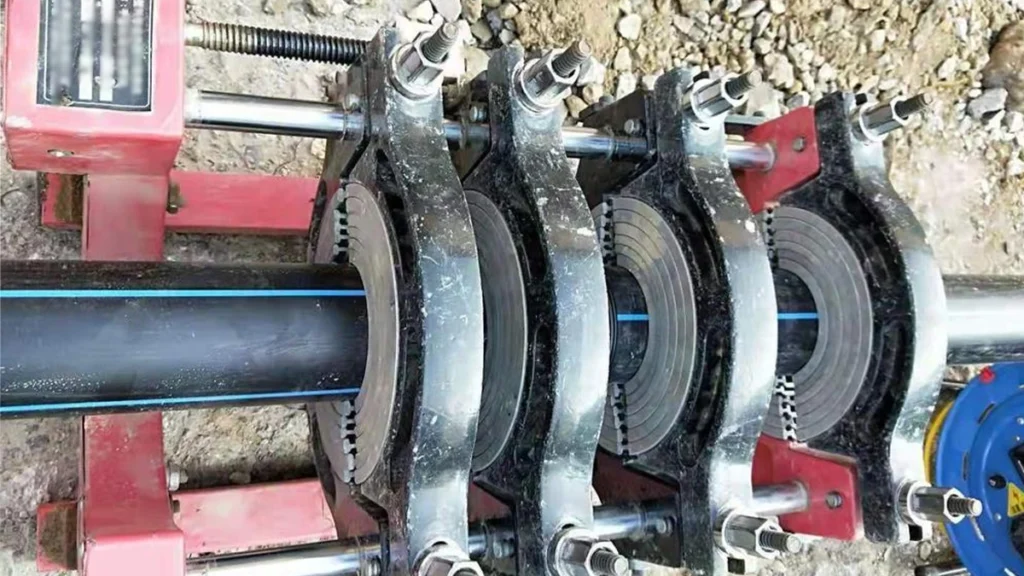
Key Technical Features of High-Performance Automatic Butt Fusion Machines
When specifying a heavy-duty automatic pipeline welding system, buyers need to look past the glossy brochures and scrutinize the engineering specifications. A HDPE pipe welding machine’s ability to maintain pressure and temperature stability correlates directly to the long-term strength of the pipeline.
Hydraulic System Precision and Pressure Control
The heart of any automatic welder is its hydraulic power unit. Ekberg butt fusion machines utilize a closed-loop hydraulic system capable of operating at system pressures up to 160 bar (16 MPa). Depending on the cylinder configuration, this enables interfacial fusion pressures ranging from 6.3 to 10.0 MPa. Crucially, the hydraulic circuit incorporates a high-capacity accumulator to maintain pressure stability during the fusion cycle.
During the cooling phase, polyethylene shrinks as it solidifies, which can cause a drop in interfacial pressure. A standard hydraulic pump might pulse or fluctuate, creating voids in the weld. A high-performance CNC unit detects this micro-drop in pressure and instantly engages the accumulator to maintain constant force, ensuring a homogenous molecular bond.
Heating Plate Technology and Thermal Uniformity
Temperature consistency across the heating plate surface is vital. For PE100 applications, the standard temperature range is 200–230°C. Ekberg heating plates feature a high-quality PTFE (Teflon) coating to prevent sticking and utilize electronic temperature control with an accuracy of ±5°C.
Inferior HDPE pipe jointing machines often suffer from “cold spots” at the edges of the heating plate, leading to incomplete fusion at the outer pipe wall. Advanced heating elements and thermal mapping ensure the entire face of the pipe reaches the melt temperature simultaneously.
Chassis Design and Heavy-Duty Construction
The HDPE pipe welding machine body (chassis) must be rigid enough to withstand the high drag forces of pulling heavy pipes without flexing. For smaller diameter butt fusion machines (EW-160 to EW-315), high-strength aluminum alloy frames offer the necessary rigidity while remaining lightweight enough for portability.
However, for large-diameter welding (EW-630 to EW-1600), hardened steel frames are mandatory. A steel chassis prevents structural distortion under the immense hydraulic forces required to fuse thick-walled SDR 11 or SDR 9 pipes. This rigidity ensures pipe alignment remains within the <10% wall thickness mismatch tolerance allowed by ISO standards.
Intelligent Control Units (CNC) and Interface
The interface bridges the gap between the operator and the technology. Modern Ekberg CNC units feature ruggedized touch screens rated IP54 for dust and splash resistance. The software comes pre-loaded with welding parameters for common materials (PE, PP, PVDF) and standards (ISO, DVS, ASTM).
Connectivity is standard. The ability to export data via USB or transmit via WiFi allows for real-time project management. The system also includes safety interlocks—for instance, preventing the facing tool from activating unless the HDPE pipe welding machine is in the correct state—protecting operators from injury.
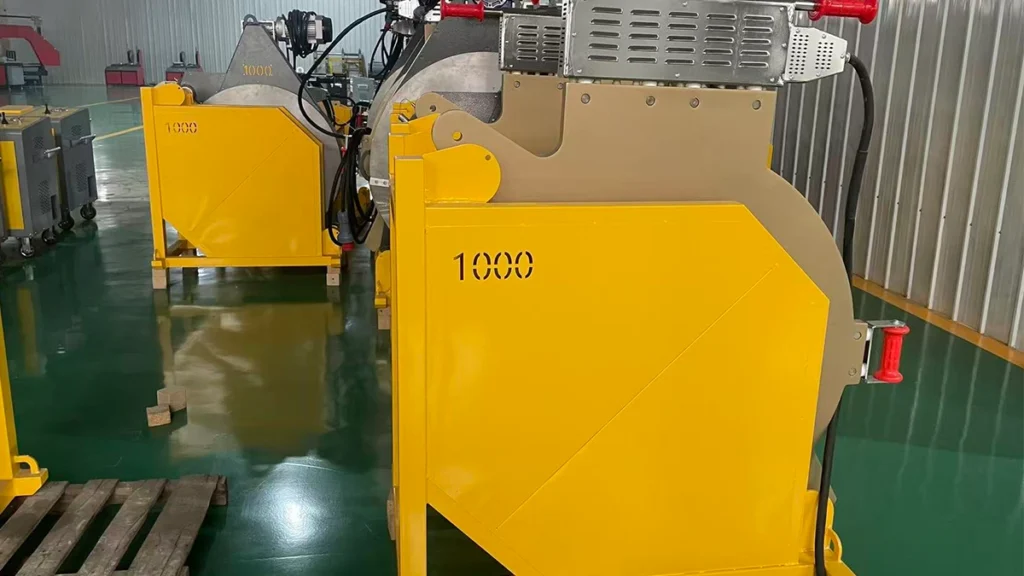
Selection Guide: Finding the Best Automatic Pipe Welding Machine for Sale
Choosing the correct HDPE pipe welding machine requires a careful balance of pipe diameter capacity, wall thickness (SDR), and the physical environment of the job site. Buying factory direct allows for customization, but you must know your parameters.
Matching Machine Capacity to Pipe Diameter (DN40 to DN2600)
HDPE pipe welding Machines are categorized by the maximum pipe Outside Diameter (OD) they can fuse. Common ranges include:
- EKY 160: 40mm – 160mm
- EKY 315: 90mm – 315mm
- EKY 630: 315mm – 630mm
- EKY 1800: 1200mm – 1800mm
It is strategic to select a HDPE pipe welding machine that covers the majority of your project’s pipe sizes without being oversized. Using an oversized butt fusion machine on small pipe can be cumbersome and difficult to align, while an undersized HDPE pipe welding machine will struggle to generate sufficient fusion pressure.
Evaluating SDR (Standard Dimension Ratio) Compatibility
SDR represents the ratio of pipe diameter to wall thickness. Lower SDR numbers (e.g., SDR 7.4, SDR 9) indicate thicker walls and require significantly higher fusion force.
When evaluating an automatic HDPE pipe welding machine, verify the hydraulic cylinder area. A butt fusion machine rated for DN630 SDR 17 (thin wall) may not have the hydraulic power to fuse DN630 SDR 9 (thick wall) according to High Pressure ISO standards. Always consult the manufacturer’s force charts to ensure the cylinders can deliver the required interfacial pressure for your specific pipe schedule.
Field Mobility vs. Workshop Applications
For cross-country pipelines or rough terrain (mining, hill country), a crawler-mounted (track) automatic butt fusion machine is superior. These self-propelled units eliminate the need for a crane or excavator to move the welder from joint to joint, significantly speeding up production.
Conversely, for fabrication shops or trench work where space is tight, a standard frame machine is more appropriate. These units are lighter, can be lowered into tight excavations, and are generally more cost-effective if mobility is not the primary constraint.
Assessing “Factory Direct” Pricing and Total Cost of Ownership
The “industrial automatic HDPE pipe welding machine price” is composed of the base unit, shipping, import duties, and accessories. Buying factory direct from Ekberg eliminates the 30-40% markup typically added by local distributors.
However, buyers must consider the Total Cost of Ownership (TCO). This includes the availability of consumables (inserts, blades) and the durability of components. A factory-direct unit that uses standard, non-proprietary hydraulic seals and electrical components ensures maintenance can be performed locally without waiting for expensive proprietary parts.
Industrial Applications for Ekberg Automatic Welding Solutions
Ekberg’s automatic fusion technology is deployed across diverse sectors, each with unique technical demands.
Municipal Water and Gas Distribution Networks
Gas distribution networks often utilize PE80 or PE100 piping (yellow or black with stripes). Because gas lines are safety-critical infrastructure, compliance is strict. HDPE pipe welding machines are essential here because they force the operator to adhere to the cooling times dictated by the standard. The data logger provides the “birth certificate” for every joint, which is often a legal requirement for utility handover.
Mining Slurry and Tailings Pipelines
Mining environments are notoriously harsh. Pipelines carrying slurry or tailings are subject to high abrasion and often use thick-walled PE100-RC (Crack Resistant) pipe. The welding equipment must be robust enough to drag heavy pipe strings over jagged rock and mud. Ekberg’s heavy-duty steel chassis models are engineered specifically for these high-stress loads, ensuring the clamps do not deform under the weight of the pipe.
Agricultural Irrigation and Drainage Systems
Large-scale irrigation projects involve kilometers of piping that must be installed quickly during the off-season. HDPE pipe welding machines improve efficiency by standardizing the workflow. Consistent cycle times allow project managers to accurately predict daily progress (e.g., 20 welds per shift) and plan logistics accordingly.
Industrial Plant Process Piping (Chemical & HVAC)
Industrial plants frequently use specialized materials like Polypropylene (PP) and PVDF for chemical resistance. These materials have different melt characteristics than HDPE. PP fuses at 210-230°C, while PVDF requires higher temperatures (up to 250°C) and specific pressure ramps. Ekberg HDPE pipe welding machines allow operators to select the specific material profile, automatically adjusting the heating plate temperature and fusion pressure to match the polymer’s rheology.
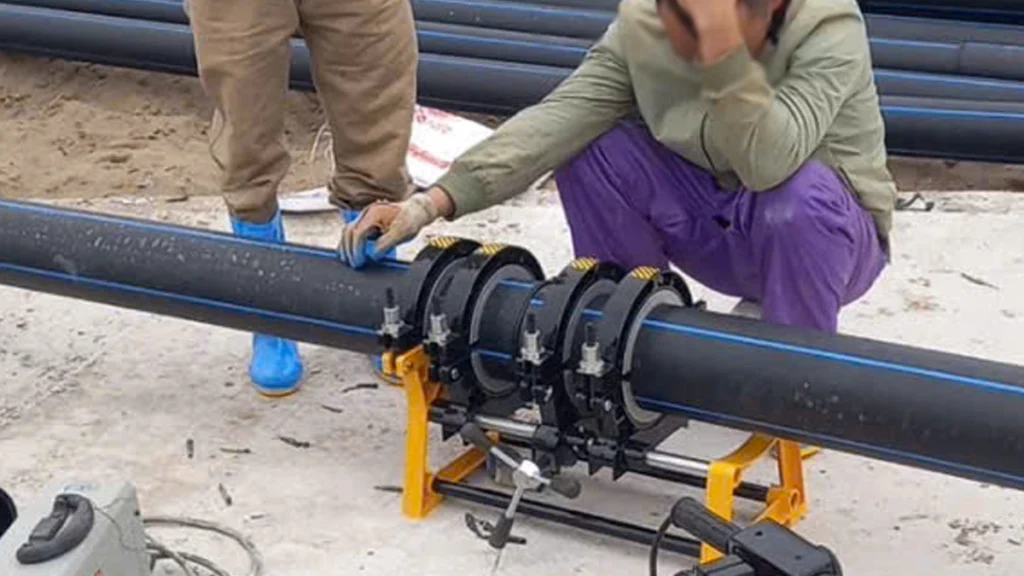
Manufacturing Excellence, Quality Control & Factory Direct Support
Ekberg Welding positions itself as a manufacturing partner rather than just a vendor. This distinction is crucial for B2B buyers who rely on long-term reliability.
Strict Quality Assurance and Testing Protocols
Every butt fusion machine leaving the factory undergoes a rigorous battery of tests. Hydraulic systems are pressure-tested to 1.5x their working load to check for seal integrity. Heating plates are subjected to thermal mapping to verify temperature uniformity across the entire surface. Frames undergo stress testing to ensure they meet the rigidity requirements for high-pressure fusion.
Material Sourcing and Component Reliability
Reliability starts with components. We utilize high-grade hydraulic seals, industrial-grade PLCs, and hardened steel for cutting blades. By sourcing components that meet global industrial standards, we ensure that our plastic pipe welding machines can withstand thousands of welding cycles in the field without premature failure.
Global Logistics and Spare Parts Availability
One concern with factory-direct purchasing is support. Ekberg addresses this with a global logistics network. We maintain a stock of critical spare parts—inserts, heating elements, facing tool blades—ready for immediate air shipment via DHL or FedEx. Because we are the manufacturer, there are no backorder delays caused by third-party distributors.
Training and Technical Certification Support
Owning the best equipment is useless if the operator cannot use it. We provide comprehensive training resources, including video tutorials and remote technical support, to certify operators on our CNC interface. This ensures your team knows how to leverage the automatic features correctly, maximizing safety and productivity.
Frequently Asked Questions (FAQ)
Q1: What is the main difference between CNC automatic and hydraulic semi-automatic HDPE pipe welding machines?
The primary difference lies in operator intervention. Semi-automatic butt fusion machines require the operator to manually actuate hydraulic valves and time the cooling phase. CNC automatic HDPE pipe welding machines control the entire process electronically—pressure, temperature, and time—based on pre-programmed standards. This eliminates human error, ensures consistent joint quality, and provides automatic data logging for compliance reports.
Q2: Can Ekberg HDPE pipe welding machines weld pipes made of materials other than HDPE (e.g., PP, PVDF)?
Yes. Our CNC control units come pre-loaded with welding parameters for various thermoplastics, including Polypropylene (PP) and PVDF. The HDPE pipe welding machine automatically adjusts the heating plate temperature (e.g., 230-250°C for PVDF) and fusion pressures to match the specific material properties, ensuring a strong chemical bond for industrial process piping.
Q3: How does the data logging feature work on your automatic HDPE pipe welding machines?
The integrated data logger records key metrics for every weld: operator ID, date/time, ambient temperature, drag pressure, bead-up pressure, heat soak time, and cooling time. This data is stored internally and can be exported via USB to Excel or PDF formats. The system effectively creates a digital quality certificate for every joint, which is essential for project inspection.
Q4: What is the typical lead time for a factory-direct order of a heavy-duty automatic welding system?
Factory-direct orders typically have a lead time of 2-3 weeks for standard models (up to DN630). This is significantly faster than many distributor channels, which may face backorders of 4-8 weeks. Custom large-diameter machines (DN1200-DN2600) or crawler-mounted units may require slightly longer production times depending on current factory capacity.
Q5: Do you provide calibration services for the automatic control units?
Yes. We provide calibration protocols and support. The CNC sensors (pressure transducers and temperature probes) should be verified annually. We offer remote guidance for calibration verification and can provide replacement calibrated sensors if necessary to ensure your plastic pipe welding machine remains compliant with ISO 21307 and local quality standards.
Conclusion
In the modern infrastructure landscape, the cost of equipment pales in comparison to the cost of failure. Choosing a high-performance automatic HDPE pipe welding machine is more than a purchase; it is a risk management strategy. By automating critical fusion parameters—pressure, temperature, and cooling time—contractors can guarantee leak-free joints, satisfy strict municipal compliance standards, and significantly accelerate project timelines.
Whether you are welding DN40mm HDPE pipe or DN1600mm mining HDPE pipes, the transition to CNC technology offers a measurable return on investment through labor savings and error prevention. Sourcing directly from Ekberg Welding ensures you receive “Tier 1” automation capabilities—including full data traceability and heavy-duty construction—without the inflated costs associated with distributor markups.
Ready to upgrade your projects? Contact Ekberg Welding today to discuss your project specifications, request a technical consultation, and get a competitive factory-direct quote for the best automatic pipe welding machine for your needs.