
Butt Fusion Machine Kits: Complete Selection Guide
Table of Contents
Butt fusion machines that deliver precise hydraulic pressure control and unwavering temperature stability are the single most critical investment for pipeline contractors. When a joint fails, the cost isn’t just the repair; it’s a liability that can easily exceed $15,000 per incident. While you can find suppliers selling components piecemeal, piecing together a fragmented system is a gamble. It often leads to hydraulic incompatibilities, heating plate variances beyond the allowable ±10°C, and a failure to meet ISO 21307 standards.
This guide breaks down the technical anatomy of a truly turnkey welding kit, outlines selection criteria for various project scales (from DN63 service lines to DN2600 trunk mains), and examines the ROI of CNC automation versus manual hydraulic systems. By the end, you will have a clear framework for selecting the right equipment for your specific SDR requirements—helping you avoid specification errors that threaten project timelines.
The Anatomy of a Complete Butt Fusion Machine Kit: What to Expect
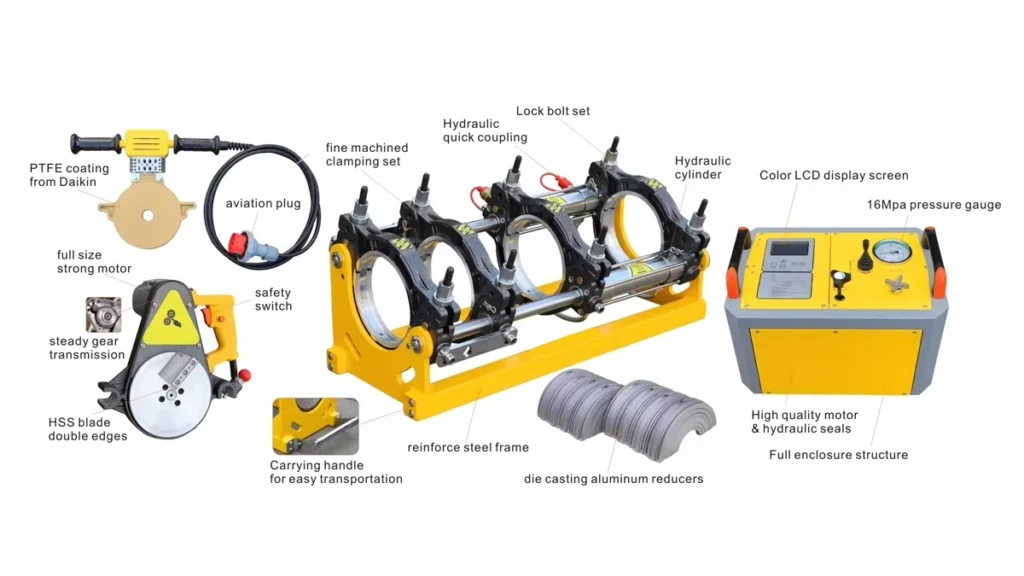
In the procurement world, the term complete kit gets thrown around loosely. For professional contractors and utility engineers, however, a kit must be a turnkey solution requiring only a power source to start welding. The danger of sourcing a chassis from one vendor and a hydraulic unit from another isn’t just a logistical headache; it’s a technical hazard. Mismatched hydraulic flow rates create jerky carriage movements, while incompatible voltage inputs between the facer and control box can fry electronics instantly.
Hydraulic Unit and Control System Specifications
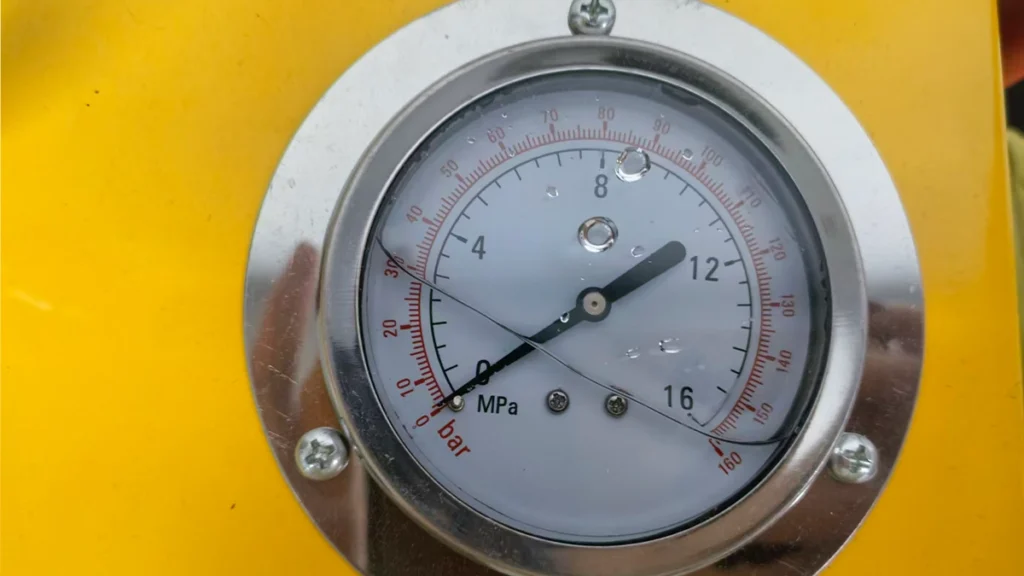
The hydraulic unit is the engine room of the fusion process. It applies the drag and interfacial pressures necessary to fuse HDPE pipe ends. A professional-grade kit must feature a hydraulic station capable of delivering pressures between 0 and 160 bar (0–16 MPa), fully adjustable to the specific diameter and SDR of your pipe.
Accuracy is non-negotiable. Pressure gauges must be Class 1.0 accuracy or better. In the dust and grit of a construction site, a low-accuracy gauge can hide pressure deviations that violate DVS 2207 standards, leading to weak joints. Additionally, the system needs an accumulator. This component maintains pressure during the cooling phase without forcing the pump to run continuously, stabilizing the joint and extending the motor’s life. Finally, look for flat-face quick couplings. Unlike standard screw fittings, flat-face couplings stop dirt from entering the system—a leading cause of hydraulic failure—and prevent oil leaks during disconnection.
Heating Plate and Milling Cutter (Facer) Performance
The heating plate is the primary variable in fusion quality. A complete kit must include a heating element coated with high-grade PTFE (polytetrafluoroethylene) to stop molten plastic from adhering to the surface. The critical metric here is temperature uniformity. Across the entire plate surface, the temperature deviation must stay within ±5°C. If a DN315 plate reads 220°C at the center but drops to 205°C at the edges, the weld will have uneven melt depth, creating stress concentration points that crack when the ground shifts.
The milling cutter (facer) is equally important and requires a high-torque electric motor. For larger machines (DN1000-DN2600mm), chain-driven mechanisms are superior to direct gear drives, as they can handle the immense torque needed to shave oxidized layers off thick-walled pipes. Safety is also paramount; the facer must include a limit switch that prevents the blades from spinning unless the unit is correctly seated in the chassis, protecting operators from severe injury.
Chassis and Clamping Inserts for Versatility
The machine body, or chassis, must be built from rigid materials—typically aluminum casting for smaller units and reinforced steel for larger diameters. It needs to withstand high drag forces without flexing. If the chassis flexes during the high-pressure fusion cycle, pipe alignment shifts, causing a “high-low” mismatch that exceeds the permissible <10% wall thickness deviation.
A truly complete kit includes a full set of layered aluminum inserts. For instance, a standard Ekberg 315mm hydraulic butt fusion machine kit should come with inserts for 90mm-315mm HDPE pipes. These must be machined to precise tolerances. Generic or “universal” inserts often fit loosely, resulting in ovality issues where the pipe isn’t rounded during clamping, compromising the integrity of the fusion zone.
Essential Accessories and Tooling
Field efficiency is often determined by the “small” items in a kit. A complete package must include a stub end holder for welding flange adapters—a frequent necessity for valve connections. Furthermore, a dedicated carrying rack (basket) for the heater and facer is mandatory. Placing a 220°C heater directly on the ground damages the PTFE coating and invites contaminants. Finally, the kit should contain a maintenance tool set specific to the butt fusion welding machine’s bolts and hydraulic adjustments, ensuring that minor field repairs don’t turn into days of downtime.
Buyer’s Guide: Selection Criteria for Butt Fusion Machines
Choosing the right butt fusion machine involves balancing technical specs with project economics. The biggest HDPE pipe welding machine isn’t always the best fit. Instead, the decision depends on pipe diameter range, SDR ratings, and the data traceability required by the asset owner.
Matching Machine Specs to Pipe Diameter and SDR
Pipeline projects generally fall into specific diameter bands. Contractors working on service lines and house connections typically need a DN63–160 unit. Conversely, main distribution lines usually call for a DN160–315 or DN315–630 hdpe fusion machine.
The Standard Dimension Ratio (SDR) of the pipe significantly impacts butt fusion machine selection. A butt fusion welding machine rated for DN630 HDPE pipe might handle SDR 17 (thin wall) easily but stall on SDR 7.4 (thick wall) used in high-pressure mining applications. Thick-walled pipes require significantly higher interfacial pressures to achieve proper bead formation. Buyers must verify that the hydraulic cylinder cross-section and pump capacity can generate the required force—often exceeding 60 bar drag pressure plus fusion pressure—without failure. Using an under-powered hdpe fusion machine on low-SDR pipe is a primary cause of “cold welds.”
Manual vs. Semi-Automatic vs. CNC Systems
The choice between manual, hydraulic, and CNC systems is largely driven by compliance requirements.
- Manual Butt Fusion Machines: Best for low-pressure agricultural drainage or irrigation where strict data logging isn’t required. These rely entirely on operator skill.
- Hydraulic Butt Fusion Machines: The industry standard for general infrastructure. The operator controls phases via levers, but the hydraulic system maintains the pressure.
- Automatic Butt Fusion Machines: Mandatory for gas and potable water lines in many jurisdictions. These butt fusion machines automatically control pressure, temperature, and time based on the selected standard (ISO/DVS). They eliminate the “human element” during the critical changeover phase (removing the heater), ensuring it happens within the allotted seconds (e.g., <8 seconds for DN250).
Comparison of Machine Types
| Feature | Manual / Hydraulic | CNC Automatic |
|---|---|---|
| Pressure Control | Operator Visual Check | Computer Controlled |
| Data Logging | Manual Written Log | Digital Auto-Record (USB/Cloud) |
| Changeover Time | Dependent on Operator Speed | Automated / Guided |
| Primary Application | Agriculture, Drainage | Gas, Water, Mining, Industrial |
| Cost Factor | Low (1x) | High (3x – 4x) |
Power Supply and Field Logistics
Power stability is critical for electronic welding equipment. A common failure mode for CNC automatic pipe welding machines is voltage fluctuation causing the computer to reset mid-weld. When sizing a generator, the rule of thumb is to secure a capacity 1.5 times the total rated power of the butt fusion machine to handle the startup surge of the facer motor.
For a 250mm hydraulic butt fusion machine, a 5kW generator is typically sufficient. However, a heavy-duty 1000mm hydraulic butt fusion machine draws approximately 24.5 kW (17.5 kW for the heater alone). This requires a substantial tow-behind generator of at least 35-40 kVA. Buyers must plan for this; standard portable construction generators will trip their breakers immediately upon heater activation.
Supplier After-Sales Support and Spare Parts Availability
A butt fusion machine is only as reliable as its supply chain. In the harsh environment of pipeline construction, hydraulic seals blow, limit switches break, and facer blades dull. A supplier must offer a comprehensive inventory of these specific wear parts.
When evaluating a supplier, ask for the lead time on a replacement hydraulic cylinder or a new set of electronic control boards. If the answer is “three weeks from the factory,” that represents three weeks of stalled progress. Top-tier suppliers stock these critical components regionally or offer “emergency kits” containing seals, O-rings, and blades that can be purchased alongside the butt fusion welding machine.
Standards and Compliance: Why Certified Kits Matter
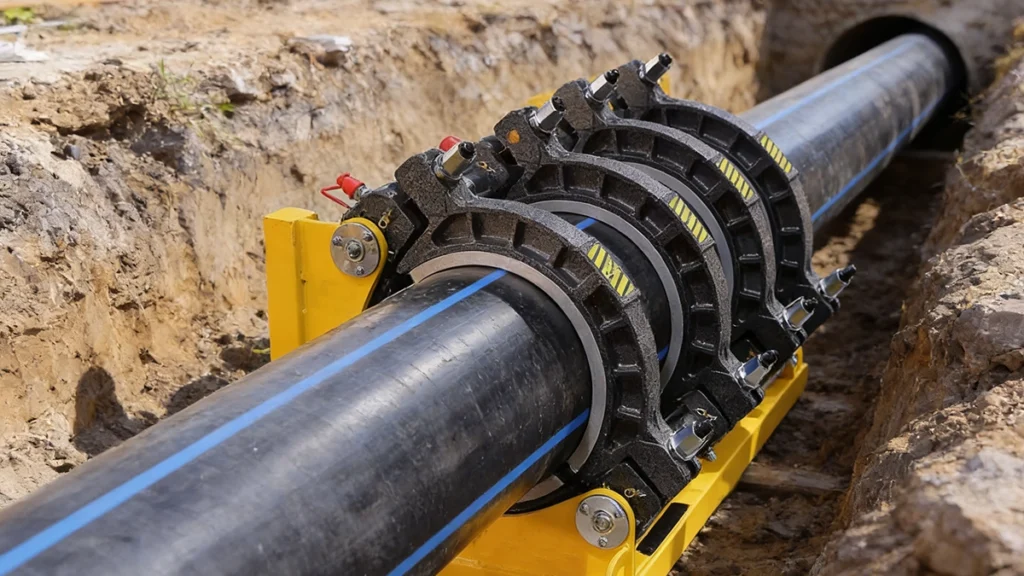
In modern infrastructure projects, a weld is more than a physical joint; it is a data point that must be verified. Complete kits from reputable suppliers are engineered to meet specific international standards, ensuring every joint passes inspection.
Navigating ISO 21307 and DVS 2207 Welding Parameters
Different regions and applications demand different welding parameters. ISO 21307 defines three main pressure procedures: Single Low Pressure (SLP), Dual Low Pressure (DLP), and Single High Pressure (SHP). A HDPE pipe jointing machine capable of SHP (common in North America) must exert roughly three times the force of an SLP machine.
Alternatively, the German DVS 2207 standard is often specified for industrial and chemical piping. It requires a precise heat soak pressure of ≤0.02 N/mm² and a specific cooling curve based on wall thickness. A generic machine kit may not have a pressure gauge sensitive enough to register the low drag pressure required during the heating phase, leading to excessive bead roll-back. Ekberg Welding kits are calibrated to support both ISO and DVS parameters, giving contractors the flexibility to bid on diverse projects.
Equipment Safety Certifications (CE, LVD, EMC)
Safety compliance is non-negotiable. The heating plate and electric facer must carry CE markings, specifically adhering to the Low Voltage Directive (LVD) and Electromagnetic Compatibility (EMC) regulations. EMC is particularly important; a powerful industrial heater can generate electromagnetic interference that disrupts nearby communication equipment or the butt fusion welding machine’s own control unit if not properly shielded.
Data Logging and Traceability for Inspections
For municipal water and gas distribution, the “black box” data logger is essential. It records the operator ID, joint number, date, time, ambient temperature, heating plate temperature, drag pressure, fusion pressure, and cooling time.
This data is compiled into a weld report (often in PDF or encrypted format) that auditors review. If a pipeline fails five years later, this report serves as proof that the weld was performed according to spec. Manual logging is increasingly rejected by project owners due to the risk of falsification or human error.
Industry Applications for Butt Fusion Solutions
Municipal Water and Gas Distribution Networks
Urban infrastructure requires absolute reliability. A leak in a buried gas line under a city street is a catastrophic liability. Consequently, municipal contracts almost exclusively specify CNC automatic butt fusion machines with full traceability. The equipment must be robust enough to handle the frequent start-stop nature of urban work while maintaining the precision to weld SDR 11 and SDR 17 pipes typically used in these networks.
Mining and Industrial Slurry Pipelines
Mining environments are abusive testing grounds for welding equipment. Pipelines here transport abrasive slurries and are often thick-walled (SDR 7.4 or SDR 9) to resist wear. This application demands heavy-duty hydraulic frames with immense clamping force. The Ekberg DN1000 series, weighing over 2600kg, is designed specifically for this sector, capable of exerting the high interfacial pressures needed to fuse walls exceeding 80mm in thickness.
Agricultural Irrigation and Drainage Systems
In agriculture, the priority shifts to speed and cost-effectiveness. Irrigation networks often span kilometers of open fields using lower pressure SDR 26 or SDR 32 pipe. Here, a semi-automatic or manual hydraulic kit is often the optimal choice. The extreme precision of a CNC unit is less critical than the portability and rugged simplicity needed to move the butt fusion welding machine rapidly between hundreds of joints in a muddy field.
Ekberg Welding: Manufacturing Excellence & Quality Control
Precision Manufacturing and In-House Machining
Quality control starts with the raw metal. Ekberg Welding utilizes advanced CNC machining centers to fabricate the hdpe welding machine chassis and hydraulic cylinders in-house. This ensures that the alignment of the clamping jaws is perfect. Even a 0.5mm misalignment in the chassis machining can lead to a stepped joint, which acts as a stress riser and reduces the pipeline’s pressure rating. By controlling the machining process, Ekberg guarantees alignment accuracy of ≤0.2mm.
Rigorous Testing Protocols for Heaters and Hydraulics
Before any kit is crated, it undergoes a battery of tests. Hydraulic units are subjected to pressure retention tests, where they must hold maximum pressure (e.g., 160 bar) for a set duration without dropping, verifying the integrity of seals and check valves. Heating plates undergo thermal mapping to verify that the surface temperature remains within the ±5°C tolerance across the entire plate. This prevents “cold spots” that could cause brittle welds.
Global Logistics and Export-Grade Packaging
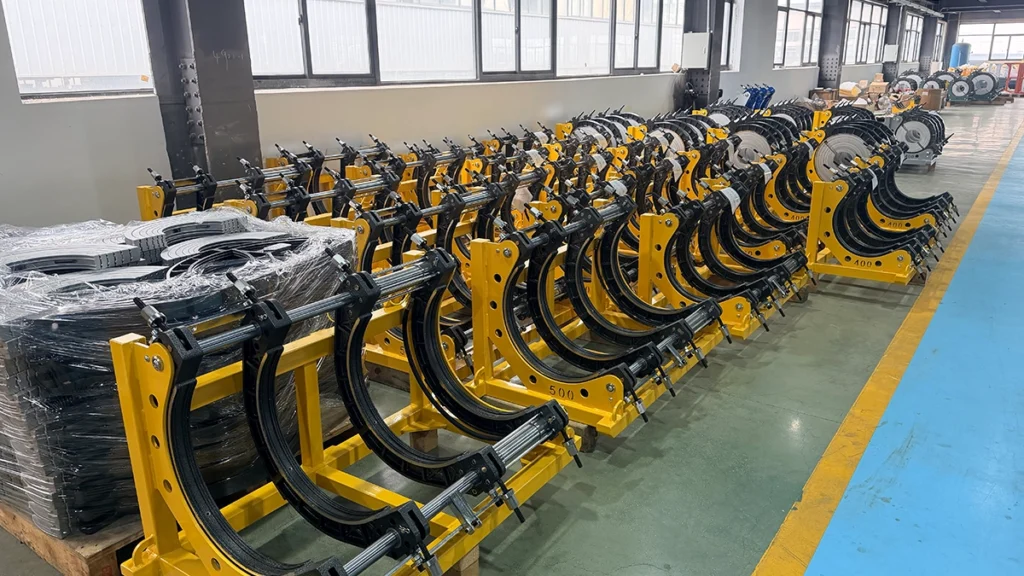
Shipping a 2.5-ton machine halfway across the world requires more than cardboard. Complete kits are packaged in reinforced, fumigated wooden crates designed to withstand the shocks of ocean freight and rough handling at ports. The hydraulic stations are drained of fluids (or sealed with transport plugs) to prevent leaks, and sensitive electronics are wrapped in moisture-barrier packaging to prevent corrosion from sea air.
Frequently Asked Questions
Q1: What specific items are included in a standard Ekberg butt fusion machine kit?
A standard kit includes the butt fusion welding machine body (chassis), a hydraulic control station with quick couplings, a PTFE-coated heating plate, an electric milling cutter (facer), a carrying basket for the heater/facer, and a full set of aluminum reduction inserts (e.g., 90mm to 315mm). It also includes a tool kit for maintenance and necessary operation manuals.
Q2: Can the hydraulic unit from an Ekberg kit operate with other brands of machine bodies?
Generally, no. While hydraulic principles are similar, the flow rates, quick-coupling sizes, and pressure calibration are specific to the machine’s cylinder volume. Mixing brands can lead to dangerous pressure spikes or insufficient clamping force. It is strongly recommended to use the matched hydraulic unit provided in the complete kit.
Q3: How do I determine if I need a CNC automatic butt fusion machine or if a standard hydraulic unit is sufficient?
If your project requires ISO 12176 data traceability (common in gas and municipal water), or if you need to eliminate operator error for liability reasons, a CNC machine is required. For general irrigation, drainage, or projects where data logging is not specified by the engineer, a standard hydraulic unit is a cost-effective and reliable solution.
Q4: What is the typical lead time for shipping a complete container of mixed-size welding machines?
For standard models (DN160–DN630), Ekberg maintains a stock of components that allows for rapid assembly. A typical mixed container order can be ready for shipment within 15–20 days. Custom voltage requirements or specialized CNC configurations may extend this timeline slightly. Always confirm with our sales team for current production schedules.
Q5: Does Ekberg provide calibration certificates for the heating plates and pressure gauges?
Yes. Every machine includes a factory inspection certificate verifying that the pressure gauge accuracy and heating plate temperature uniformity meet the required standards. For projects requiring third-party validation, we can facilitate calibration through authorized testing bodies prior to shipment.
Conclusion
Sourcing butt fusion machines is a strategic decision that directly impacts the long-term integrity of your pipeline projects. A complete, factory-integrated kit eliminates the risks associated with component mismatch, ensuring that your hydraulic pressures, heating temperatures, and alignment tolerances work in perfect unison. Whether you are welding DN63 service lines or DN1200 high-pressure slurry mains, the difference between a successful project and a costly failure often lies in the quality of the equipment selected.
By choosing a reputable supplier like Ekberg Welding, you gain access not just to hardware, but to a manufacturing ecosystem compliant with ISO and DVS standards. Don’t leave your project’s success to chance with piecemeal equipment.
Ready to equip your team with reliable infrastructure solutions? Contact Ekberg Welding today for a customized quote on complete butt fusion machine kits tailored to your specific pipe dimensions and project requirements.