
How Butt Fusion Machines Work for HDPE Pipe Welding
Table of Contents
High-pressure gas and water infrastructure depends heavily on butt fusion machines to provide joint integrity capable of withstanding pressures exceeding 1.6 MPa and temperature swings from -20°C to 40°C. Consider the stakes: a single failed joint in a DN630 pipeline can saddle contractors with over $50,000 in excavation, environmental cleanup, and repair costs. Equipment precision isn’t just a luxury—it’s an operational necessity.
This engineering guide breaks down the thermal fusion process, exploring the physics of intermolecular diffusion, compliance with ISO 21307 standards, and the non-negotiable TPT (Temperature, Pressure, Time) triangle. We will also weigh manual against hydraulic systems to help you align equipment capabilities with specific project SDR ratings. By the end, you will possess a solid framework for selecting the right gear for DN90–DN2600 HDPE projects, helping you avoid expensive specification errors.

The Engineering Principles: How Butt Fusion Actually Works
Butt fusion isn’t simply “gluing” plastic components; it is a thermomechanical event that fundamentally alters the molecular structure of pipe ends to forge a single, continuous entity. For engineers and procurement officers, grasping the physics driving the hdpe pipe welding machine is vital for assessing equipment value.
The Physics of Intermolecular Diffusion
Zoom in to the microscopic level, and you’ll find high-density polyethylene (HDPE) existing as a semi-crystalline polymer. In its solid state, molecular chains are packed tightly within crystalline lamellae. The butt fusion process applies heat to shift this material from a crystalline structure to an amorphous, viscous state.
When the heating plate engages, polymer chains gain kinetic energy and begin to unravel. Once the heater is withdrawn and the pipe ends are forced together, these amorphous chains tangle across the interface—a phenomenon called intermolecular diffusion. As the joint cools under regulated pressure, the chains re-crystallize. Executed correctly, the boundary line between the two pipes vanishes completely, yielding a monolithic structure.
Material compatibility is the linchpin here. The Melt Flow Index (MFI) of the pipes must align (usually within 0.2–1.4 g/10min). Welding pipes with drastically mismatched MFIs (e.g., 0.3 vs 1.0) generates stress concentrations; the viscosity difference blocks uniform entanglement, resulting in brittle, unreliable joints.
The Three Critical Parameters: Temperature, Pressure, Time
The integrity of any fusion operation hangs on the “TPT” triangle. A deviation in just one of these parameters compromises the joint’s capability.
1. Temperature: For PE100 and PE80 materials, the heating plate temperature must sit strictly between 200°C and 230°C. Ekberg butt fusion welding machines deploy high-precision thermostats to lock this range in with a variance of no more than ±5°C. Run too cold, and the plastic never reaches its amorphous state; run too hot, and the material oxidizes, degrading into brittleness.
2. Pressure: Pressure is dynamic, not static. The total fusion pressure P(total) combines the theoretical fusion pressure mandated by the standard (often 0.15 N/mm²) with the Drag Pressure P(drag). Drag pressure is the force needed to physically move the carriage and pipe, a variable that fluctuates based on pipe weight and friction.
3. Time: Every phase—heating, changeover, and cooling—operates within a specific time window dictated by pipe wall thickness. “Heat soak” time, for instance, generally requires 10 seconds per millimeter of wall thickness.
The Welding Cycle Phases (ISO 21307 / DVS 2207)
Adhering to standards like ISO 21307 or DVS 2207 means following a rigid cycle. A capable butt fusion welding machine must execute these phases with absolute precision:
- Bead Up: High pressure forces the pipe ends against the heater until a uniform bead (0.5mm to 2.0mm high) rings the circumference.
- Heat Soak: Pressure drops to near zero (drag pressure only). This lets heat soak deep into the pipe wall without pushing molten material out of the joint.
- Changeover: The danger zone. The heater plate is removed, and the pipes are brought together. For large diameter pipes (>DN630), this window is tight—often under 20 seconds—to prevent the molten surfaces from cooling and oxidizing into a “cold joint.”
- Fusing/Ramping: Pressure increases linearly to the fusion level. Slamming pipes together squeezes out the molten plastic, leaving a cold, weak interface.
- Cooling: The joint must remain under fusion pressure until the core temperature dips below 60°C.
Why the Joint Becomes Stronger Than the Pipe
Engineers often cite the axiom that the weld is the strongest part of the system. In butt fusion, this holds true for tensile strength. Because the joint area is often slightly thicker due to bead formation and has been re-crystallized under pressure, a properly fused joint typically boasts higher tensile yield strength than the virgin pipe. During destructive tensile testing, a high-quality weld will force the pipe to yield and stretch (ductile failure) outside the joint area, rather than the joint snapping (brittle failure).
Anatomy of a Butt Fusion Machine: Key Components & Functions
To deliver the precision outlined above, butt fusion machines rely on four primary sub-assemblies. Recognizing the build quality of these components allows buyers to separate premium infrastructure equipment from budget alternatives.
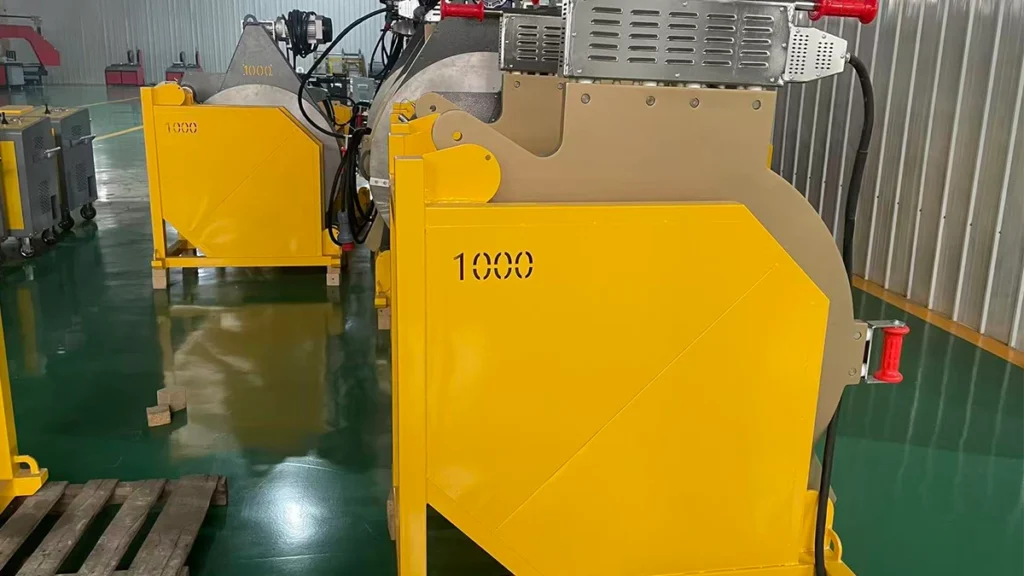
The Chassis and Clamping System
The chassis serves as the plastic pipe welding machine’s backbone and requires immense structural rigidity. When welding a DN1200 pipe with a 100mm wall thickness (SDR 11), hydraulic cylinders exert tons of axial force. If the chassis flexes or twists under this load, the pipe ends will misalign, causing a “high-low” mismatch.
Ekberg constructs chassis using high-tensile steel and reinforced aluminum alloys. Our butt fusion machine clamping inserts to exact tolerances, ensuring the pipe stays perfectly round and correcting the natural ovality often found in large-diameter HDPE pipes sitting in stockpiles.
The Hydraulic Unit and Control Station
Think of the hydraulic unit as the operation’s muscle. Unlike standard hydraulic pumps, fusion units must maintain static pressure for extended periods (cooling times for thick walls can surpass 60 minutes) without a hint of fluctuation.
Advanced units incorporate an accumulator to stabilize pressure even if the motor cycles off. The control station houses pressure gauges and relief valves. In CNC models, a PLC (Programmable Logic Controller) takes over, automatically calculating P(drag) and adjusting system pressure to eliminate human calculation errors.
The Heating Plate (Heater)
The heating plate is the most delicate component. Typically cast aluminum with a double-layer PTFE (Teflon) coating, it prevents molten plastic from sticking. Temperature uniformity is the critical spec here. A budget heating plate might read 220°C at the sensor but drop to 190°C at the edges. Ekberg heaters use optimized element geometry to keep temperature variance across the entire surface within ±5°C, guaranteeing consistent melting across the pipe face.
The Trimmer (Facing Tool)
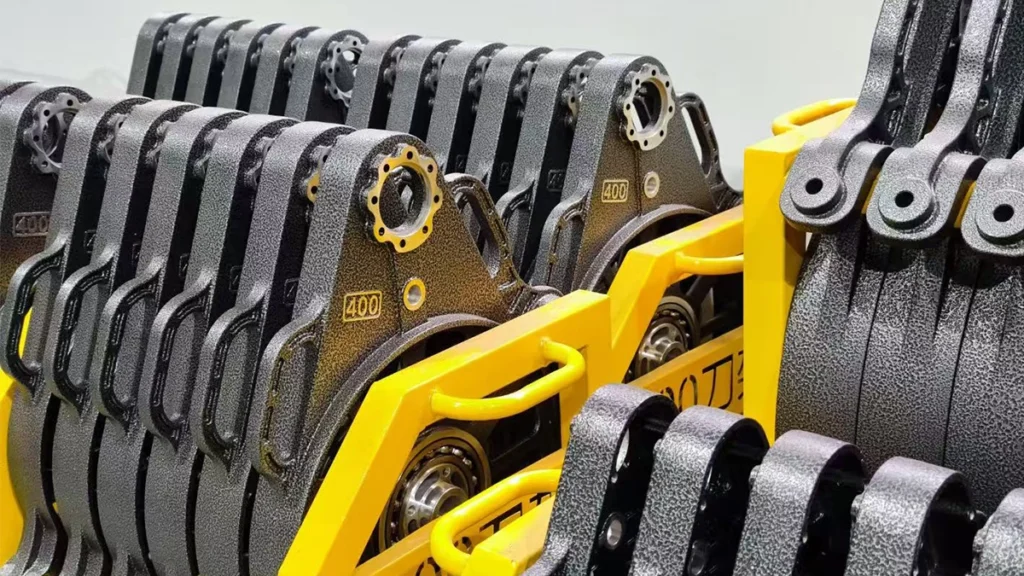
Before heating, pipe ends must be virgin material and perfectly parallel. The trimmer, a rotating disc armed with high-speed carbon steel blades, shaves the pipe ends. It performs two vital jobs: removing the oxidized outer layer and squaring the pipe ends for 100% contact. This requires a high-torque electric motor, particularly when dealing with “sticky” materials like PP or thick-walled HDPE.
Step-by-Step Operation Guide for Pipeline Contractors
For contractors, the operational workflow dictates both project speed and quality. Here is how the butt fusion welding machine functions in the field to ensure compliance.
Preparation and Alignment (The Zero-Gap Rule)
The process starts by locking the pipes into the chassis clamps. Operators must scrub the pipe ends to banish dirt, grease, or moisture—the sworn enemies of fusion. Once clamped, the operator brings the ends together to check alignment. The maximum allowable mismatch is typically 10% of the wall thickness. If the pipes are oval, tightening specific clamps can round them out.
The Heating and Changeover Critical Window
Once trimmed, the heating plate slides in. The operator applies pressure to raise the initial bead, then drops the pressure for the heat soak. Now, the operator watches the clock—or the CNC screen.
When the heat soak timer hits zero, the hdpe pipe butt fusion machine carriage opens, the heater is removed, and the carriage closes. This “changeover” demands speed. For a 315mm pipe, ISO 21307 allows a maximum of 8-10 seconds. Any delay allows the molten surface to cool, forming a thin “skin” that blocks molecular entanglement.
Bead Formation and Visual Inspection
As pipes press together at fusion pressure, molten plastic rolls back to form the final bead. A seasoned technician can judge a weld instantly by the bead’s look. It should be a uniform double roll, symmetrical on both sides of the fusion line. Bead width is a key tell; a DN400 pipe, for example, should show a bead width of 10-14mm. Too small? Insufficient pressure or heat. Too large or curled wrongly? Excessive pressure.
Cooling Phase and Crystallization
The most frequent field error is cutting the cooling phase short to boost production speed. The pipe must remain clamped under fusion pressure for the full duration mandated by the standard. Releasing pressure while the core remains hot (>60°C) allows molten material to retract, creating voids or vacuum bubbles inside the joint wall. These voids remain invisible from the outside but become ticking time bombs under high-pressure service.
Machine Selection Criteria: Manual vs. Hydraulic vs. CNC
Choosing the right butt fusion machines hinges on pipe diameter, project pressure requirements, and compliance needs.
When to Use Manual Machines (Small Diameter)
Manual butt fusion machines, driven by a hand wheel or lever, fit small diameters (typically 63mm to 160mm) and low-pressure tasks like drainage or irrigation. They rely entirely on the operator’s physical feel to apply pressure. While budget-friendly, they lack the consistency needed for high-pressure gas lines and generally don’t make the cut for critical infrastructure.
Advantages of Hydraulic Butt Fusion Machines
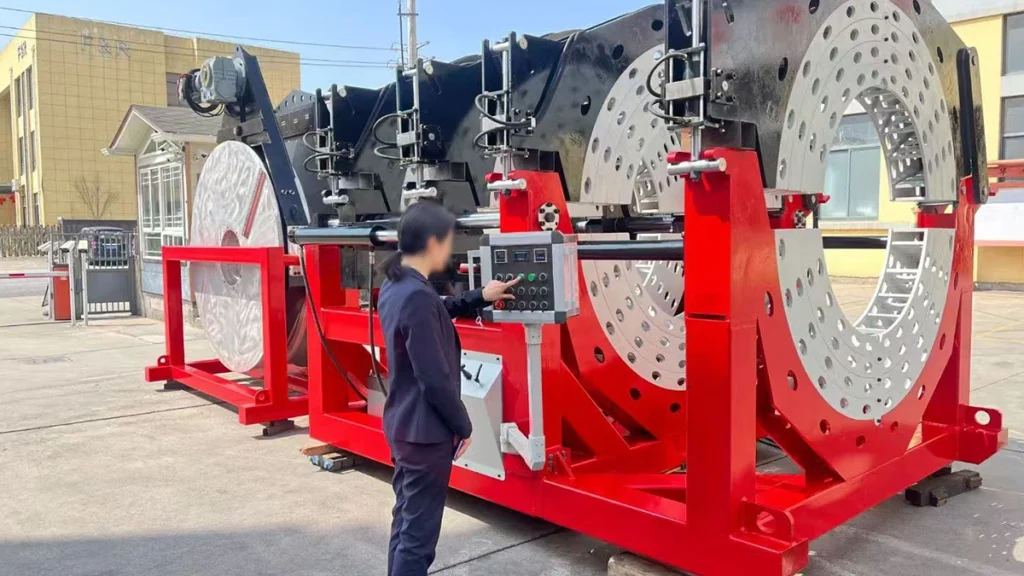
Hydraulic butt fusion machines represent the industry standard for pipes from 160mm to 1600mm. The hydraulic system delivers the massive force required to fuse thick-walled pipes and, crucially, maintains that force consistently during long heat soak and cooling cycles, sparing the operator from fatigue. For most water and industrial projects, a standard hydraulic unit strikes the best balance between cost and performance.
The Rise of Automatic Butt Fusion Machines for Accountability
Liability is a massive concern for gas distribution and municipal water projects. CNC (Computer Numerical Control) automatic butt fusion machines eliminate the human factor. The machine scans the HDPE pipe’s barcode (identifying material and SDR), calculates exact parameters, and governs the hydraulics automatically.
Most importantly, these butt fusion welding machines log every data point—temperature, pressure, time, and date—into an encrypted report. If a joint fails a decade later, the utility company can audit that specific weld record. This level of traceability is fast becoming mandatory in European and North American markets.
Matching Machine Size to SDR Ratings
Buyers must respect the Standard Dimension Ratio (SDR) of the pipe. A DN630 SDR 11 pipe (thick wall) demands significantly more fusion force than a DN630 SDR 26 (thin wall). A butt fusion welding machine rated for DN630 might have a hydraulic cylinder strong enough for SDR 26 but may struggle to hit the required interfacial pressure for SDR 7 or SDR 9 pipes used in mining. Always cross-reference the total cylinder area and max pressure (in bar) against your project’s thickest pipe specs.
| Feature | Manual Machine | Hydraulic Semi-Auto | CNC / Automatic |
|---|---|---|---|
| Diameter Range | 63mm – 250mm | 40mm – 2600mm+ | 63mm – 630mm+ |
| Pressure Control | Operator Feel | Hydraulic Gauge | Computer Controlled |
| Data Logging | None | Optional (Data Logger) | Integrated & Encrypted |
| Typical Use | Drainage, Irrigation | Water, Industrial, Mining | Gas, Municipal Water |
| Cost | Low | Medium | High |
Ekberg Manufacturing Excellence & Factory Capabilities
At Ekberg Welding, we don’t just assemble parts; we engineer solutions for the planet’s most unforgiving pipeline environments.
Precision Machining and Quality Control
Our chassis are born from laser-cutting technology and CNC machining centers, ensuring alignment tolerances stay within 0.1mm. This precision means that when you clamp two pipes, they align naturally—no excessive force or shimming required. We pressure-test every hydraulic cylinder to 150% of its rated capacity to guarantee seal integrity under heavy loads.
Component Sourcing and Durability Testing
We source premium hydraulic seals and electrical components built to survive harsh field conditions, from the freezing Scandinavian tundra to the baking heat of Australian mines. Our heating plates undergo rigorous thermal mapping to verify the PTFE coating delivers uniform heat transfer without hot spots.
Global Certification and Spare Parts Support
Every Ekberg butt fusion welding machine carries CE certification and complies with ISO 12176-1 standards for fusion equipment. We know downtime burns money, so we maintain a global inventory of non-proprietary spare parts. While our core technology is proprietary, we use standard industrial hydraulic fittings where possible, simplifying local maintenance and repair in remote locations.
Frequently Asked Questions
Q1: What is the difference between butt fusion and electrofusion?
Butt fusion joins pipes by heating the ends and pressing them together, requiring no extra fittings. It is the cost-effective choice for long, straight pipelines. Electrofusion, conversely, uses special fittings with embedded heating coils to melt the pipe surface. While electrofusion is perfect for tight spaces, repairs, or tie-ins where a butt fusion machine won’t fit, the fittings make it significantly more expensive per joint.
Q2: Can I join pipes with different wall thicknesses (SDRs) using a butt fusion machine?
Generally, no. Butt fusion requires pipe ends to share the same wall thickness to ensure uniform pressure distribution and bead formation. Joining different SDRs creates a stress concentration at the step—a weak point. For mismatched walls, use a machined transition fitting, electrofusion couplers, or bevel the thicker pipe (if local standards permit).
Q3: How do environmental conditions (cold/wind) affect the butt fusion process?
Cold and wind accelerate cooling on both the heating plate and the molten pipe ends. In temperatures below 5°C or windy conditions, a welding tent is mandatory to shield the butt fusion welding machine. Furthermore, standards often recommend bumping the heating plate temperature by 10-15°C (within limits) or extending the heat soak time to ensure the pipe wall is fully saturated with heat.
Q4: What is the typical service life of Ekberg butt fusion machines?
With proper maintenance, an Ekberg hydraulic butt fusion welding machine is engineered for a 10-15 year service life. The chassis and hydraulic body are incredibly durable. While wear parts like trimmer blades, heating plate PTFE coating, and hydraulic seals need periodic replacement based on usage, the core hdpe pipe welding machine is built as a long-term capital investment.
Q5: How often does the butt fusion machines require calibration?
ISO standards and best practices dictate that pressure gauges and temperature sensors be calibrated every 12 months. This confirms that the pressure reading on the gauge matches the actual force applied to the pipe and that the heater is hitting the correct temperature. Ekberg provides full calibration certification services for all our units.
Conclusion
A pipeline’s integrity is defined by its weakest link, but with butt fusion machines, that link becomes the system’s strongest point. From the molecular physics of diffusion to the brute force of hydraulic pressure, successful fusion demands a harmony of Temperature, Pressure, and Time. Whether you are welding DN110 for a local water supply or DN1200 for a high-pressure mining slurry line, your equipment choice dictates the safety and longevity of the infrastructure.
Ekberg Welding delivers the engineering precision, robust chassis design, and intelligent control systems needed to meet strict ISO 21307 compliance while maximizing contractor ROI. Don’t leave joint integrity to chance.
Ensure leak-free pipelines with Ekberg’s advanced welding technology. Contact our engineers today for a technical consultation, a catalog of our CNC and hydraulic series, or a competitive factory-direct quote.