
Butt Fusion Machines: Complete Guide for HDPE Pipes
Table of Contents
Butt fusion machines that operate with precise hydraulic pressure control and heating plates calibrated to 210°C ± 10°C are the only reliable defense against catastrophic joint failures in high-pressure HDPE pipelines. For municipal water authorities, gas distribution networks, and industrial mining operations, the price of a single failed joint can easily surpass $15,000 when you factor in downtime, excavation, and environmental remediation.
Despite the high stakes, many contractors still struggle with inconsistent bead formation, drag pressure miscalculations, and adherence to rigorous ISO 21307 standards. This guide breaks down the engineering mechanics of the fusion cycle, compares manual versus CNC automation for regulated industries, and outlines the essential technical specifications for procurement. We also provide critical data on matching the butt fusion machine capacity to pipe SDR ratings and understanding the ROI of factory-direct equipment. By the end, you will have a clear framework to select the right equipment for DN63–DN1600 projects—ensuring compliance and avoiding expensive specification errors.

The Engineering Mechanics of Butt Fusion Welding
The structural integrity of a thermoplastic pipeline hangs on a single concept: molecular entanglement. Unlike metal welding, which introduces filler material, butt fusion creates a monolithic joint where the pipe ends essentially become a single homogenous unit. This process isn’t magic; it is governed by strict thermodynamic and mechanical principles.
The Four Critical Phases of the ISO 21307 Cycle
To achieve a weld stronger than the pipe itself, operators must strictly follow the four distinct phases outlined in ISO 21307. The cycle kicks off with the Bead-up Phase. During the bead-up stage, the HDPE pipe ends are pressed against the heating plate at a controlled pressure (usually 0.15 MPa plus drag pressure) until a continuous and uniform bead is formed around the pipe circumference. This step guarantees complete contact between the pipe face and the heat source.
Once that bead is established, the process shifts to the Heat Soak Phase. Crucially, the pressure must drop to near zero—maintaining just enough force to keep the pipe against the plate without pushing out the molten material. For HDPE, the heating plate stays between 200°C and 220°C. The duration here is calculated based on wall thickness ($\approx 10 \times e_n$ seconds), ensuring the heat-affected zone runs deep enough for proper molecular fusion.
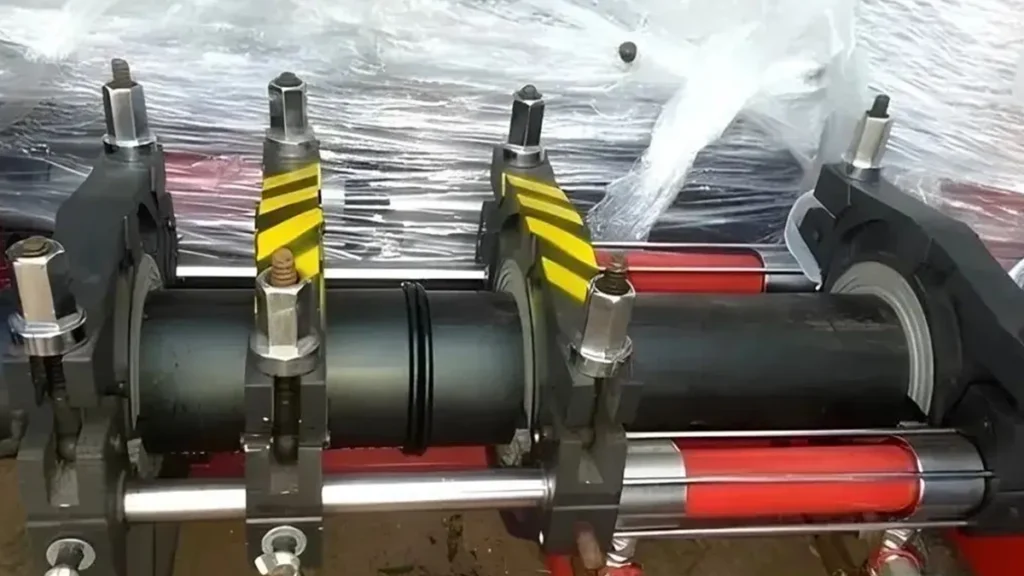
The Changeover Phase is the most time-sensitive step. The heating plate is removed, and the pipe ends are brought together. Speed is everything here; if you are too slow, the molten surfaces cool or oxidize. Finally, the Cooling Phase applies the joining pressure while the polymer recrystallizes. According to ISO 21307 (High-Pressure Procedure), the joint must be maintained under fusion pressure for at least 0.43 × the nominal wall thickness (eₙ) minutes during the cooling phase to avoid internal voids or brittle fracture.
Understanding Interfacial Pressure vs. Drag Pressure
A frequent failure point in pipeline construction is ignoring drag pressure. Drag pressure is the hydraulic force required simply to overcome the friction of the HDPE pipe welding machine carriage and the dead weight of the pipe. It is not part of the fusion pressure; it must be added to it.
If a butt fusion machine needs 40 bar just to move the pipe, and the welding standard calls for 60 bar of interfacial pressure, your gauge needs to read 100 bar. If you fail to compensate for drag, you end up with weak, low-pressure welds.
Engineers must also distinguish between “High Pressure” (SHP) and “Low Pressure” (SLP) welding standards. While ISO 21307 SLP and DVS 2207 typically utilize interfacial pressures around 0.15 MPa, North American standards (ASTM F2620) and ISO SHP push significantly higher forces (up to 0.52 MPa) to slash cooling times. Ekberg hydraulic systems are engineered with high-capacity cylinders to handle both, ensuring a single butt fusion machine can execute compliant welds regardless of the regional specification.
Material Compatibility and Environmental Constraints
Butt fusion is the standard for HDPE (High-Density Polyethylene), PP (Polypropylene), and PVDF (Polyvinylidene Fluoride). However, you cannot simply weld different materials together. Attempting to fuse HDPE to PP is a recipe for disaster, as their melt flow indices and molecular structures are incompatible. Furthermore, pipes with different Standard Dimension Ratios (SDR) should never be butt fused. The difference in wall thickness creates stress concentrations and misalignment at the ID (Inner Diameter).
The environment also dictates weld quality. Most manufacturers, Ekberg included, specify an operating ambient temperature range of -5°C to +40°C. Welding below 5°C demands the use of welding tents and potentially bumping up the heating plate temperature (within allowable limits) to offset rapid heat loss. Wind is another adversary; drafts can cool the heating plate unevenly or chill the molten pipe face during the changeover, leading to “cold joints” that might look fine visually but fail under pressure testing.
Types of Butt Fusion Machines: Manual, Hydraulic, and CNC
Choosing the right butt fusion welding machine architecture isn’t just a budget decision; it’s about matching the equipment to the criticality of the pipeline application.
Manual vs. Hydraulic: Choosing the Right Butt Fusion Machine
Manual butt fusion machines are generally limited to smaller diameters (DN 63mm – 250mm) and non-critical applications like gravity drainage or irrigation. These units rely on a hand-wheel or lever to apply pressure. While they are cost-effective, they lack the ability to maintain consistent pressure during the cooling cycle. This makes them unsuitable for pressure pipe (water mains or gas lines) because an operator cannot reliably confirm that interfacial pressure remained constant for a 20-minute cooling phase.
In contrast, Ekberg’s hydraulic series (spanning DN 40mm to 2600mm) uses a hydraulic power unit to drive the carriage. This provides the immense force needed for large-diameter pipes and maintains pressure automatically. These hydraulia butt fusion machines feature shock-resistant pressure gauges (typically 0-16 MPa range) and independent dual-channel timers to track heat soak and cooling phases. For any project involving pressurized water or industrial fluids, hydraulic actuation is the minimum entry requirement for safety compliance.
Why Regulated Industries Demand CNC Automation
For gas distribution networks and nuclear applications, human error is a liability asset owners refuse to accept. CNC (Computer Numerical Control) automatic butt fusion machines automate the entire welding process. The operator simply scans the barcode on the pipe (RFID), and the butt fusion machine’s PLC automatically configures the welding parameters based on standards like DVS 2207 or ISO 21307.
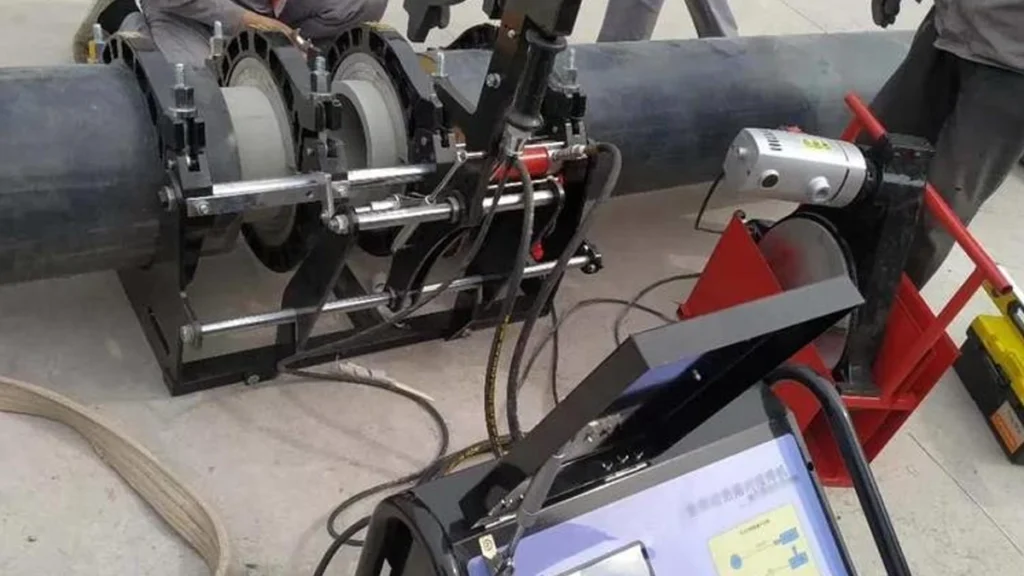
These pipe butt welders manage heating plate removal (automatic ejection), monitor drag pressure in real-time, and dynamically adjust hydraulic force. If the heating plate temperature drifts outside the ±3°C tolerance, or if the changeover time runs long, the butt fusion machine aborts the weld. This level of control is increasingly mandatory for utility companies requiring 50-year asset life guarantees.
Workshop vs. Field Machine Configurations
Field machines are built for the trench. They feature removable chassis, allowing the welding unit to be detached from the frame for use in tight spaces or overhead repairs. The focus here is on weight reduction and ruggedness.
Workshop machines, on the other hand, are the production hubs for fabrication. Ekberg’s workshop series allows for the creation of segmented elbows, tees, wyes, and crosses. These butt fusion welding machines feature pivoting clamps that can be set to specific angles (e.g., 45° or 60°) to create multi-segment bends. While field machines connect pipe-to-pipe, workshop machines build the complex geometries required in plant engineering and water treatment facilities.
Comprehensive Buyer’s Guide: Selection Criteria for Butt Fusion Equipment
Procurement managers need to look past the sticker price and evalua te the technical capabilities of the equipment against the specific requirements of their pipe schedule.
Matching Machine Capacity to Pipe SDR
The welding range of a butt fusion machine is determined by its clamp inserts and the surface area of its hydraulic cylinders. A butt fusion welding machine rated for 315mm HDPE pipe might theoretically clamp a DN315 SDR 7 pipe (very thick wall), but if the hydraulic cylinders are undersized, they may not generate enough force to achieve the required interfacial pressure for high-pressure welding standards.
Ekberg Machine Selection Matrix:
| Pipe Diameter Range (mm) | Machine Model | Pressure Adjusting Range | Typical Application |
|---|---|---|---|
| 40 – 160 | EKY160 | 0–8 MPa | House connections & irrigation |
| 63 – 200 | EKY200 | 0–8 MPa | Residential water supply |
| 63 – 250 | EKY250 | 0–8 MPa | Municipal water pipelines |
| 90 – 315 | EKY315 | 0–8 MPa | Urban water & gas lines |
| 90 – 355 | EKY355 | 0–8 MPa | Drainage & sewer systems |
| 160 – 400 | EKY400 | 0–10 MPa | Industrial piping systems |
| 180 – 450 | EKY450 | 0–10 MPa | Gas distribution networks |
| 180 – 500 | EKY500 | 0–10 MPa | Municipal infrastructure |
| 315 – 630 | EKY630 | 0–10 MPa | Main transmission pipelines |
| 450 – 800 | EKY800 | 0–10 MPa | Large infrastructure projects |
| 630 – 1000 | EKY1000 | 0–12 MPa | Mining & industrial pipelines |
| 630 – 1200 | EKY1200 | 0–12 MPa | Major water supply works |
| 1000 – 1400 | EKY1400 | 0–16 MPa | Trunk pipeline construction |
| 1000 – 1600 | EKY1600 | 0–16 MPa | Large diameter water mains |
| 1200 – 1800 | EKY1800 | 0–16 MPa | Mega infrastructure projects |
| 1600 – 2000 | EKY2000 | 0–16 MPa | Super large transmission lines |
| Customizable | EKY2250 | Custom | Special engineering projects |
| Customizable | EKY2600 | Custom | Ultra-large pipeline systems |
Buyers must verify that the hdpe pipe jointing machine’s maximum force capacity exceeds the calculated fusion force for the thickest wall pipe (lowest SDR) they intend to weld.
Data Logging and Traceability Essentials
In modern municipal tenders, “traceability” is non-negotiable. Engineers require proof that every joint was fused according to spec. Ekberg data loggers record critical variables: Operator ID, Job Site Location (via GPS/Beidou), Ambient Temperature, Heating Plate Temperature, Drag Pressure, Fusion Pressure, and Cooling Time.
This data creates a digital fingerprint for every weld, typically output as a PDF or CSV file with a pressure-vs-time graph. If a joint fails five years later, the asset owner can retrieve this record to determine if the failure was due to operator deviation (e.g., cutting the cooling time short) or environmental factors. Butt fusion machines lacking data logging capabilities are increasingly being excluded from public works projects.
Chassis Build Quality and Component Durability
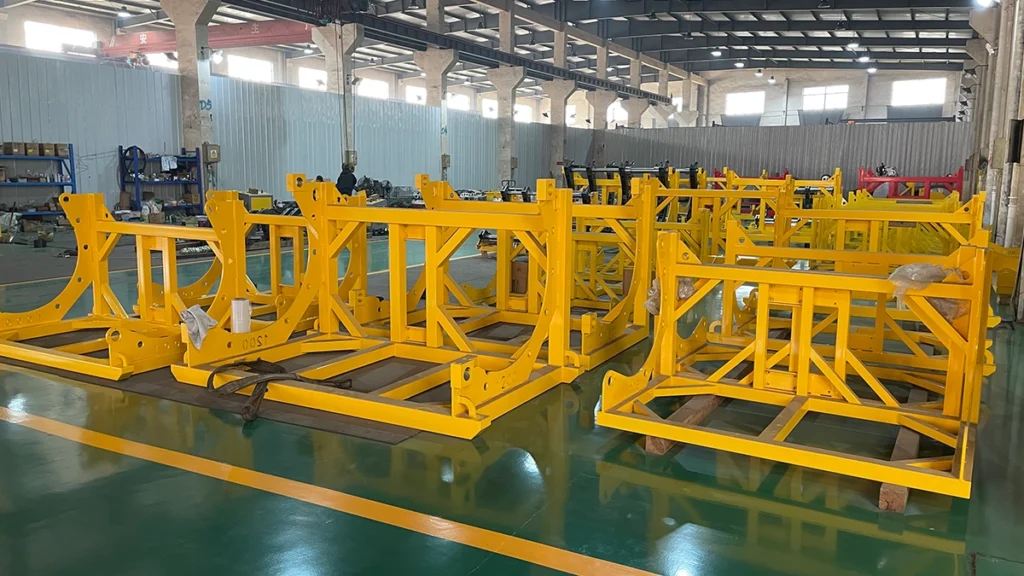
The physical construction of the butt fusion machine dictates its longevity in harsh field conditions. Lower-tier manufacturers often use bent steel sheets for the machine body, which can flex under high loads and cause pipe misalignment. Ekberg utilizes high-pressure aluminum die-casting for butt fusion welding machine bodies up to 630mm. This ensures rigidity and perfect alignment of the pipe centers, even under maximum hydraulic load.
Additionally, the quality of the heating plate coating is paramount. A double-layer PTFE (Teflon) coating prevents molten plastic from sticking to the heater. If this coating is thin or poor quality, plastic residue builds up, altering heat transfer and potentially contaminating future welds.
Best Practices for Operational Safety and Quality Control
Even the most advanced butt fusion machines cannot compensate for poor preparation. Adhering to strict operational protocols is essential for safety and weld quality.
Pipe Preparation and Facing Techniques
Before heating, the pipe ends must be planed (faced) to ensure they are perfectly parallel and free of oxidation. Polyethylene oxidizes when exposed to air, creating a thin layer that inhibits fusion. The electrical facer (trimmer) shaves off this layer.
Operators must continue facing until a continuous ribbon of plastic is produced from both pipe ends. After facing, the pipe ends are brought together to check for gaps. For large diameter pipes (DN 315+), the maximum allowable gap is typically <0.5mm. Any gap larger than this indicates that the pipes are angled or the HDPE pipe welding machine chassis is twisted, which will result in uneven pressure distribution during the fuse.
Identifying Common Welding Defects
Visual inspection of the weld bead provides immediate feedback on joint quality.
- Narrow/Small Bead: Caused by insufficient heating time or low joining pressure.
- Excessive Bead Width: Indicates overheating or excessive joining force.
- Concave Melt: A critical defect caused by applying high pressure during the heat soak phase. This pushes the molten material out of the joint interface, leaving a “cold joint” with no molecular bonding.
- Mismatched Beads: Occurs when pipe alignment is off by more than 10% of the wall thickness. This creates a stress riser that significantly reduces the pressure rating of the pipeline.
Routine Maintenance for Hydraulics and Heaters
To maintain ISO compliance, equipment requires a strict maintenance schedule. Hydraulic oil (ISO VG 46) should be checked daily and changed annually to prevent moisture contamination which can corrode cylinder walls.
The most critical maintenance task is the calibration of the heating plate. Temperature controllers can drift over time. Operators should use a digital surface pyrometer to verify that the actual plate temperature matches the digital display at nine distinct points across the surface. Ekberg recommends this calibration be performed weekly on active job sites.
Manufacturing Excellence: Why Choose Ekberg Factory Direct
When procuring capital equipment for critical infrastructure, the source of the machinery is as important as the specifications.
Ekberg’s Quality Assurance Protocols
Ekberg Welding implements a comprehensive testing regime that exceeds standard industry practices. Before any machine leaves the factory, it undergoes a hydraulic seal pressure test at 1.5x the maximum operating pressure to ensure zero leakage. Heating plates are subjected to thermal mapping to guarantee temperature uniformity within ±3°C across the entire surface. For international customers, this minimizes downtime, a crucial factor that is of paramount importance.
Global Supply Chain and Spare Parts
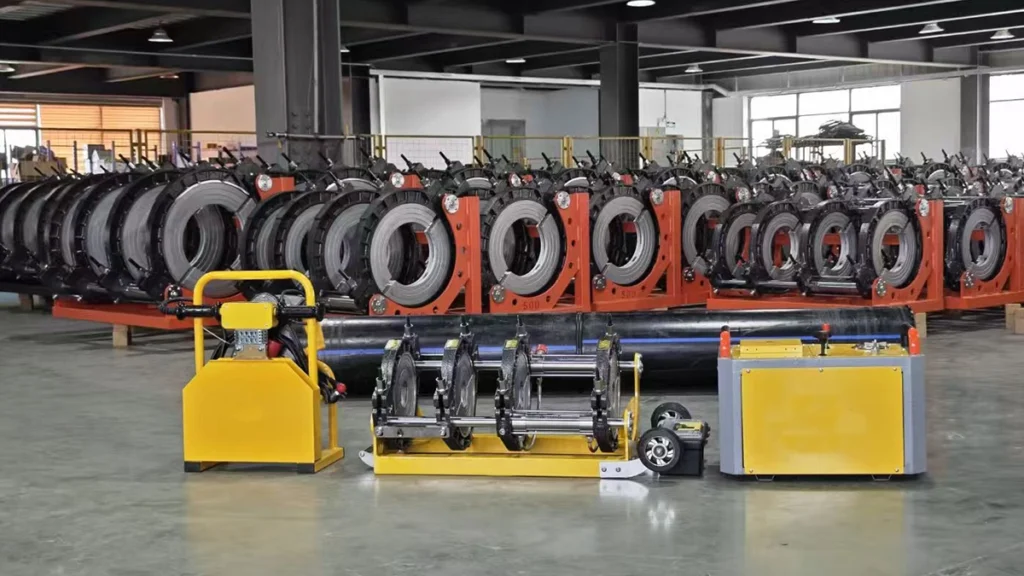
Purchasing factory-direct eliminates the markup and delay of third-party distributors, but the true value lies in long-term support. Butt fusion equipment operates in abrasive, dirty environments; components like hydraulic seals, facer blades, and aluminum inserts are wear items. Ekberg maintains a massive inventory of standardized components, allowing for immediate dispatch of critical spares. For international clients, this minimizes downtime—a crucial factor when a project is stalled waiting for a \$50 seal.
International Certifications and Compliance
Compliance is the currency of the global construction industry. Ekberg butt fusion welding machines are CE certified for safety, ensuring they meet European electrical and mechanical safety directives. Manufacturing is conducted under ISO 9001 quality management systems. Most importantly, the equipment is engineered to comply with specific welding process standards, including DVS 2207-1 (Germany), ISO 12176-1 (International), and ASTM F2620 (USA), allowing contractors to bid on projects globally with confidence.
Frequently Asked Questions
Q1: What is the difference between butt fusion and electrofusion welding?
Butt fusion joins pipes by heating the ends and pressing them together, requiring no additional fittings. It is the most cost-effective method for long, straight pipelines (DN 63mm+). Electrofusion uses special couplers with embedded heating coils to melt the pipe surface. Electrofusion is ideal for repairs, tight spaces, or tie-ins where a butt fusion machine simply won’t fit, but the couplers are significantly more expensive per joint.
Q2: Can butt fusion machines join pipes with different wall thicknesses (SDRs)?
No. Butt fusion requires both pipe ends to have the same wall thickness (SDR) and diameter to ensure even pressure distribution and bead formation. Welding different SDRs creates a “step” at the internal joint, causing stress concentration. To join different SDRs, you must use a flange adapter or a mechanical transition fitting.
Q3: How do I calculate the correct cooling time for a 315mm HDPE pipe?
Cooling time depends on wall thickness ($e_n$) and the standard used. Under ISO 21307 High Pressure, the minimum cooling time under pressure is approximately $0.43 \times e_n$ (minutes). For a 315mm SDR 11 pipe (wall thickness ~28.6mm), cooling would be roughly 12–13 minutes. Always consult the specific welding tables provided with your Ekberg butt fusion machine or the project specifications.
Q4: What power supply is required for large hydraulic butt fusion machines?
Large machines require significant power for the heater, facer, and hydraulic pump. A general rule for generator sizing is $(Heater kW + Cutter kW + Pump kW) \times 1.5 \text{ to } 2.0$ to handle startup currents. For a 315mm hydraulic butt fusion machine, a 3.5kVA to 5kVA generator is typically required. HDPE Pipe welding achines above 315mm usually require 3-phase 380V power.
Q5: Is data logging mandatory for all butt fusion projects?
It is fast becoming the industry standard. While agricultural irrigation projects may not strictly enforce it, gas distribution, municipal water, and mining projects almost universally require data logging reports (ISO 12176 protocols) to verify joint quality. Using a butt fusion machine without data logging can disqualify contractors from bidding on high-value utility tenders.
Conclusion
The integrity of a pipeline is defined by its weakest link, and in thermoplastic piping, that link is the fusion joint. Selecting the right butt fusion machine is not merely a purchase—it is a strategic decision that impacts project safety, compliance, and long-term profitability. Whether you require the rugged simplicity of a hydraulic field unit or the precision data-logging capabilities of a CNC system, ensuring your equipment meets ISO 21307 and DVS 2207 standards is non-negotiable.
By choosing Ekberg Welding, you are investing in factory-direct engineering that prioritizes robust chassis design, precise thermal control, and global component support. Do not leave your pipeline’s future to chance.
Ready to equip your projects with high-performance fusion technology? Contact Ekberg Welding today for a technical consultation, request our comprehensive butt fusion machine catalog, or get a factory-direct quotation tailored to your project needs.