
Buy Butt Fusion Machines Direct from Factory Wholesale
Table of Contents
Buying equipment straight from a reputable butt fusion machine factory slashes pipeline project capital expenditures by up to 70%. At the same time, you still guarantee flawless welds at the standard 220°C. Let’s face it: pressure pipeline contractors and equipment distributors are battling shrinking margins. Inflated retail markups on essential HDPE welding gear are largely to blame.
Here, we break down the financial mechanics of cutting out the middleman. We will look at detailed factory-direct HDPE welder cost breakdowns and material quality benchmarks. You will learn how to calculate ROI across manual, hydraulic, and CNC technologies. Plus, we cover how to navigate minimum order quantities (MOQ) and verify compliance with strict ISO 21307 and DVS 2207 welding standards.
When you finish reading, you will possess a data-backed procurement framework. This makes selecting the right equipment for DN110–DN2600mm infrastructure projects straightforward. Technical buyers and procurement managers can use this knowledge to specify exact voltage, pressure, and capacity requirements. Scale your operations efficiently, and stop costly equipment failures dead in their tracks.

Why Buy Direct from a Butt Fusion Machine Factory?
Calculate cost reductions (up to 30-40%) by buying direct from a butt fusion machine factory vs regional distributors.
Procurement managers mapping out capital equipment budgets have to factor in the layered markups baked into traditional distribution networks. Buy through a regional dealer, and you eat the costs of domestic warehousing, local marketing, and the middleman’s profit margin. Going straight to a butt fusion machine factory wipes out these secondary expenses entirely. For large-scale pipeline contractors, this completely transforms capital expenditure models.
Industry data shows a massive gap in procurement costs. Take a standard North American retail package for a comparable small-diameter HDPE pipe welder. It usually runs between $3000 and $5000. Compare that to fully automatic butt fusion machines sourced right from the manufacturer, which sit between $2,000.00 and $6000. You are looking at a 50% to 70% cost reduction. Contractors can literally grab three factory-direct units for the price of a single retail machine.
These savings directly boost your competitiveness during project bidding. Lowering the equipment depreciation burden on a per-weld basis lets contractors submit much more aggressive tenders for municipal water and gas distribution jobs. Distributors who buy direct also win. They leverage these wholesale butt fusion machine prices to dominate regional pricing while keeping their own profit margins incredibly healthy.
Detail the advantage of direct OEM/ODM customization capabilities (branding, specific voltage requirements, localized plugs).
Infrastructure projects worldwide run on highly specific electrical and environmental parameters. Regional distributors mostly stock standardized setups. This forces contractors to rig up external transformers or rely on aftermarket modifications just to get the job done. Working directly with the factory opens the door to full OEM and ODM customization, ensuring your equipment arrives ready for the site.
Consider an Ekberg fully automatic butt fusion machine built for the DN63–DN630 range. A factory can configure it specifically for 220V (50 Hz) systems pulling a total of 3.7 kW. On the flip side, massive hydraulic units designed for 630mm to 1000mm transmission lines demand heavy-duty 380V industrial power to handle their 24.5 kW draw. A factory engineers the internal circuitry, heating plate elements, and localized plugs to perfectly match the grid infrastructure of the destination country.
Customization goes beyond just electrical specs. Direct buyers get a say in structural materials and branding. Factories can swap out heavy standard steel frames for ZL104 standard aluminum, dropping the weight to 190 kg for smaller units. That makes a huge difference for trench maneuverability. Distributors can also tap into ODM services for custom brand colors, localized proprietary software interfaces, and branded casings. You build your market presence without spending a dime on R&D.
Faster Support Through Direct Communication
Equipment downtime in an active pipeline trench triggers brutal financial penalties. We are talking thousands of dollars bleeding away daily due to idle labor and missed milestones. Leaning on a third-party distributor for technical support creates agonizing communication lags. The dealer usually has to bounce complex hydraulic or electrical questions back to the original manufacturer anyway.
Building a direct bridge to the manufacturer cuts through the noise. If a hydraulic pressure drop hits, or a heating plate struggles to hold that crucial 220±10°C target, site engineers talk straight to the factory’s technical team. Take Ekberg as an example. They use remote data transmission built into their smart butt fusion welding machines to diagnose faults digitally. They back this up with rapid video solutions and real-time remote guidance.
Getting spare parts fast is just as vital. Surveys show that 60% of field workers stress the need for rapid replenishment of consumables like PTFE-coated plates and hydraulic seals. Factories sit on massive inventories of specialized components. Whether you need high-precision shock-resistant pressure gauges or imported hydraulic sealing rings, the factory dispatches them via expedited international shipping right to your job site.
Understanding Factory Direct HDPE Welder Cost Factors
Compare wholesale butt fusion machine prices across different technologies
Technological complexity drives the factory direct HDPE pipe welder cost. Buyers need to match butt fusion machine capabilities with their actual operational needs. Otherwise, you risk over-specifying or under-equipping your crews. Manual butt fusion machines sit at the bottom of the wholesale pricing tier. They work fine for low-pressure, small-diameter, non-critical plumbing. However, they lack the sheer force required for infrastructure-grade HDPE.
Hydraulic systems are the workhorses of municipal and industrial applications. These units rely on hydraulic power to hit and hold specific drag and fusion pressures—usually between 0 and 16 MPa for large-diameter pipes. Adding motorized milling cutters and hydraulically actuated clamps bumps up the manufacturing cost compared to manual setups. But they deliver the pressure stability demanded by global welding standards.
CNC (Computer Numerical Control) and fully automatic systems rule the premium tier. Expect 10-inch color touchscreens, recipe-driven alignment, independent dual-channel timers, and remote data logging that stores up to 1,000 welds. The initial wholesale cost bites a bit harder. Yet, upgrading to CNC historically yields a 20-25% bump in operational efficiency over 3-5 years. Why? Because it virtually wipes out operator error and expensive joint rework.
*Comparison of Fusion Technologies:*
- Manual Systems: Lowest cost, manual force application, no data logging. Best suited for non-pressure drainage.
- Hydraulic Systems: Mid-tier cost, 0-16 MPa pressure control, manual temperature/time monitoring. Ideal for standard municipal water/gas.
- CNC/Automatic Systems: Higher initial cost, automated pressure/temperature cycles, 1000-weld data storage. Perfect for highly regulated utility and mining sectors.
Key Components Driving HDPE Welding Machine Pricing
Not all factory-direct butt fusion welding machines share the same engineering DNA. Wholesale pricing variances between manufacturers usually tie directly back to the quality of raw materials and internal components. Procurement teams have to look under the hood. Saving a few hundred bucks on the initial purchase easily triggers catastrophic joint failures out in the field.
The hydraulic system acts as the HDPE pipe welding machine’s beating heart. Premium factories install imported hydraulic sealing systems featuring flat-type quick connectors. This guarantees the system holds >0 MPa pressure through the entire cooling phase without a single leak. Cheaper builds often slap in market-grade oil-lubricated shafts with terrible stiffness and budget sealing rings. These degrade incredibly fast in the punishing environment of a pipeline trench.
Temperature control components also swing the price tag. Fast-heating stainless steel molds coated with premium PTFE (Teflon) stop molten polyethylene from sticking to the plate. Engineering a temperature control system that nails a 0–300°C range with an error margin of ≤±3°C requires serious R&D. That adds measurable cost to the unit. However, it remains absolutely non-negotiable if you want to produce compliant PE100 fusion joints.
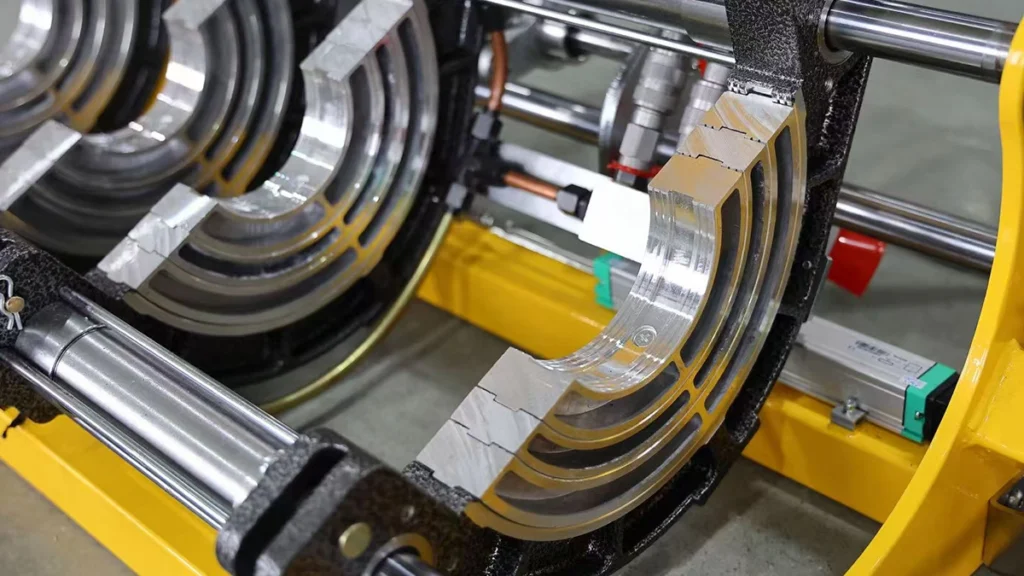
Formulate a pricing model based on volume: single unit sample costs vs. bulk wholesale pricing for equipment distributors.
Decoding the factory pricing matrix helps optimize your procurement budget. Manufacturers naturally build their pricing to reward volume. Still, reputable factories know new clients need to test and validate equipment first. The pricing model slides based on production efficiency and logistics consolidation.
Buy a single unit, and you pay the baseline wholesale price. This still beats retail by a mile. Contractors can grab one DN110-250 machine for immediate deployment without draining their capital. Since the factory eats higher relative administrative and crating costs for single units, the baseline quote reflects that reality.
Push order volumes to 5, 10, or 20 units, and distributors unlock aggressive bulk wholesale pricing. Volume orders let the factory run continuous CNC machining cycles for aluminum frames and buy hydraulic pumps in bulk. That drives the per-unit manufacturing cost straight down. Distributors using these bulk tiers can stretch their retail margins or offer unbeatable leasing rates to local contractors.
Navigating Butt Fusion Machine Factory MOQ (Minimum Order Quantity) Requirements
Define standard butt fusion machine factory MOQ expectations for standard inventory models vs. customized OEM orders.
Minimum Order Quantity (MOQ) policies normally act as a massive gatekeeper in international B2B procurement. Specialized industrial equipment factories play by different rules than consumer goods manufacturers, though. Because butt fusion machines stand as high-value capital assets, standard MOQ expectations remain highly accessible even for individual contractors.
For standard inventory models—think the Ekberg 250mm hydraulic butt fusion machine—the factory-direct MOQ usually sits at just 1 Set/Piece. This low barrier guarantees small-to-medium pipeline contractors get wholesale pricing without stockpiling gear they do not need. Factories often keep standard units in partial assembly, speeding up final configuration and dispatch.
Customized OEM orders naturally carry higher MOQ thresholds. Say a distributor wants proprietary software interfaces, custom cast aluminum branding, or specific regional 110V setups. The factory has to retool production lines and hunt down custom components. In these cases, expect the MOQ to jump to 5 or 10 units to cover the R&D and specialized manufacturing overhead.
Provide negotiation strategies for distributors and contractors to secure favorable MOQ terms and staggered delivery schedules.
Factories set baseline policies, but MOQ terms are almost always negotiable. This holds especially true for buyers who show long-term partnership potential. Procurement managers need to treat negotiations as a supply chain integration strategy, not just a haggling session over price.
Blanket purchase orders work wonders here. A distributor might commit to an annual volume of 20 butt fusion machines to lock in the maximum bulk discount, but then negotiate a staggered delivery schedule. The factory builds the units in batches, perhaps shipping 5 units a quarter. This slashes the buyer’s warehousing costs and smooths out cash flow. At the same time, it hands the factory predictable production forecasting.
Contractors chasing multi-phase infrastructure projects can weaponize their project timelines. Show the factory the awarded project scope and the pipeline installation schedule. Buyers can often negotiate initial single-unit deliveries at the bulk price rate, provided they order the rest of the units as subsequent project phases kick off.
Verify Quality with Factory Sample Testing
Moving procurement to a new international supplier carries risk. Reputable factories get this, which is why they actively encourage sample testing. They know engineers have to validate mechanical tolerances and software reliability before greenlighting a fleet-wide equipment replacement.
A solid sample testing policy lets buyers grab a single unit—usually a versatile mid-range model like the DN110-250—at the standard wholesale rate. Once it lands, the buyer’s engineering team puts it through its paces in the field. They test the durability of the ZL104 standard aluminum frame. They ensure the alignment deviation stays strictly ≤0.3 mm during clamp actuation.
The sample phase also proves electrical and environmental claims. Technicians verify the IP54 protection level in damp, dusty trenches. They make sure the heating plate nails the critical 220°C target temperature with no more than a ±3°C fluctuation. Once the sample clears these internal audits, the buyer can pull the trigger on high-volume wholesale contracts with total confidence.
Buyer’s Checklist: Selecting the Right Butt Fusion Equipment
How to Select Pipe Welding Machines by Diameter
Picking the right gear means perfectly aligning butt fusion welding machine capabilities with pipeline project demands. Over-sizing your equipment creates unnecessarily wide trenches and burns through capital. Under-sizing strains the equipment and ruins weld integrity.
Secondary distribution networks, residential gas lines, and agricultural irrigation demand agility. The Ekberg 250mm fully automatic butt fusion machine hits this sweet spot. Weighing 190 kg, its 3.7 kW power requirement lets it run on standard portable generators. It is an absolute lifesaver in cramped urban environments where power access is limited.
Primary transmission mains, municipal water reservoirs, and industrial mining slurry lines are a different beast. These use massive high-density polyethylene pipes requiring heavy-duty hydraulic butt fusion machines. We are talking 630mm, 800mm, 900mm, and 1000mm diameters. These 2600 kg behemoths need 380V power supplies. They generate up to 24.5 kW of total power just to run the 17.5 kW heating plates and 3.0 kW hydraulic pumps needed to muscle multi-ton pipe sections around.

Welding Standards Compliance for HDPE Projects
Strict engineering codes govern global infrastructure projects. Utility companies and municipal inspectors will flat-out reject welded joints—and potentially shut down the whole site—if your equipment fails to comply with recognized international standards.
ISO 21307 serves as the global baseline for water and gas systems. It dictates proven butt fusion jointing procedures, including Single Low-Pressure (SLP), Dual Low-Pressure (DLP), and High-Pressure parameters. Your equipment needs the hydraulic fidelity to execute these exact pressure profiles flawlessly.
European projects, chemical plants, and heavy industrial mining strictly mandate DVS 2207-1 compliance. This German standard demands extreme precision for temperature control and alignment. North American gas projects lean heavily on ASTM F2620. When buying factory direct, ensure the CNC software comes pre-programmed with these specific parameter recipes.
Key Parameters: Pressure Stability & Temperature Control
The physics of butt fusion boil down to three absolute variables: temperature, pressure, and time. If a butt fusion machine fails to control these with surgical precision, the weld will inevitably snap under operational stress.
During the heating phase, the plate must reach and stabilize between 210°C and 230°C for standard PE pipes (aiming for 220±10°C). You need fast-heating stainless steel molds with automatic temperature adjustment to kill cold spots. Once you hit the cooling phase, the hydraulic system has to hold a constant pressure (>0 MPa) for a duration calculated simply: Wall thickness (mm) × 1 minute.
Buyer’s Selection Checklist:
- Frame Construction: Insist on ZL104 standard aluminum over heavy, rust-prone steel.
- Hydraulic Integrity: Check for imported seals and flat-type quick connectors to stop pressure drops dead during the vital cooling phase.
- Temperature Accuracy: Accept nothing less than a heating plate error margin of ≤±3°C.
- Smart Features: Prioritize independent dual-channel timers and 10-inch color touchscreens for flawless recipe control.
- Data Logging: Ensure the machine stores and transmits weld data so inspectors can verify your work.
Ekberg Welding: Manufacturing Excellence, Quality Control & Global Service
Ekberg Manufacturing Process for Butt Fusion Machines
A butt fusion machine’s durability is born on the factory floor. Ekberg Welding uses a highly vertically integrated manufacturing process to hold tight tolerances across every mechanical and electrical subsystem. Everything starts with the raw materials.
The chassis and clamping mechanisms rely on ZL104 standard aluminum. Engineers choose this specific alloy for its incredible strength-to-weight ratio and stubborn resistance to harsh trench environments. Advanced CNC machining centers process the aluminum, crafting clamps that guarantee an alignment deviation of ≤0.2 mm on massive hdpe fusion machines and ≤0.3 mm on smaller ones. This obsessive precision stops the pipe wall mismatches that create stress concentrations in the finished pipeline.
Hydraulic power units are assembled in clean-room environments to lock out particulate contamination. Technicians pair 0.75 kW to 3.0 kW hydraulic motors with premium imported sealing systems. At the same time, electrical engineers wire up the 220V and 380V power distribution boards. They make sure the heating, milling, and hydraulic circuits are safely isolated and ready for brutal field conditions.
Rigorous QA/QC Protocols Before Machine Shipment
No butt fusion welding machine leaves the loading dock without surviving a punishing battery of Quality Assurance and Quality Control (QA/QC) tests. This intense validation process separates a premium butt fusion machine factory from cheap, low-tier assemblers.
Hydraulic systems face sustained pressure retention tests. Take a massive 1000mm hydraulic butt fusion machine: technicians pressurize it to its absolute 16 MPa limit. The system has to hold that pressure without a single micro-leak or pressure drop, perfectly simulating the long cooling phases thick-walled HDPE pipes require.
Electrical safety gets the same obsessive treatment. High-voltage insulation tests guarantee operator safety and prove the IP54 protection level against dust and water. Finally, thermal imaging calibrates the temperature control systems. This ensures the heating plates hold that 0–270°C range with an absolute error margin of ±3°C across every square inch of the surface.
Global After-Sales Support for Pipe Welding Machines
The real value of a direct purchase kicks in after the equipment unloads at your site. Ekberg Welding treats the sale as day one of an operational partnership. They back their engineering with a formidable global service infrastructure.
Every butt fusion welding machine carries a comprehensive 1-year warranty, backed by lifetime maintenance support. If something breaks during the warranty period (and it was not human error), you get free replacement parts. Even after the warranty expires, the factory waives labor fees and only charges baseline material costs for repairs. Ekberg even throws in an annual complimentary on-site maintenance service for qualifying fleet operators.
When projects hit a wall, Ekberg fast-tracks spare parts shipping and jumps on remote video troubleshooting. If ambient temperatures plunge below -5°C and operators need help pushing to the 230°C upper heating limits, factory engineers step in. They hand over immediate, data-backed operational parameters so your project never skips a beat.
Frequently Asked Questions
Q1: What is the typical MOQ when ordering directly from an Ekberg butt fusion machine factory?
The standard Minimum Order Quantity (MOQ) for factory-direct inventory models is just 1 Set/Piece. Contractors can easily grab single units at wholesale rates without tying up massive amounts of capital. For highly customized OEM orders—like those needing proprietary branding or odd electrical setups—the MOQ usually bumps up to 5 or 10 units to cover the specialized manufacturing process.
Q2: How much can I save with wholesale butt fusion machine prices compared to local retail?
Going direct wipes out layers of distributor markups, warehousing fees, and local marketing costs. Buyers generally see a 50% to 70% cost reduction. A butt fusion machine retailing domestically for over $4,300 can often be bought straight from the factory for $1,000 to $1,900. That drastically improves your project ROI and bidding power.
Q3: Does the factory direct HDPE welder cost include international shipping and customs?
Factory-direct quotes usually operate under EXW (Ex Works) or FOB (Free on Board) incoterms. That means the baseline price covers manufacturing and delivery to the local port. You can arrange CIF (Cost, Insurance, and Freight) terms to roll in international shipping. Just remember, buyers handle their destination country’s import duties and customs clearance fees.
Q4: Can the factory manufacture butt fusion machines compliant with local voltage and plug standards?
Absolutely. Direct OEM capabilities mean the factory engineers butt fusion welding machines to match your exact regional grid. Small butt fusion machines (DN110-250) get configured for 220V (50 Hz) systems. Large-scale hydraulic units (630-2000+mm) are built tough for 380V industrial power. They install localized plug types and specific safety breakers long before the unit ships.
Q5: What technical support is available if a machine malfunctions on a job site?
Ekberg delivers comprehensive remote support. You get rapid video diagnostics and digital troubleshooting powered by the butt fusion welding machine’s smart data transmission features. If a part fails, the factory taps into a massive inventory of spares (like hydraulic seals and PTFE plates) and fast-tracks them via international air freight. A 1-year warranty and lifetime maintenance policy lock in your long-term operational security.
Conclusion
Teaming up directly with a reputable butt fusion machine factory completely rewrites the procurement playbook for pipeline contractors and equipment distributors. Bypassing traditional retail channels unlocks wholesale pricing that slashes capital expenditures by up to 70%. Best of all, you do not sacrifice an ounce of the mechanical precision demanded by ISO 21307 and DVS 2207 standards.
It does not matter if you are fusing DN110 gas distribution lines or wrestling with 1000mm municipal water mains. Direct sourcing guarantees your equipment arrives with premium ZL104 aluminum frames, precise 220V/380V electrical configurations, and hydraulic systems that hold stable pressure through the entire critical cooling phase. Balancing upfront costs with rigorous factory QA/QC and lifetime after-sales support builds sustainable profitability and ensures flawless infrastructure deployment.
Stop eating unnecessary intermediary markups on your critical pipeline equipment. Contact Ekberg Welding today to request a customized factory-direct quote. We can discuss flexible MOQ options tailored to your project scope and set up a technical consultation with our engineering team.