
Top Butt Fusion Welding Machine Factory for Custom HDPE Solutions
Table of Contents
Working directly with a butt fusion welding machine factory secures equipment that hits precise 220°C temperatures and maintains strict 0-6.0 MPa hydraulic pressures. Why does this matter? Because a single failed DN400 joint can cost contractors an average of $15,000. Relying on middleman distributors often means dealing with inflated markups, frustrating lead times, and out-of-touch technical support that can derail a tight pipeline schedule. In this guide, we break down the strategic edge of buying factory-direct for your HDPE welding operations.
We will walk through the technical specs you need to hit flawless DVS 2207 standard welds, explore custom manufacturing options for specialized pipe diameters, and provide a hard-hitting checklist for vetting supplier reliability. By the time you finish reading, you will have a clear, actionable framework for sourcing the right machinery for DN40mm–DN2600 HDPE pipe infrastructure projects. This insight helps you avoid expensive specification errors, stretch your capital budget further, and field butt fusion machines built for maximum ROI.
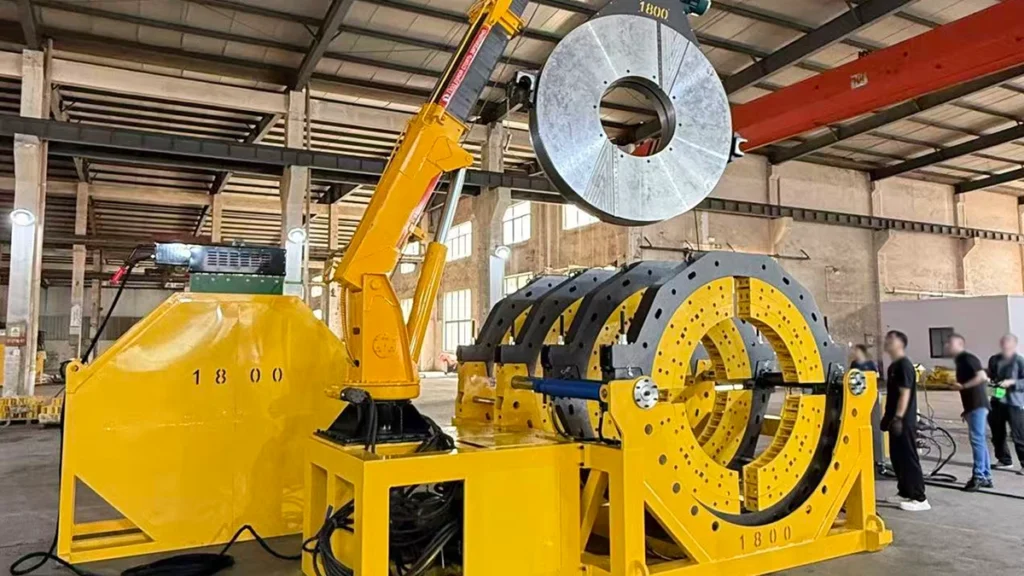
Why Source Directly from a Butt Fusion Welding Machine Factory?
Compare factory-direct pricing vs. third-party distributor markups for large-scale procurement
Procurement budgets for municipal water and gas networks are always under the microscope. Capital equipment costs naturally become a prime target for optimization. When you buy through a distribution network, compounding markups quickly inflate the baseline price by 30% to 50%. Take a standard 2-inch to 8-inch 380V hydraulic butt fusion machine, for example. It averages $5,790 at the factory level, yet retail pricing frequently drives that number much higher. Cutting out the middleman frees up capital. Contractors can then redirect those savings into automated data-logging upgrades or simply expand their fleet.
Beyond immediate savings, factory-direct models offer true transparency for large-scale fleet buys. Distributors generally slap a flat margin across all products. Manufacturers, on the other hand, can build out tiered pricing structures based on volume. This direct financial link guarantees you pay for actual engineering value—think IP54-rated protection and 3.7 kW low-draw power systems—instead of subsidizing a vendor’s marketing budget and warehouse space.
Analyze the advantages of direct technical support and OEM spare parts availability for pipeline contractors
When an HDPE pipe fusion welding machine goes down in a tight trench, the ticking clock burns project capital. Third-party sellers rarely have the deep engineering background needed to troubleshoot complex hydraulic or electrical faults. A direct manufacturer changes the game. You get immediate access to Level 3 engineering support, often leveraging cloud connectivity for remote fault diagnosis and parameter adjustments.
OEM spare parts availability plays an equally vital role. Factories stock massive inventories of specific components, from PTFE-coated heating plates to double-edged tool steel milling inserts. Instead of waiting weeks for a distributor to process a backorder, you get expedited shipping straight from the assembly line. Ekberg, for example, provides rapid video troubleshooting and remote guidance designed around your specific operational hiccups. The result? Your equipment gets back to work fast.
Evaluate lead times, global supply chain reliability, and direct shipping logistics for urgent infrastructure projects
Infrastructure projects run on unforgiving schedules. Equipment delays do not just cause headaches; they trigger steep financial penalties. The volatility of the global supply chain constantly exposes the flaws in the distributor model, which leans heavily on sporadic inventory refills. A manufacturer dictates the production schedule. This control translates to predictable lead times and the agility to rush manufacturing when project demands spike.
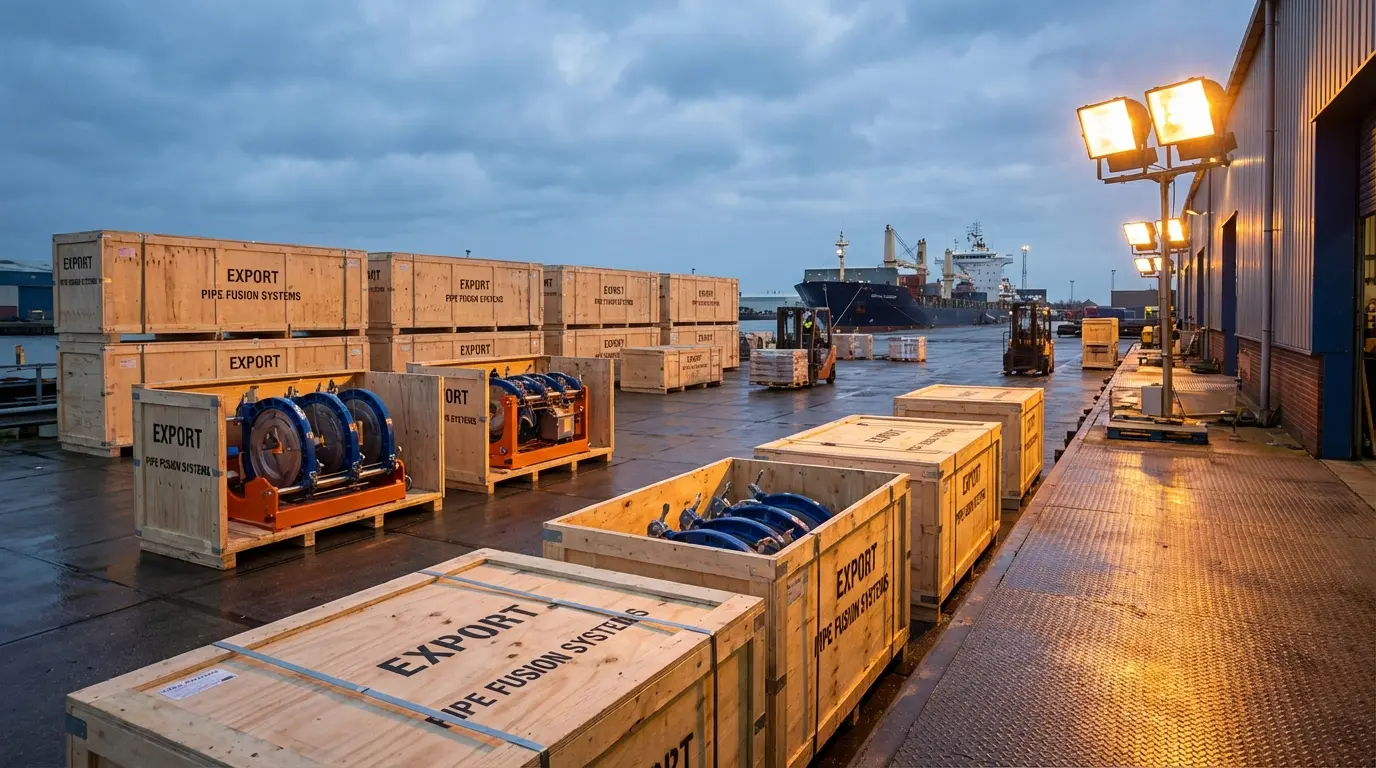
Direct shipping logistics also strip friction from the delivery process. Factories pack equipment using standardized export crating so HDPE pipe welding machines arrive fully calibrated and ready to drop into the trench. For high-stakes situations, elite manufacturers even supply backup equipment tailored to your exact needs, protecting your critical path from unexpected logistical nightmares.
Detail the long-term ROI of partnering with the best butt fusion welding machine manufacturer over a 3-5 year period
Figuring out the true return on investment for pipeline welding gear means looking well past the initial sticker price. Over a three- to five-year window, direct factory partnerships unlock massive financial advantages through ironclad warranties and structured maintenance programs. A standard one-year warranty backed by lifetime maintenance—plus free replacements for non-human-induced damage—slashes your total cost of ownership.
Operational efficiency also fuels long-term ROI. Butt fusion welding machines built with low total power consumption (like a 3.7 kW draw for a DN250 unit) let contractors run smaller, highly fuel-efficient generators on the job site. Pair that with trade-in programs for aging equipment and complimentary annual on-site maintenance, and the financial trajectory of a factory-direct fleet easily outpaces a scattered collection of distributor-bought butt fusion welding machines.
Custom Butt Fusion Welding Machine Factory Solutions for Specialized Projects
Identify customization options for specific pipe diameter ranges
Off-the-shelf equipment frequently misses the mark when pipeline projects demand unique dimensional specs. A specialized manufacturer designs distinct configurations tailored right down to your exact operational parameters. For standard municipal tie-ins, compact setups covering DN63mm–250mm and DN90mm–315mm deliver the agility necessary for tight trench work.
On the flip side, bulk water transmission and industrial effluent lines demand uncompromising structural integrity. Factory customization makes it possible to build massive units designed to tackle 630mm, 800mm, 900mm, and 1000mm outer diameters (OD). By perfectly matching the chassis rigidity and hydraulic cylinder capacity to the required DN range, engineers eliminate the carriage deflection that otherwise ruins large-diameter joints.
Detail custom hydraulic system upgrades and control unit modifications
Hydraulic precision is the backbone of high-density polyethylene molecular bonding. Custom hydraulic setups can be dialed in to deliver working pressures between 0 and 6.0 MPa (0-60 bar), easily handling the severe drag forces of heavy-wall pipes. Factories also build in displacement detection systems for the T1 stage (preheating and beveling). This accurately controls the beveling degree—a crucial feature completely missing from basic manual rigs.
Control unit modifications bridge the gap between manual guesswork and full automation. Buyers can request CNC-controlled systems featuring an optional servo-pneumatic device that applies up to 10 N of exact axial compression. These smart butt fusion welding machines execute real-time welding procedures using recipe control. Parameters like temperature and time are saved and automatically loaded the moment you select the pipe cavity.
List specialized clamp and reduction insert adaptations for unique SDR requirements
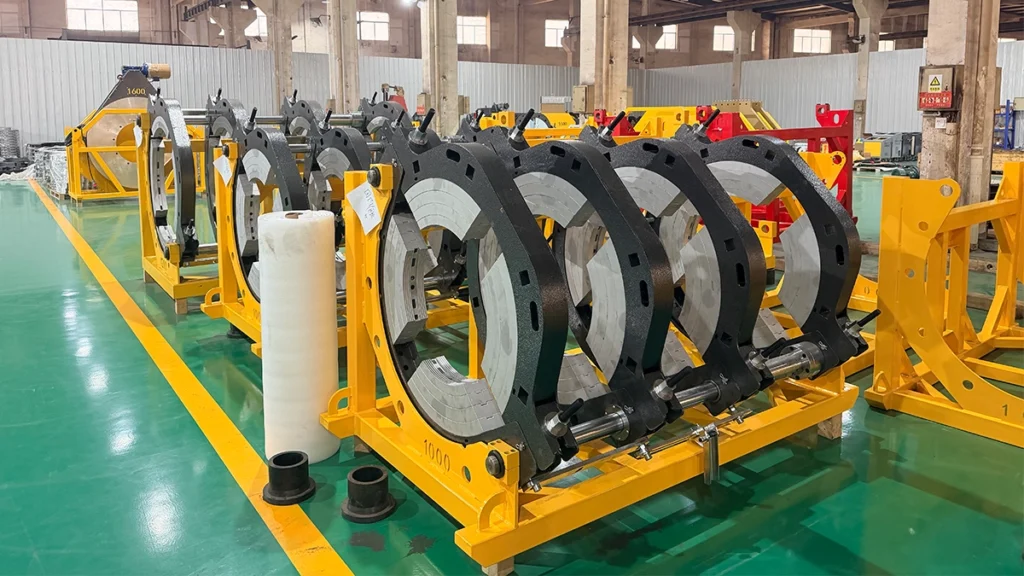
Standard Dimension Ratio (SDR) mismatches create massive headaches during field fusion. While butt fusion is not typically recommended for differing SDRs without prior machining, specialized clamping systems drastically reduce alignment risks for complicated fittings. A heavy-duty four-clamp sleeve structure locks the pipe into precise position and makes it easy to correct severe high-low misalignment.
Factories also butt fusion welding machine custom reduction inserts from premium-grade aluminum to accommodate non-standard pipe specs. These inserts must hold incredibly tight dimensional tolerances to distribute clamping force evenly. Without that precision, the pipe slips under high drag pressure, leading directly to cold welds or rejected bead formations. .
Explain factory capabilities in adapting data logging modules to meet regional compliance standards
Regulatory agencies around the world demand exhaustive documentation for pipeline infrastructure. Factory-integrated data logging modules tackle this by storing up to 1,000 weld cycles right on the hdpe fusion machine. They capture the exact temperature, pressure, and time metrics for every single joint. This wipes out the need for manual logging and guarantees total traceability for utility inspectors.
Engineers program these systems to satisfy specific regional rules, such as ASTM F2620 for North America or ISO 21307 Single Low Pressure (SLP) and Dual Low Pressure (DLP) standards. By aligning with strict codes like TSG D2002-2006, fully automated operating systems can even push conformity data straight to your enterprise management software via the cloud.
Engineering Standards & Technical Proof: How Top Manufacturers Ensure Flawless Welds
Find Ekberg heating plate temperature uniformity specs
A thermoplastic weld is only as good as its heat distribution. For HDPE, you must hold the target heating temperature strictly at 220±10°C. Ekberg constructs its heating plates from high-grade aluminum alloy, coating them with a premium PTFE (Polytetrafluoroethylene) film. This prevents the plastic from sticking and guarantees rapid, perfectly even heat conduction.
Thermal mapping of these plates proves a temperature uniformity deviation of ≤±5°C across the entire surface. Such tight precision prevents localized cold spots that cause brittle joints, as well as hot spots that destroy the polymer chain. While standard units run between 0–300°C, custom builds can be engineered to push up to 600°C for specialized industrial thermoplastics.
Detail the hydraulic system pressure stability requirements during the critical cooling phase according to DVS 2207 standards
The cooling phase is the moment of truth. This is when the weld’s molecular structure solidifies, making absolute pressure stability non-negotiable. Under DVS 2207-11 standards, the joint must sit under a constant, calculated pressure until thermal stabilization is complete. The hydraulic system has to hold this pressure without a hint of leak-down, relying on independent dual-channel timers to monitor the separate heat melting and cooling phases.
Following these standards delivers tangible operational wins. For example, if the joint is properly supported and stress-free, you can safely slash cooling time under pressure by up to 50%. At an ambient temperature of 70°F, the cooling time for a 6-inch SDR 11 pipe plummets from 14 minutes to just 9 minutes. That dramatically speeds up daily production without compromising a shred of joint strength.
List the planing tool (facer) motor specifications and safety micro-switch requirements
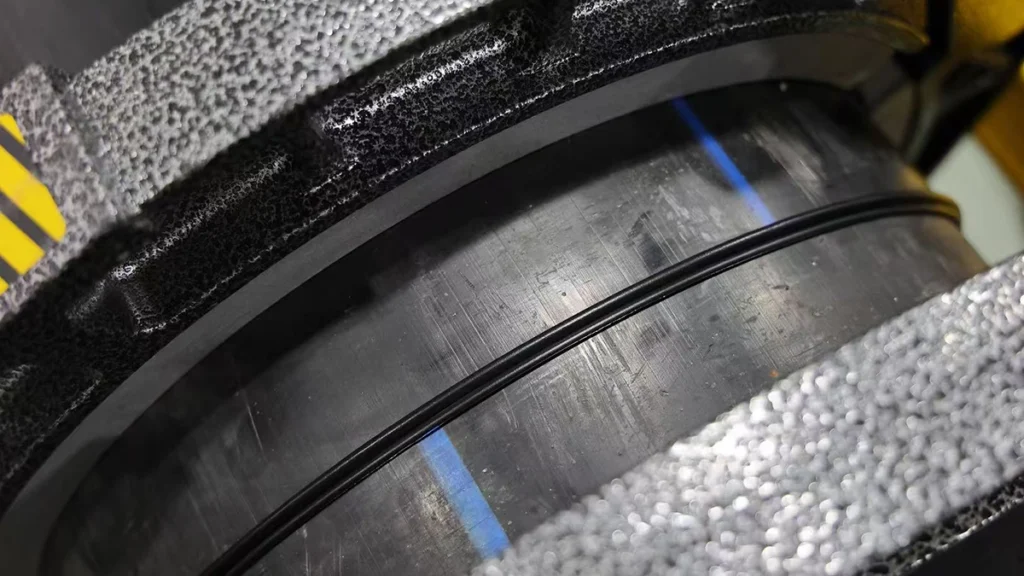
Flawless pipe end preparation sets the stage for a successful fusion. The planing tool—often called the facer—must shave the pipe ends perfectly square so they sit flush against the heating plate with zero gaps. Doing this right requires a high-torque milling motor. Medium-range butt fusion welding machines typically pack a 1.0 kW motor designed to chew through heavy-wall HDPE without stalling or chattering.
Factories engineer safety and durability straight into the facer’s DNA. Critical specs include safety micro-switches that physically prevent the motor from firing up when the facer sits outside the carriage. On top of that, the cutting mechanism relies on high-quality tool steel milling inserts. These feature a double-edged design with interchangeable, reversible blades to stretch their lifespan in the field.
Explain the alignment precision and structural rigidity of the machine chassis under high drag pressure
Welding large-diameter pipes puts immense stress on the chassis (carriage). It must absorb massive drag pressures without bending or deflecting. Operators must test and record the drag pressure (P0) for every single joint to calculate the correct total fusion pressure. If the carriage lacks structural rigidity, the hydraulic force will twist the clamps, causing unacceptable alignment deviation.
HDPE fusion pipe welding machines guarantee an alignment deviation of ≤0.3 mm. Advanced units hit this mark using optical alignment technology. A color video camera projects up to 20 software crosshairs onto a 10-inch touchscreen panel. This visual check, combined with a rock-solid four-clamp chassis, ensures the pipe ends meet with absolute, dead-center concentricity.
Comprehensive Buyer Checklist: Selecting the Right HDPE Fusion Machine Supplier
Define the pipeline project scope to determine the exact machine type required
Smart procurement starts with a hard look at the project environment. Municipal water and gas repairs frequently force crews into narrow, muddy trenches. For these jobs, buyers need butt fusion machines with separate clamping and operating systems. This setup lets the hydraulic and electronic console stay safely above ground while the carriage does the heavy lifting in confined spaces.
Alternatively, mining sites and bulk water transmission lines demand heavy-duty, highly automated rigs built for relentless operation in brutal conditions. Evaluating the maximum pipe diameter, standard dimension ratio (SDR), and target daily weld count ensures the gear you buy has the necessary hydraulic muscle (up to 0.75 kW) and structural mass to survive the job.
Create a checklist for evaluating factory quality certifications
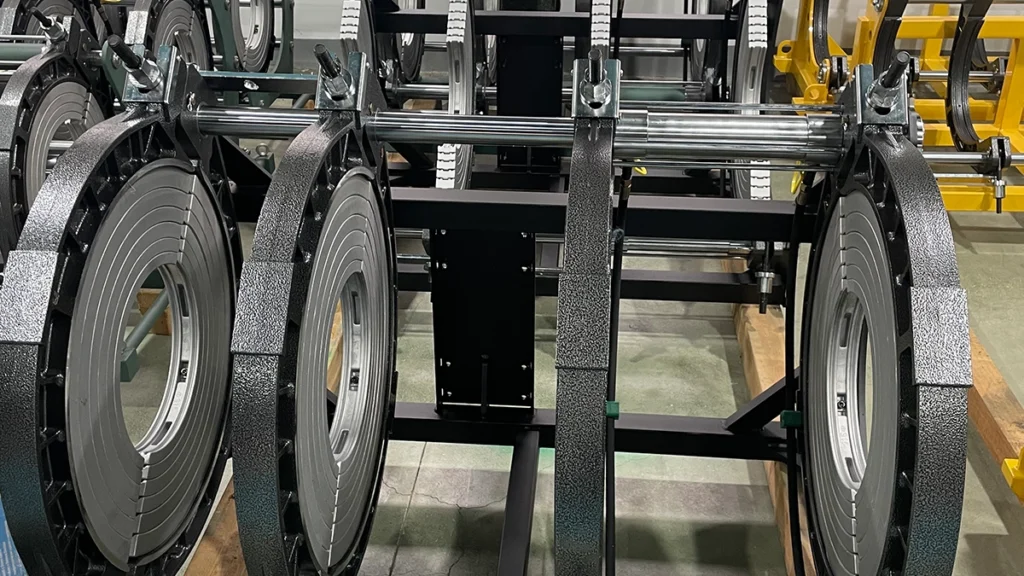
Checking a manufacturer’s credentials is the fastest way to separate true industrial equipment from cheap replicas. Buyers must demand paperwork proving the factory adheres to global manufacturing standards. The absolute baseline is ISO 9001 certification, which enforces strict quality management across the entire production floor.
CE marking is also mandatory for compliance in the European market, proving both electrical and mechanical safety. RoHS compliance guarantees the equipment contains no hazardous materials. For data-heavy projects, verify that the factory’s automated systems meet TSG D2002-2006. This ensures the data logging modules satisfy legal requirements for pipeline integrity verification. .
Compare essential machine features: automated data logging capabilities, hydraulic pressure range, and generator power compatibility
To cut through the noise during evaluation, buyers should use a standardized spec comparison. A butt fusion welding machine missing integrated parameter control will inevitably bleed money through wasted labor and failed weld inspections.
This matrix puts a spotlight on the value of low total power consumption. A 160mm hydraulic butt fusion welding machine that only draws 3.65 kW total (1.5 kW for heating, 1.4 kW for milling, 0.75 kW for hydraulics) drastically shrinks the size, cost, and fuel burn of the generator needed to run it on-site.
Establish criteria for evaluating supplier after-sales service, warranty terms, and global shipping capabilities
The final hurdle in procurement is vetting the supplier’s post-purchase support network. A rock-solid warranty is absolutely non-negotiable. Demand a minimum one-year warranty backed by lifetime maintenance provisions. The factory should clearly state that any non-human-induced damage during the warranty window gets free replacement components.
Global shipping logistics also need to be transparent. The supplier must guarantee the use of fumigation-free wooden cases for export to dodge customs delays. Furthermore, offering expedited shipping for spare parts and cloud-based remote troubleshooting proves the manufacturer actually cares about your long-term operational success.
Manufacturing Excellence, Quality Control & Global Support
Detail the multi-stage quality control process
The field reliability of a butt fusion welding machine starts with the raw materials. Top-tier factories run a multi-stage quality control protocol that begins with a metallurgical inspection of the aluminum alloys used for heating plates and carriage chassis. This confirms the base materials have the tensile strength needed to handle extreme clamping forces without micro-fracturing.
After validating the materials, CNC machining precision dictates the final fit of the hydraulic cylinders and reduction inserts. Tight tolerances stop hydraulic fluid bypass and guarantee uniform clamping pressure. Finally, assembly testing runs the completed butt fusion welding machine through simulated weld cycles to ensure the PLC controllers, safety micro-switches, and IP54-rated enclosures perform flawlessly under heavy load.
Explain the rigorous load testing and calibration of hydraulic cylinders and heating elements prior to shipment
Before any butt fusion welding machine rolls off the factory floor, its core components face brutal stress tests. Technicians push hydraulic cylinders to maximum pressure loads (up to 6.0 MPa) for extended periods to hunt down potential seal leaks or pressure drops. This is how they guarantee the system will hold the exact DVS 2207 cooling pressure out in the dirt.
Heating elements go through equally tough calibration. The PTFE-coated plates are cranked to their 300°C maximum, while thermal imaging cameras confirm they meet the ≤±3°C temperature uniformity requirement. Technicians calibrate the dual-channel timers and integrated control consoles at the same time, ensuring the numbers on the screen perfectly match the physical reality at the pipe interface.
Outline global logistics, export packaging standards, and factory-direct sea/air freight options
Shipping precision-calibrated equipment across the globe takes specialized logistics. Leading manufacturers pack all export shipments in heavy-duty, fumigation-free wooden cases. This standard protects the machinery from moisture and brutal impacts while ensuring it sails through international customs without triggering quarantine delays.
Factories also run dedicated logistics departments to handle flexible freight arrangements. Depending on how fast you need the gear, you can opt for cost-effective sea freight for planned fleet expansions or expedited air freight to hit urgent project deadlines. Keeping this logistical control in-house removes the chaos often caused by third-party freight forwarders.
Describe remote troubleshooting, video operation guides, and comprehensive maintenance manuals provided directly by the factory
Modern manufacturing brings factory support straight to the trench via digital tools. Smart butt fusion welding machines wired with cloud and big data integration let factory engineers run remote fault diagnostics. If an operator hits an error code, the factory taps into the hdpe fusion machine’s logs remotely to identify the exact electrical or hydraulic issue in seconds.
To keep field crews moving, factories supply comprehensive, multi-language maintenance manuals alongside fast-response video operation guides. These digital tools walk operators step-by-step through routine tasks, whether that is swapping out double-edged milling blades or recalibrating the optical crosshairs. Clients are also highly encouraged to visit the factory floor for hands-on inspections and deep-dive technical consultations.
Frequently Asked Questions
Q1: What is the typical butt fusion welding machine factory price range compared to local distributors?
Factory-direct pricing for butt fusion welding machines is typically 20% to 40% lower than purchasing through local distributors, depending on the market, brand, and service package included. Distributors often add margins to cover inventory, local support, and after-sales services. Butt fusion welding machine prices typically range from $500 to $50,000, depending on factors such as machine size, functionality, and manufacturing quality.
Q2: Can a custom butt fusion welding machine factory design equipment for extreme cold weather operations?
Absolutely. A specialized factory can engineer equipment built specifically to survive brutal environments. Standard rigs run fine between -5°C and 50°C. For extreme cold, engineers modify the hydraulic fluids, beef up the IP54 electrical enclosures, and add advanced insulation to the heating plate. This keeps the strict 220±10°C HDPE fusion temperature stable, guaranteeing DVS 2207 compliance even in freezing conditions.
Q3: How do top factories ensure their machines comply with strict DVS 2207 and ISO 21307 welding standards?
Leading manufacturers wire precision PLCs and displacement detection systems into the equipment to automate the welding recipe. Using CNC controls, the butt fusion welding machine actively regulates the ≤±3°C heating uniformity, tracks the exact drag pressure (P0), and locks in the mandatory cooling times required by DVS 2207 and ISO 21307. Onboard data loggers then capture up to 1,000 cycles to provide hard proof of compliance.
Q4: What routine maintenance is required for the PTFE-coated heating plate on an HDPE pipe welding machine?
The PTFE (Polytetrafluoroethylene) coating needs a visual check every day. Operators must ensure it stays free of scratches and melted plastic residue, which cause dangerous cold spots. Clean the plate using lint-free cotton cloths and approved non-abrasive solvents only while the plate is warm. Never scrape the surface with metal tools. If a plate gets damaged, it must be recoated or completely replaced to keep that crucial ≤±3°C temperature uniformity intact.
Q5: What is the standard manufacturing and shipping lead time when ordering directly from the best butt fusion welding machine manufacturer?
Lead times hinge on your customization needs. Standard builds (like DN63-250mm units) are frequently in stock and ready to hit the loading dock in fumigation-free wooden cases. Custom rigs or massive large-diameter models (up to 2600mm) usually take 2 to 4 weeks for CNC machining and heavy load testing. Factories also provide expedited air freight and backup units to keep tight infrastructure schedules on track.
Conclusion
Skipping the distributor network to partner directly with a top-tier butt fusion welding machine factory gives pipeline contractors a massive strategic edge. Direct procurement locks in transparent pricing and wipes out compounding markups. More importantly, it hands you direct access to Level 3 engineering support and authentic OEM spare parts the moment you need them.
Winning large-scale municipal water, gas distribution, and mining bids requires aligning your equipment specs perfectly with brutal field realities. Tapping into custom manufacturing capabilities—whether you need specialized 0-6.0 MPa hydraulic pressure ranges or automated data logging for ISO 21307 and DVS 2207 compliance—ensures flawless joint integrity and keeps inspectors happy. Add in the low 3.7 kW power draw and a rugged IP54-rated chassis, and your daily operational ROI takes a massive leap forward.
Never let weak equipment or out-of-touch suppliers put your next pipeline installation at risk. Align your project’s exact welding requirements with machinery built for relentless precision and durability. Reach out to Ekberg Welding today for a deep-dive technical consultation, lock in factory-direct pricing, and get an immediate quote to upgrade your fleet with the most reliable HDPE fusion technology on the market.