
Purchase Directly from a Butt Fusion Welding Machine Factory
Table of Contents
Sourcing equipment directly from a butt fusion welding machine factory fundamentally changes your project’s economics. When you secure machinery capable of holding a strict 210°C ± 10°C and 60 bar interfacial pressure, procurement costs often drop by up to 30%. At the same time, you virtually eliminate catastrophic joint failures. Procurement managers and pipeline contractors know the struggle all too well. Middleman markups inflate budgets. Inefficient supply chains delay critical technical support. And if you choose the wrong supplier? A single failed high-pressure joint can cost thousands of dollars to excavate and repair, instantly wrecking your margins and project timeline.
This guide walks you through the exact process of evaluating manufacturers and selecting the right technical specs for pipelines ranging from DN63 to DN2600. We cover strict compliance with ISO 21307 and DVS 2207 welding standards. You will see the real return on investment (ROI) of buying direct. We also break down control systems—from basic manual setups to fully CNC automatic butt fusion machines—and highlight why Ekberg Welding remains a top choice in the global infrastructure sector.
By the time you finish reading, your engineering procurement team will possess a data-driven framework for choosing high-pressure HDPE pipe fusion equipment. You will avoid expensive specification errors, lock in better financial terms, and ensure decades of operational reliability.

The Financial and Operational Advantage: Buy Direct Butt Fusion Machine Factory
Calculate the true cost: Middleman markups vs. butt fusion welding machine factory price
Buying heavy industrial equipment through multi-tiered distribution networks artificially inflates your capital expenditure (CAPEX). Bypassing retail channels to get a direct butt fusion welding machine factory price instantly strips away those standard distributor markups. Pipeline contractors can then take that upfront capital and reinvest it into advanced CNC automation upgrades or a larger fleet. Factory-direct financial terms are also highly favorable. Most manufacturers require just a 30% T/T deposit to kick off production, giving buyers massive cash flow leverage during the critical early days of project mobilization.
Look at the ROI over a standard five-year equipment lifespan. It goes way beyond the initial sticker price. Premium factory-direct models come standard with automated displacement detection systems. These systems precisely control preheating and beveling during the vital T1 stage, effectively stripping manual operator error out of the equation. Think about the labor, material, and heavy excavation costs needed to dig up and repair just one botched DN630 joint. When you factor in those avoided disasters, the operational savings of highly calibrated direct-from-factory equipment easily eclipse the initial purchase price.
Avoid Downtime with Direct Factory Engineering Support
When equipment goes down in an active pipeline trench, contractors bleed thousands of dollars daily in idle labor and missed milestones. Buying through a third-party distributor usually creates a massive administrative bottleneck between the operator in the dirt and the technical solution they desperately need. Direct procurement solves this. It opens an immediate, unfiltered line of communication with the exact engineers who designed and built the plastic pipe welding machine. This means 24/7 remote guidance, live video troubleshooting, and rapid diagnostics. No waiting for a sales rep to forward your urgent email.
Authentic factory support also ensures replacement parts perfectly match your butt fusion welding machine’s exact specifications. Roughly 60% of industrial buyers consider spare parts availability a massive operational risk. Elite manufacturers counter this by building their HDPE fusion welding machines with premium, universally recognized imported parts for primary electrical and hydraulic systems. By integrating standard flat-face quick-connect hydraulic fittings and off-the-shelf electrical relays, factories build in a safety net. If an emergency overnight shipment isn’t fast enough, contractors can easily source compatible components locally to keep the trench moving.
Detail factory customization capabilities: Modifying chassis, clamps, and hydraulic systems for specific terrain or pipe standards
Off-the-shelf machinery rarely cuts it for specialized pipeline infrastructure. Working directly with the manufacturer opens the door to deep customization that local distributors simply cannot match. Need specific modifications to the steel chassis? Engineers can reinforce the frame to handle the steep gradients or muddy, unstable trenches typical in cross-country transmission lines.
Complex projects demand tailored solutions. Factories can machine custom aluminum clamps and reducing inserts for non-standard outer diameters (OD) or highly specific Standard Dimension Ratios (SDR). Heavy-duty jobs, like laying DN630-1000mm main transmission lines, require customized hydraulic systems with boosted cylinder capacities. By collaborating directly with the factory’s engineering team, contractors can guarantee the hydraulic unit delivers the exact total piston area needed to overcome the massive drag force of heavy-walled pipes before locking in the critical fusion pressure.
Compare warranty and maintenance SLAs when purchasing from distributors versus direct from the manufacturer
Service Level Agreements (SLAs) negotiated straight with the manufacturer offer a much stronger safety net than standard distributor warranties. Third-party warranties are often packed with restrictive clauses regarding unauthorized repairs. A direct relationship usually lands you a rock-solid 1-year warranty covering free replacements for non-human-induced damage. You also typically secure an extended 3-year warranty on vital core components, such as the CNC controller and hydraulic pump.
Manufacturers back their equipment with lifetime maintenance commitments that middlemen simply cannot provide. Premium factory SLAs frequently bundle in complimentary annual on-site maintenance, deep remote or on-site operator training, and even backup equipment dispatch for high-stakes projects. This direct line of accountability ensures your machinery stays calibrated to international standards year after year, safeguarding your long-term operational capabilities.
How to Evaluate the Best Butt Fusion Welding Machine Factory
Verify core quality and safety certifications: ISO 9001, CE mark, and strict compliance with international welding standards
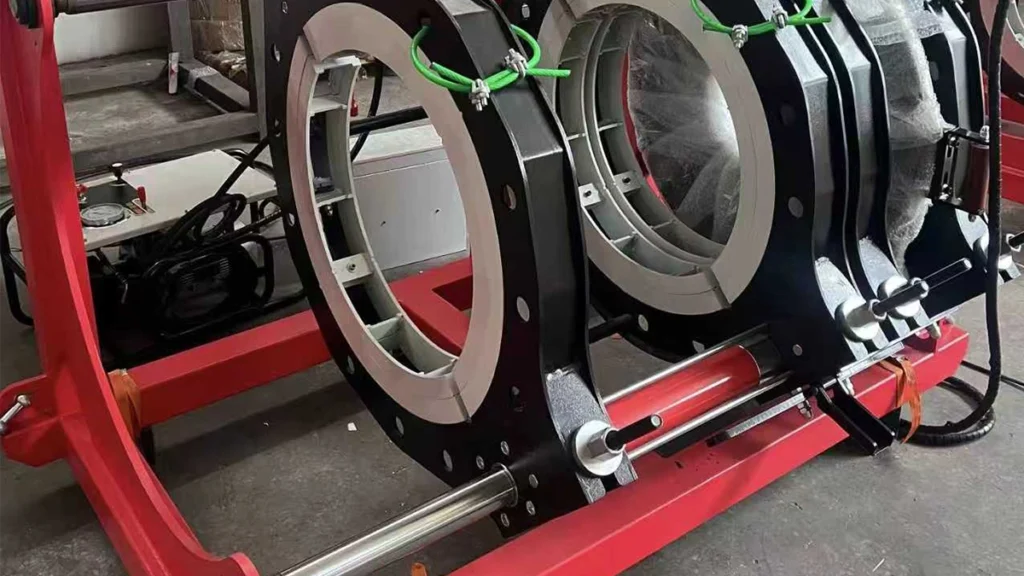
Finding the right manufacturing partner starts with a ruthless audit of their quality and safety credentials. A credible facility must run on strict ISO 9001 quality management protocols. This guarantees consistency from the moment raw materials enter the building to the final bolt tightening. For global projects, the CE mark is absolutely mandatory. It proves the electrical and hydraulic systems comply with tough European safety directives.
Beyond the factory floor, the equipment itself must meet rigid international welding standards. ISO 21307 maps out the exact procedures, temperature windows, and soak times required for pipes up to 70mm thick. If you are operating in the chemical, mining, or heavy industrial sectors, your machinery must also comply with DVS 2207 (the strict German standard) which demands ultra-high-precision welds. Verifying these specs ensures the butt fusion welding machine can consistently hit that mandatory 60 bar (0.15 N/mm²) interfacial pressure without the chassis deflecting or warping.
Assess raw material sourcing and production capacity: Analyzing lead times for bulk pipeline contractor orders
A manufacturer can only deliver on time if their supply chain and internal production capacity are bulletproof. Procurement teams must dig into where the raw materials come from. Pay special attention to the high-grade aluminum used for the clamping assemblies and the polytetrafluoroethylene (PTFE) coating on the heating plates. Cheap materials break down fast under punishing 210°C operating temperatures.
Production capacity directly impacts your procurement lead times, which can make or break a project schedule. For bulk pipeline contractor orders, a highly efficient factory usually needs a 6-8 week lead time. This covers manufacturing, rigorous quality control, and international shipping logistics. Auditing a factory’s true throughput prevents catastrophic project delays caused by suppliers who overpromise but lack the machining resources to deliver.
Investigate factory R&D capabilities: Advancements in CNC automatic controls, data logging systems, and hydraulic stability
The technological edge of your equipment reflects the manufacturer’s investment in Research and Development (R&D). Today’s pipeline specifications increasingly demand automation to pull human error out of the equation. Look closely at the manufacturer’s CNC controllers. The best systems boast 10-inch color touchscreens running recipe-based control software. They also use multi-tiered password protection (Operator, Engineer, Calibrator) to lock down critical welding parameters.
Data logging is another non-negotiable R&D benchmark. The butt fusion welding machine’s internal storage should handle at least 1,000 welding cycles, complete with remote cloud transmission and USB export for rapid field audits. Furthermore, robust R&D leads to superior hydraulic stability. Advanced units now use optical alignment via color video cameras and software crosshairs, keeping mechanical alignment deviation at or below ≤0.3mm to guarantee a flawless joint every time.
Request and review verifiable case studies from top butt fusion machine manufacturers in large-scale global infrastructure projects
Glossy marketing brochures don’t weld pipes. Procurement engineers must demand verifiable case studies showing the equipment performing in the trenches of large-scale global infrastructure projects. These documents need to highlight specific site challenges. Did the butt fusion machines face blistering ambient temperatures? Highly abrasive dust? Massive pipe diameters? More importantly, how did the equipment maintain structural integrity and pressure stability under those conditions?
Reviewing case studies from top butt fusion machine manufacturers reveals how their technology actually performs in the wild. Look for hard data showing reduced joint failure rates, strict adherence to municipal leak-testing protocols, and flawless execution of automated data-logged systems that comply with domestic standards like TSG D2002-2006.
Key Selection Criteria: Choosing the Right Butt Fusion Equipment
Define pipe diameter requirements and machine sizing specs
You must perfectly align your equipment sizing with the project’s Standard Dimension Ratio (SDR) and outer diameter (OD). For everyday municipal water and gas distribution, a Model 315mm hydraulic butt fusion machine running on 220V two-phase power easily tackles the DN160-315mm range at 2-4 MPa working pressure.
As pipe diameters grow, power and structural demands skyrocket. Main transmission lines call for heavy-duty beasts like the Model 630 (DN315-630mm) or the Model 800 (DN450-800mm). These larger units require 380V three-phase power and push 4-6 MPa of working pressure to muscle massive pipe segments into place. For extreme industrial applications, factories can engineer custom units for diameters reaching DN1000mm or even DN2600. These require specialized hydraulic stations and heavily reinforced chassis designs to stop the frame from warping under immense tonnage.
Compare control system tiers: Manual operation vs. Semi-hydraulic vs. fully automatic CNC machines with digital data logging for gas pipelines
Choosing the right control system tier is a balancing act between your upfront budget and the strictness of project compliance. Manual HDPE butt welding machines still capture about 45% of the market, but they carry a high risk of human error during the critical timing and pressure phases.
Stepping up to semi-hydraulic or fully automatic CNC systems delivers measurable, auditable improvements in joint integrity. Gas distribution pipelines, for example, legally require fully automatic butt fusion machines equipped with tamper-proof digital data logging to ensure 100% traceability.
Detail heating plate technical requirements: Temperature precision (200-230°C for HDPE), heat distribution uniformity, and high-grade PTFE coating durability
The heating plate acts as the thermal heart of the fusion process. When welding standard PE100 high-density polyethylene (HDPE) pipes, the industry dictates a precise plate temperature of 210°C ± 10°C. Elite equipment tightens that window considerably. By using high-precision electronic thermostats, top-tier plates maintain a temperature error of ≤±3°C across the entire heating surface.
Uniform heat distribution is critical to prevent “cold spots,” which inevitably create brittle, leak-prone joints. The plate must also feature a premium Polytetrafluoroethylene (PTFE) coating. This non-stick layer stops molten plastic from adhering to the metal, ensuring a clean, smooth pull-off during the transition phase. The durability of this PTFE layer dictates your maintenance schedule. Cheap coatings flake off quickly, contaminating welds and forcing expensive plate replacements.
Evaluate hydraulic unit performance: Pressure stability during the soaking and cooling phases to ensure leak-proof fusion joints
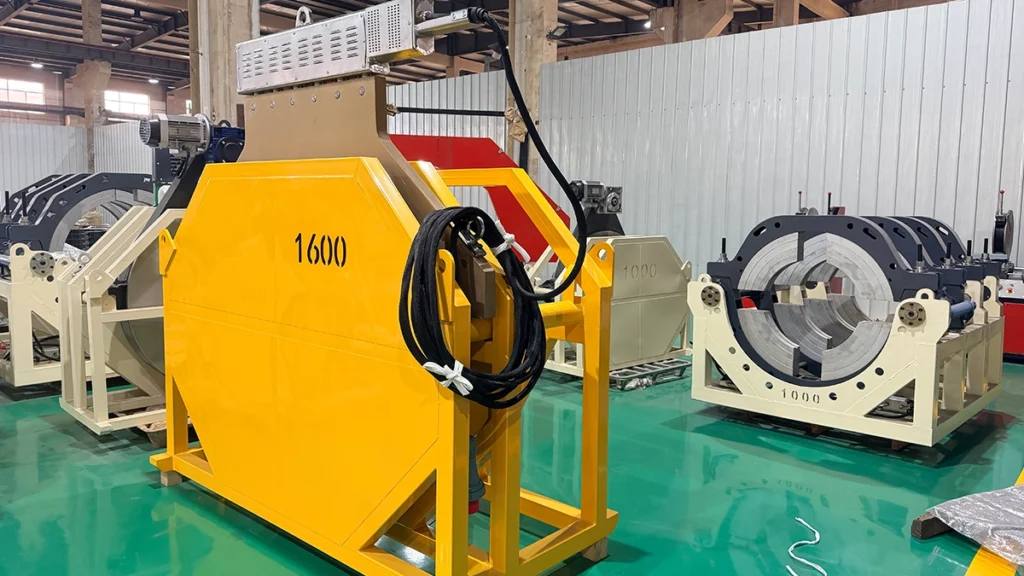
A hydraulic unit must deliver and hold precise force to forge a seamless molecular bond between the two pipe ends. For high-pressure HDPE pipe welding, the standard interfacial pressure target is 60 bar (0.15 N/mm²) plus the dynamic drag pressure of the specific pipe string you are moving.
Absolute pressure stability during the soaking and cooling phases is mandatory. If the pressure drops even slightly while the joint cools, the polymer chains will contract unevenly, destroying the weld’s tensile strength.
Buyer Decision Checklist for Hydraulic Performance:
- Total Piston Area: Does the cylinder have enough surface area (e.g., an 800mm hydraulic butt fusion machine) to hit 60 bar on thick-walled SDR pipes?
- Drag Force Compensation: Can the pump muscle through the heavy friction of long pipe strings before applying the final fusion pressure?
- Pressure Retention: Will the system hold dead-steady pressure without the motor oscillating during the crucial 15-30 minute cooling phase?
- Component Quality: Are the hydraulic seals and directional valves sourced from elite, globally recognized industrial brands?
Ekberg Welding: Manufacturing Excellence, Quality Control & Service
Detail Ekberg’s advanced CNC machining center capabilities for producing high-precision aluminum clamps and robust steel chassis
Ekberg Welding distances itself from the competition by maintaining absolute control over the manufacturing floor. The facility leverages advanced CNC machining centers to carve out high-precision aluminum clamps and master adapters. By utilizing high-pressure aluminum die-casting for hdpe fusion machine bodies up to 630mm, Ekberg guarantees an incredibly rigid chassis.
Structural rigidity is everything. A flimsy chassis will flex and bend under the massive force of the hydraulic cylinders, causing the pipe ends to slip or misalign right at the moment of high-pressure fusion. Ekberg’s heavy-duty steel chassis absorbs the violent shocks and vibrations of rugged job sites, easily holding the ≤0.3mm mechanical alignment deviation required to execute a perfect joint.
Map out the rigorous multi-step quality control process: Hydraulic pressure retention testing, heating plate thermal imaging, and electrical safety checks
Before any piece of equipment rolls out of the Ekberg facility, it faces a brutal, multi-step quality control protocol to prove it is field-ready. Hydraulic systems undergo extended pressure retention tests. Technicians push the cylinders well past their 4-6 MPa rated working pressure to hunt down microscopic leaks in the seals or valves.
Thermal components are subjected to advanced thermal imaging. Engineers map the entire heating plate to confirm the temperature holds within the strict ≤±3°C tolerance across every single square centimeter, ensuring zero cold spots. Finally, the IP54-rated electrical enclosures endure intense dielectric and continuity testing to guarantee the operator stays safe in wet, hazardous trench conditions.
Explain Ekberg’s approach to global logistics: Export packaging, container loading optimization, and international shipping efficiency
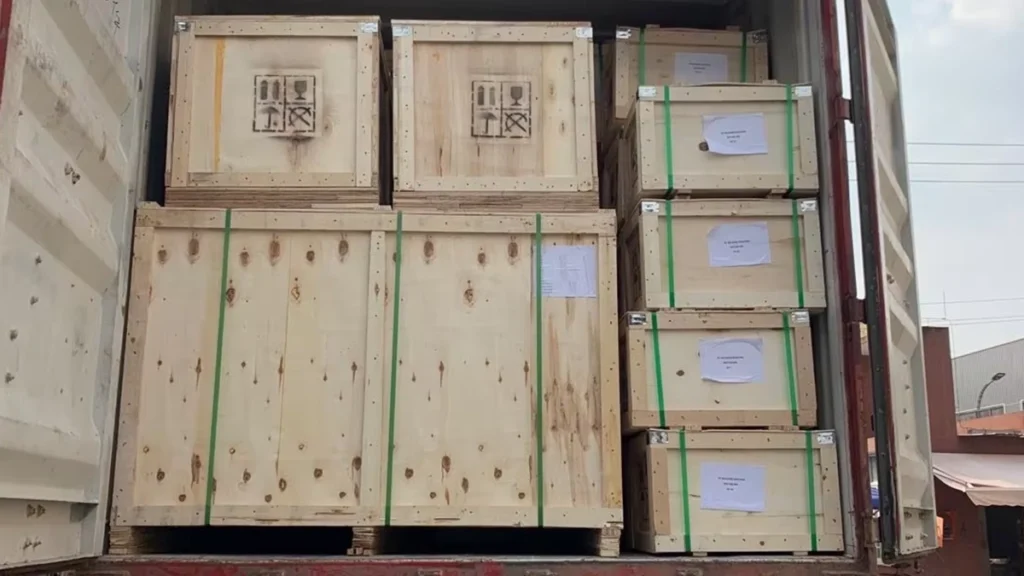
Shipping heavy industrial butt fusion welding machine across oceans requires flawless logistics. Ekberg Welding uses heavy-duty export packaging, bolting the chassis, hydraulic stations, and fragile CNC touchscreen panels into reinforced, fumigated wooden crates built to survive severe maritime transit vibrations.
The logistics team doesn’t just guess at container space; they use 3D modeling to optimize container loading for bulk orders. This precision packing slashes the shipping cost per unit for the contractor. By handling the maze of customs documentation and working directly with international freight forwarders, Ekberg guarantees that the 6-8 week procurement lead time remains a hard deadline, preventing costly delays on your end.
Highlight comprehensive after-sales support: Global warranty terms, rapid spare parts dispatch, and remote or on-site operator training programs
Ekberg’s partnership with contractors lasts for the entire lifespan of the hdpe fusion machine. The global warranty delivers 1-year of comprehensive coverage alongside 3-year protection on critical core components. Because downtime murders project profitability, Ekberg runs a rapid spare parts dispatch protocol.
Since the butt fusion welding machines feature standard, top-tier imported components, contractors can often grab emergency replacements from local industrial suppliers. When you absolutely need factory-original parts, expedited international shipping kicks in. On top of that, Ekberg delivers highly effective training programs. Whether you need 24/7 remote video guidance or prefer factory engineers deployed for on-site operator training, Ekberg makes sure your crew is certified to run CNC systems in full compliance with TSG D2002-2006 and ISO standards.
Application Scenarios Supported by Factory-Direct Equipment
Municipal water and wastewater networks: Achieving high-pressure, zero-leak joints in urban infrastructure upgrades
Upgrading municipal water infrastructure requires total reliability. A single blown joint under a city street triggers catastrophic excavation costs and shuts down public utilities. Ekberg’s butt fusion welding machine strictly follows ISO 21307 protocols, ensuring that standard SDR pipes (usually in the DN40-2600mm range) fuse with zero-leak precision. Automated displacement detection systems eliminate the “cold welds” that constantly plague manual operations, guaranteeing the municipal network will handle high-pressure water delivery for decades without needing repairs.
Gas distribution pipelines: Meeting stringent safety standards with automated data-logging butt fusion machines
Gas distribution is the highest risk category in the pipeline industry. The safety regulations are absolute. Ekberg engineers its fully automatic CNC butt fusion machines specifically for this high-stakes sector, ensuring they meet the unforgiving TSG D2002-2006 and GB/T 20674.1 standards. The equipment utilizes tamper-proof digital data logging to record the exact temperature, pressure, and timing of every single weld. This locked digital record gives utility inspectors flawless traceability, preventing any manual manipulation of welding logs and ultimately protecting public safety.
Mining operations: Supplying heavy-duty, ruggedized machines capable of withstanding harsh, abrasive environments
Mining sites subject equipment to highly abrasive dust, wild temperature swings, and relentless mechanical abuse. Pumping water or chemical slurries requires heavy, thick-walled SDR 7.4 high-density polyethylene pipes. Fusing these massive lines demands Ekberg’s heavy-duty butt fusion welding machine (like the Model 800), which pack 16.9 KW of total power. Massive hydraulic cylinders deliver the extreme clamping force needed to lock the pipe in place, while IP54-rated control units keep fine particulate dust from destroying the electrical relays.
Agricultural irrigation systems: Providing cost-effective, easily transportable machines for large-scale farm installations
For large-scale agricultural irrigation projects, contractors require machinery that balances rugged mobility with cost-effectiveness. Teams in this space frequently rely on manual butt fusion machine or semi-automatic hydraulic butt fusion machines running at 2-4 MPa working pressure. Ekberg builds highly transportable units designed to be dragged across vast, uneven farmland. Because these irrigation networks don’t require the strict digital data-logging mandated by gas pipelines, contractors secure a highly competitive price point while still getting Ekberg’s ±3°C temperature precision and rock-solid aluminum die-cast clamps.
Frequently Asked Questions
Q1: What is the typical cost difference when securing a butt fusion welding machine factory price compared to retail?
By cutting out regional distributors and their associated middleman markups, pipeline contractors routinely slash their initial capital expenditure by 20% to 30%. Locking in a direct butt fusion welding machine factory price also opens the door to better payment terms, like a 30% T/T deposit. This frees up crucial cash flow during the expensive early stages of site mobilization and procurement.
Q2: How does a top butt fusion machine manufacturer ensure compliance with DVS 2207 welding standards?
Meeting DVS 2207 demands ultra-high precision. Manufacturers hit this benchmark by integrating high-precision electronic thermostats that cap temperature fluctuations at a strict ≤±3°C. Additionally, the hydraulic units are custom-engineered to hold absolute pressure stability (usually 60 bar / 0.15 N/mm²) throughout the long soaking and cooling phases. This prevents stress on the polymer chains and guarantees a flawless molecular bond.
Q3: Can I order customized clamps or reducing inserts for non-standard pipe sizes directly from the factory?
Absolutely. A major perk of buying direct is gaining access to the manufacturer’s CNC machining centers. Factory engineers can design and mill custom high-pressure aluminum die-cast clamps and master adapters specifically tailored to unique outer diameters (OD) or non-standard Standard Dimension Ratios (SDR). This guarantees a perfect, non-slip grip during the high-pressure fusion process.
Q4: What is the standard production lead time when buying direct from a butt fusion machine factory?
For standard models and large bulk pipeline contractor orders, a highly efficient butt fusion welding machine factory generally needs a 6 to 8-week lead time. This window covers the complete manufacturing cycle, brutal multi-step quality control testing (including thermal imaging and pressure retention), custom export packaging, and the coordination of international shipping logistics to your job site.
Q5: Do factory-direct suppliers handle international shipping, customs documentation, and global spare parts delivery?
Yes. Premium manufacturers take complete control of the global logistics chain. They execute optimized container loading, build reinforced export packaging, and process all the complex customs paperwork. On the after-sales side, they rely on expedited international shipping for factory parts. They also design butt fusion welding machines using globally recognized electrical and hydraulic components, allowing you to source emergency replacements locally if time is critical.
Final Thoughts
Sourcing heavy-duty pipeline equipment directly from the factory cuts out bloated middleman markups, secures authentic manufacturing quality, and connects your engineering team directly with expert technical support. When you understand the critical specifications—from holding a tight 210°C ± 10°C heating precision to delivering a rock-solid 60 bar fusion pressure—your procurement team can confidently specify machinery that easily passes strict ISO 21307 and DVS 2207 standards.
Whether your crew is fusing DN160 pipes for a city water upgrade or wrestling massive DN1000 lines for an industrial transmission project, deploying the right CNC automated system slashes joint failure rates and guards your project’s ROI. Teaming up with a proven butt fusion welding machine factory guarantees you receive rugged, highly calibrated equipment built specifically for your operational environment.
Stop letting supply chain friction jeopardize your next pipeline installation. Contact Ekberg Welding today to request a detailed factory-direct quote. Discuss your exact project parameters with our engineering team, and lock in the most competitive pricing available in the global infrastructure market.